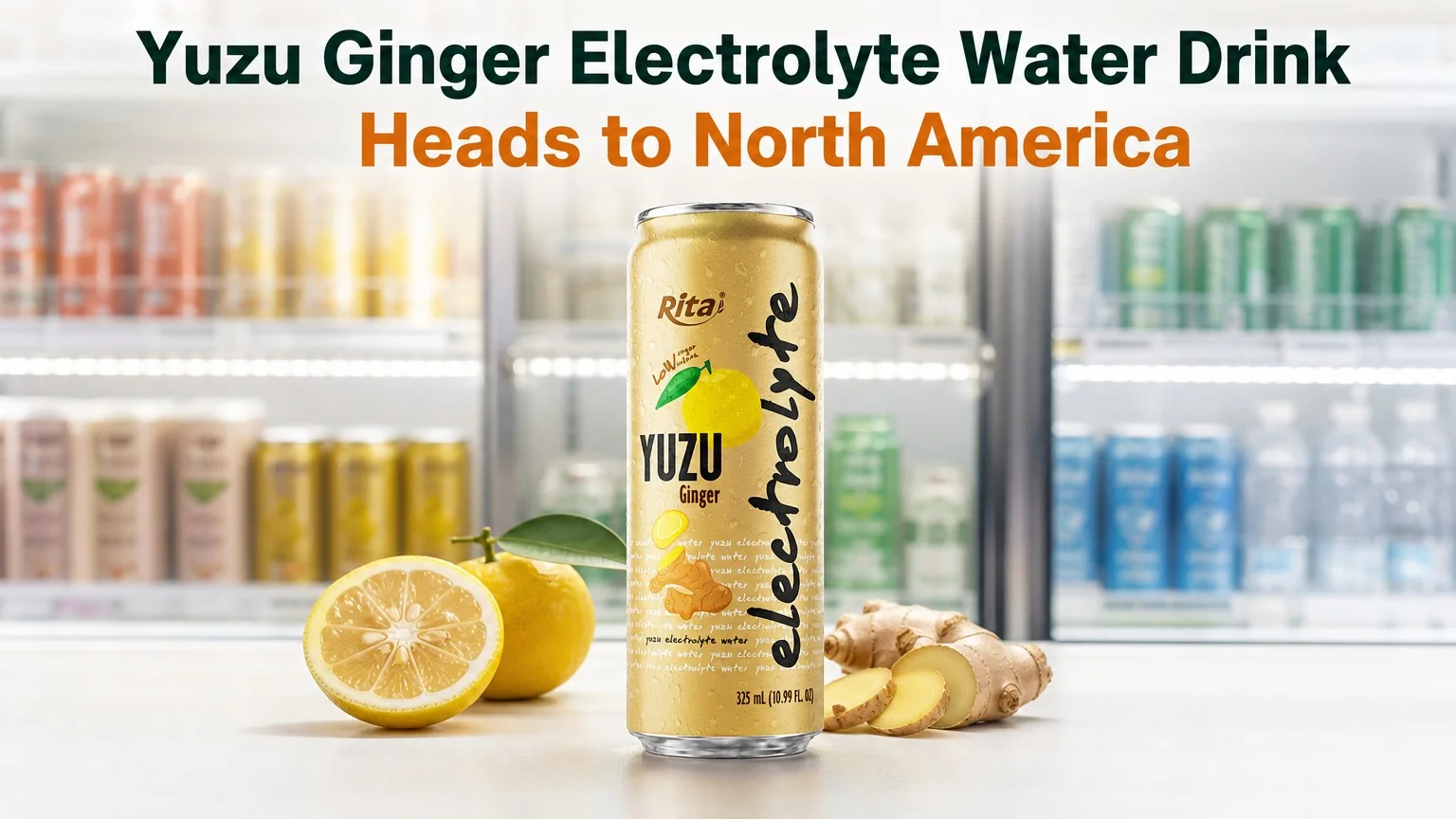
As consumer packaged goods teams across the United States and Canada revisit assortment plans, the Yuzu Ginger Electrolyte Water Drink from RITA is drawing attention as a compact 325 ml can that pairs bright citrus character with a warm ginger finish inside a low-sugar recipe. The launch arrives at a moment when beverage supply chains are being renegotiated from farm gate to retail shelf, and when buyers are weighing flavor novelty against formulation discipline. This article examines how the product is positioned, what its sourcing and certification footprint reveals about modern export manufacturing, and where the North American opportunity sits for distributors, retailers and private label partners.
Key Takeaways
- A 325 ml low-sugar aluminum can format matches the assortment trimming now common across US and Canadian retail.
- The yuzu and ginger pairing gives buyers a differentiated taste story next to mainstream citrus sodas and unflavored electrolyte waters.
- Export credentials including BRC, FSSC 22000, Halal, Kosher, ISO, GMP and HACCP shorten compliance reviews for importers.
- Mekong Delta raw material sourcing and OEM flexibility support lead-time planning for North American purchase orders.
- Disruption in alcoholic beverage supply chains is pushing buyers to widen their non-alcohol ranges.
Why the Yuzu Ginger Electrolyte Water Drink Fits the North American Shelf
Shelf space is being rationed, and flavor has become the currency that earns it.
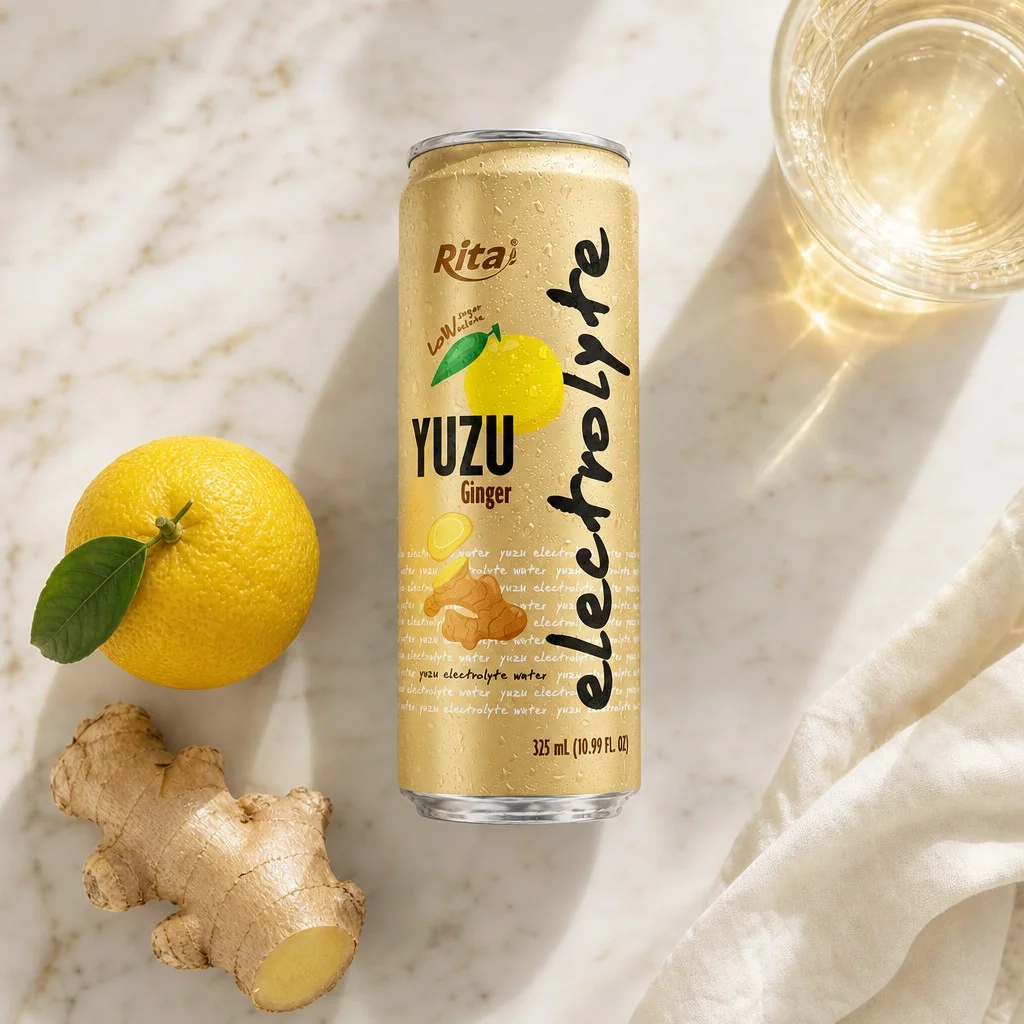
The ingredient deck is short and legible. Yuzu extract supplies the aromatic citrus top note that has traveled from restaurant menus into packaged drinks, while ginger extract adds a gentle warmth that lingers after the first sip. Purified water carries an electrolyte blend of sodium, potassium, magnesium and calcium, and a low-sugar sweetener such as stevia or monk fruit delivers sweetness without pushing the sugar line upward. Natural flavorings and preservatives round out the profile so the taste stays consistent across a long distribution chain.
What matters commercially is the sequence of tastes. The Yuzu Ginger Electrolyte Water Drink opens with a tangy yuzu burst, settles into the mineral clarity of the electrolyte base, and finishes with the soft heat of ginger. That progression gives category managers a sentence they can deliver at planogram review, which is often the difference between a listing and a rejection.
Slim 325 ml Aluminum Format and Shelf Presence
Packaging does half the selling before the tab is pulled. The can carries a golden-yellow finish with a stylized yuzu fruit and ginger root illustration, a design language that reads clearly from four feet away through a cooler door. At 325 ml, or 10.99 fl oz, the slim profile drops into car cup holders, gym lockers, lunch bags and standard retail displays without adapters or shelf adjustments. Aluminum is shelf-stable, recyclable and condensation-friendly, which keeps the label crisp when the can comes out of a cold case.
Format decides whether a can travels with the shopper.
Low Sugar Formulation Meets Label-Conscious Shopping
Reduced-sugar positioning has moved from a niche claim to a baseline expectation in the United States and Canada, particularly among shoppers who track sugar intake or follow keto and paleo patterns. The can carries a clear Low Sugar mark, and the calorie profile stays light enough to sit beside sparkling waters and unsweetened teas rather than full-sugar sodas. For buyers, that placement widens the set of shelves the product can credibly occupy.
The result is a drink that behaves like a premium sensory product while staying inside the sugar guardrails retailers now apply to new listings. Buyers reviewing the Yuzu Ginger Electrolyte Water Drink 325ml can see the full specification, ingredient panel and aluminum can beverage packaging details on the product page.
Beverage Supply Chains Absorb a New Round of Shocks
Volatility rarely stays inside one category.
Diageo and Pernod Ricard are under investigation in India over Scotch whisky imports, a reminder that tariff classification and origin documentation remain live risks for any brand moving goods across borders. Diageo is also facing a probe in Scotland concerning a toxic spill, adding an environmental compliance dimension to an already complex sourcing picture. Both stories point at the same truth: the paperwork and the physical flow of product are inseparable parts of the same beverage supply chain.
Corporate structure is moving too. Amber Beverage UK has entered administration, while Canned Wine Group acquired the South African brand New Theory, illustrating how mid-market players are consolidating around formats and territories they can control. When a distributor's portfolio shifts overnight, contracted supply lines have to be re-papered quickly, and suppliers with documented processes absorb the change with less friction.
Conference agendas reflect the mood. Pernod Ricard, Suntory and De Kuyper will be featured at the upcoming Just Drinks spirits conference, where sourcing resilience and route-to-market design are expected to dominate discussion. The signal for non-alcohol buyers is straightforward: portfolios are being rebuilt, and partners who can evidence their chain of custody will be preferred over those who negotiate on price alone.
For companies working the soft drink catalog space, the practical lesson is to keep at least two qualified manufacturing routes open and to favor partners that publish their certifications rather than promise them verbally. Diversification is cheaper than recovery after a disruption, and it protects shelf availability during peak seasons.
From Field to Can, Sourcing Ginger and Citrus Inputs
Flavor starts long before the filling line.
Ginger and citrus concentrates are the two inputs that set the character of this drink, and both are subject to crop cycles, weather windows and grading standards. RITA draws much of its fruit and root supply from the Mekong Delta raw material region, where alluvial soils and a dense network of waterways support year-round harvesting and short transport times to processing sites.
A field visit through that region shows how raw material lots are inspected, weighed and moved into storage within hours of harvest, a practice that preserves aroma compounds before extraction begins. The walkthrough is documented here: https://www.youtube.com/watch?v=jiBixXjeG8A
Yuzu presents a different sourcing question. The fruit is prized for its aromatic zest but cultivated on a limited scale, so manufacturers typically work with standardized extract bought through audited traders. Consistency of acidity and aroma across lots is the specification that matters most, because drift in extract strength would change the taste profile consumers expect from can to can.
Certifications and Export Infrastructure Behind the Yuzu Ginger Electrolyte Water Drink
Compliance paperwork is the quiet infrastructure of export beverages.
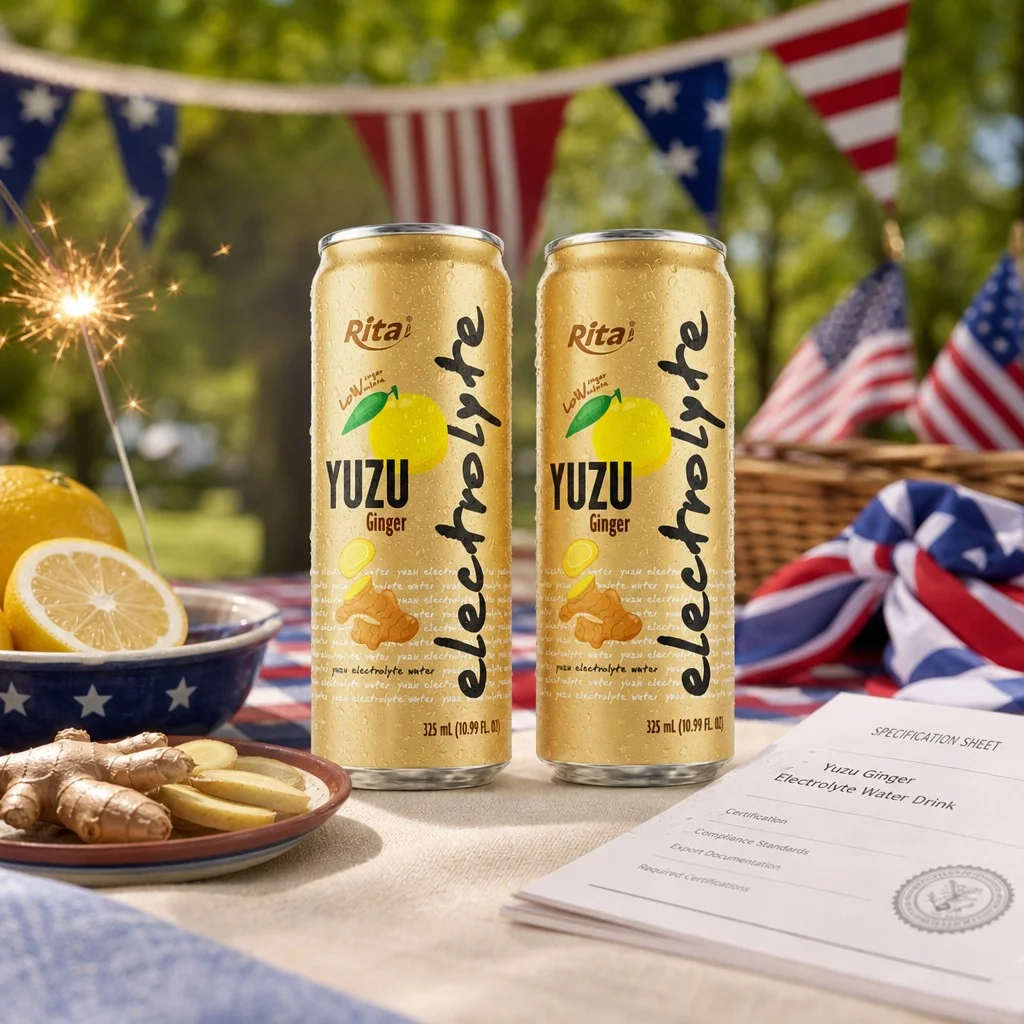
RITA Food and Drink Co., Ltd, established in 2004, operates as an OEM beverage manufacturer and ODM partner out of Vietnam with more than 50 automated production lines and over 1,200 containers shipped each month to brands in 180 countries. Goods leave the port in aluminum cans, glass bottles, PET and PP formats, and the company now exports to more than 200 countries and territories. That scale is what allows a 325 ml can program to be quoted with realistic lead times rather than optimistic ones.
| Certification | What it signals to a North American buyer |
|---|---|
| BRC | Retail-grade food safety audit recognized by major grocery groups |
| FSSC 22000 | Full food safety management system certification |
| ISO | Documented quality management processes |
| GMP and HACCP | Hazard controls embedded in daily production practice |
| Halal Jakim and Halal HCA-GCC | Access to halal-certified channels in North America and the Gulf |
| Kosher | Eligibility for kosher listings and specialty retail |
| SMETA | Ethical audit coverage for social compliance reviews |
Source: certification register published by RITA Food and Drink Co., Ltd.
Private Label and OEM Capacity for North American Buyers
Private label is where supply chain control becomes a commercial advantage. RITA's OEM beverage service lets a distributor specify sweetener system, electrolyte blend, flavor ratio and can artwork while the manufacturer handles formulation trials, stability checks and artwork proofing. The ODM route goes further, offering developed recipes a brand can adopt and re-label under its own name.
For a launch built around the Yuzu Ginger Electrolyte Water Drink, that flexibility shortens the path from concept to container. Buyers can start with the existing 325 ml specification, then adjust sweetness or ginger intensity for a regional palate without rebuilding the entire process. The RITA low-sugar hydration beverage page outlines the standard configuration used for export orders.
Retail and Distribution Opportunities in the United States and Canada
The North American opportunity is widest where occasions are smallest.
Single-serve cans sell on impulse and repeat, which makes them well suited to checkout coolers, fuel store racks and workplace micro-markets. The slim 325 ml profile also suits e-commerce multipacks, since a twelve-can tray ships at a dimensional weight that keeps parcel costs predictable. Canadian importers face the same considerations, with the added step of bilingual label review before goods clear customs.
Where the Slim Can Sits in Store and Online
In physical retail, the golden-yellow can reads as a premium citrus offer rather than a commodity water, which supports a mid-tier price band. Online, the yuzu and ginger story photographs well: the stylized fruit and root illustration gives marketplace listings a visual hook that plain labels lack. Both channels reward the same thing, a product that explains itself in a glance.
Buyers evaluating distribution paths typically weigh a short list of options before committing volume:
- Convenience and fuel retail, where single-serve cold cases turn fastest
- Grocery and club, where multipack configurations and shelf stability matter most
- Gym, campus and workplace channels that favor slim cans and clear labeling
- E-commerce and subscription boxes that reward distinctive packaging photography
- Foodservice and hospitality, where yuzu-ginger flavor profiles pair with light menus
Each route pulls a different balance of volume and margin, and the non-alcohol beverage catalog gives buyers a way to compare formats before selecting a lead SKU. Teams ready to move from sampling to shipment can start with the Yuzu Ginger Electrolyte Water Drink product listing and request current export terms for the United States and Canada.
Frequently Asked Questions
What is the Yuzu Ginger Electrolyte Water Drink 325ml?
It is a 325 ml slim aluminum can combining yuzu extract, ginger extract, purified water, an electrolyte blend of sodium, potassium, magnesium and calcium, and a low-sugar sweetener, marketed as a low-sugar hydration beverage for retail and foodservice channels.
What sweetener is used in this low-sugar drink?
The formulation relies on a low-sugar sweetener such as stevia or monk fruit to deliver sweetness while keeping the sugar line low, alongside natural flavorings and preservatives for shelf stability.
Which certifications cover this product for export?
Production sits under BRC, FSSC 22000, ISO, GMP, HACCP, SMETA, Kosher, Halal Jakim and Halal HCA-GCC, which supports review by grocery, specialty and halal retail channels in North America.
Can the formula and artwork be customized?
Yes. OEM and ODM programs allow distributors to adjust sweetener system, electrolyte blend, flavor ratio and can artwork while keeping the 325 ml format.
What packaging formats are available besides aluminum cans?
The manufacturer supplies beverages in aluminum cans, glass bottles, PET bottles and PP bottles, so a brand can extend the same flavor into multiple formats.