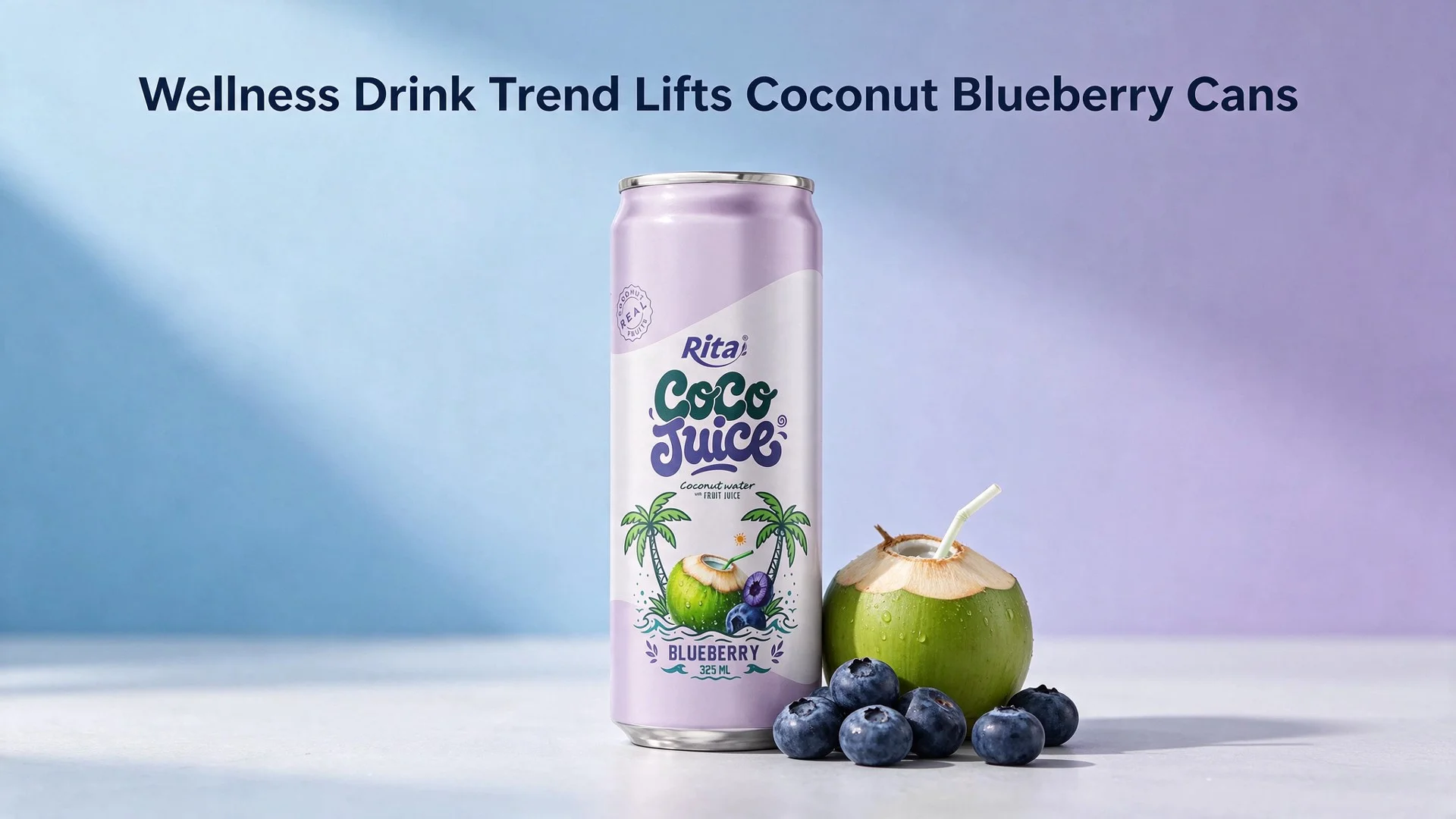
The ready-to-drink coconut category has a fresh flavor story this season, and coconut water with blueberry juice is at the center of it. RITA Coco Juice has added a blueberry variant to a seven-flavor lineup packed in slim 325 ml aluminum cans, pairing the light, clean taste of coconut water with sweet-tart berry notes aimed at everyday drinking occasions. For beverage buyers across North America, the release lands as flavored coconut water moves from the specialty shelf into the mainstream cooler.
Key Takeaways
- RITA Coco Juice Coconut Water With Blueberry Juice 325ml Can joins a seven-flavor line with color-coded, hand-illustrated packaging.
- The blend pairs light coconut water with sweet-tart blueberry juice for a fruit-forward taste that stays restrained on sweetness.
- The slim aluminum format holds chill longer and fits lunch coolers, gym bags and grab-and-go displays.
- Production runs on more than 50 automated lines, with exports reaching 200+ countries and certifications including BRC, FSSC 22000, Halal, Kosher, ISO, GMP, HACCP and SMETA.
- Distributors can build multi-SKU coconut displays or develop private label coconut water variants through OEM/ODM partnerships.
Why Coconut Water With Blueberry Juice Is Winning Shelf Space in North America
Flavored coconut water is no longer a fringe experiment. In the United States and Canada, retailers are widening coconut sets well beyond the original unflavored format, and berry-leaning variants are pulling in shoppers who want a flavor cue they can read in a second.
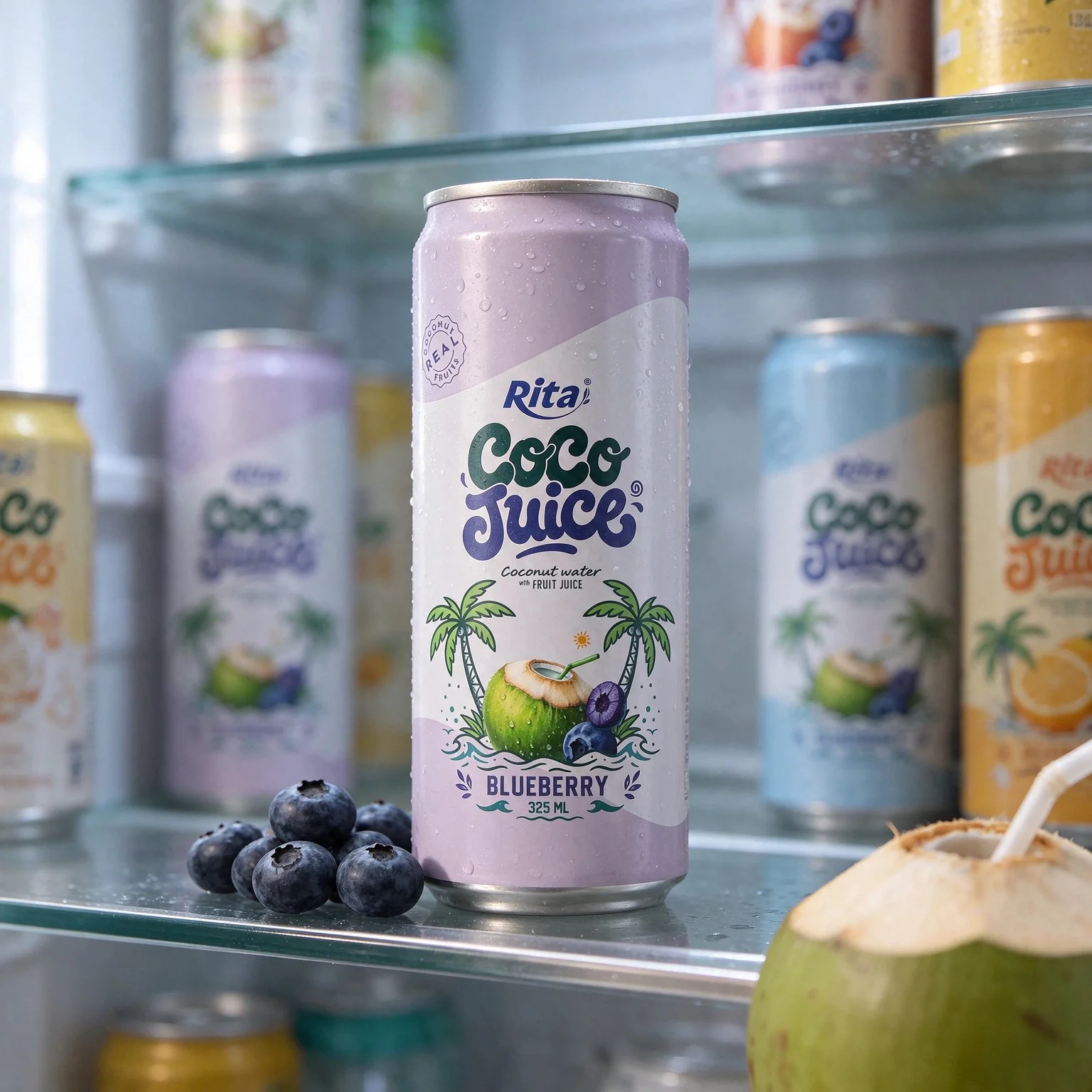
The blend sits in a useful middle ground. It is sweeter and more aromatic than plain coconut water, yet far lighter than a full-strength fruit nectar, which lets it stand beside sparkling waters, iced teas and other light refreshments without fighting for the same shopper attention. Buyers who want the full specification sheet can open the RITA Coco Juice Coconut Water With Blueberry Juice 325ml Can listing, where volume, packaging format and shelf-life details are gathered in one place.
Flavor Balance and Everyday Taste Expectations
Sweet-tart rather than sugary, a distinction that quietly decides whether a can earns a second purchase.
The blueberry variant leans on contrast. Coconut water brings a soft, mineral-leaning base, while blueberry juice adds a dark-fruit top note with gentle acidity. The result reads as a fruit drink rather than a flavored water, and it stops well short of the cloying finish that sometimes follows heavily sweetened coconut beverages. Sampling feedback and store reviews tend to converge on the same short description: refreshing, clean, not too sweet.
That profile also widens the occasion range. The drink works chilled straight from the cooler, poured over ice at lunch, or lengthened with soda water at home. Because the flavor is familiar rather than adventurous, first-time trial carries little risk, which is exactly what a new SKU needs during its first weeks on shelf.
The 325 ml Can Format for On-the-Go Occasions
Packaging decides where a drink gets consumed, and this slim can is built for mobility.
At 325 ml, the single-serve aluminum can fits a lunch box side pocket, a gym bag compartment or a checkout cooler without demanding extra shelf width. Aluminum pulls down to a cold temperature quickly and holds it longer than most plastic formats, which matters during warm-weather retail and in the gap between refrigeration points. The pale lavender body, blueberry and coconut artwork, twin palm trees and the circular Coconut Real Fruit stamp make the variant identifiable even in a crowded cooler door.
Shelf life matters just as much to importers. The can carries a 24-month run, giving distributors room to schedule container arrivals and warehouse rotation without compressing sell-through windows. For retailers running seasonal coconut displays, that timeline removes a common source of write-offs and lets a program stay on shelf across more than one selling season.
Market Signals and Export Momentum for Flavored Coconut Water
Coconut-based drinks remain one of the more active categories in the tropical beverage trade, and flavored extensions are where most growth conversations now happen.
Buyers evaluating the category usually ask three questions. Can the supplier hold flavor consistency across large runs, will the packaging survive long transit, and do the certifications clear customs without friction? Suppliers that can answer all three without reopening the conversation at every purchase order are the ones that get rebooked.
Volume is only part of the argument. Because the blueberry variant arrives as one color-coded SKU inside a wider set, a retailer can build a complete coconut wall without redesigning shelf tags for each flavor. That visual system lowers the labor cost of merchandising and raises the odds that a shopper who tries one flavor comes back for a second.
What Coconut Water With Blueberry Juice Signals to Buyers
The variant is a clean read on where the category is heading: recognizable fruit blends, restrained sweetness and formats that travel well.
Exporters are watching the same shift in adjacent categories. Recent commentary from large beverage groups about sales tracking below internal targets across parts of Europe and the Asia-Pacific is a reminder that volumes can soften quickly when preferences move. Lines that offer several flavor entry points inside one visual family give a distributor more ways to respond without rebuilding the range from scratch.
The ready to drink coconut water segment also benefits from predictable logistics. Each coconut water can is lightweight and dimensioned for standard pallet patterns, which keeps freight math stable for North American distribution networks. The 325 ml Coco Juice blueberry can is export-ready and ships with the documentation most import desks request during onboarding.
Raw Material Sourcing From Coconut Groves to the Can
Coconut water quality is decided long before the filling line, in the age and harvest timing of the nuts themselves.
RITA's coconut sourcing traces to established growing regions in southern Vietnam, where the Ben Tre coconut farms supply raw material used across the company's coconut range. Harvest windows are managed so that water content and flavor stay consistent from batch to batch, which is what allows a blueberry blend to taste the same in month one and month twelve of a distribution cycle.
A walk-through of the sourcing area is available here: https://www.youtube.com/watch?v=I7hlTL3FT_0
Manufacturing Scale Behind the Seven-Flavor Coco Juice Line
RITA Food and Drink Co., Ltd. has operated since 2004 and runs more than 50 automated production lines across its beverage portfolio.
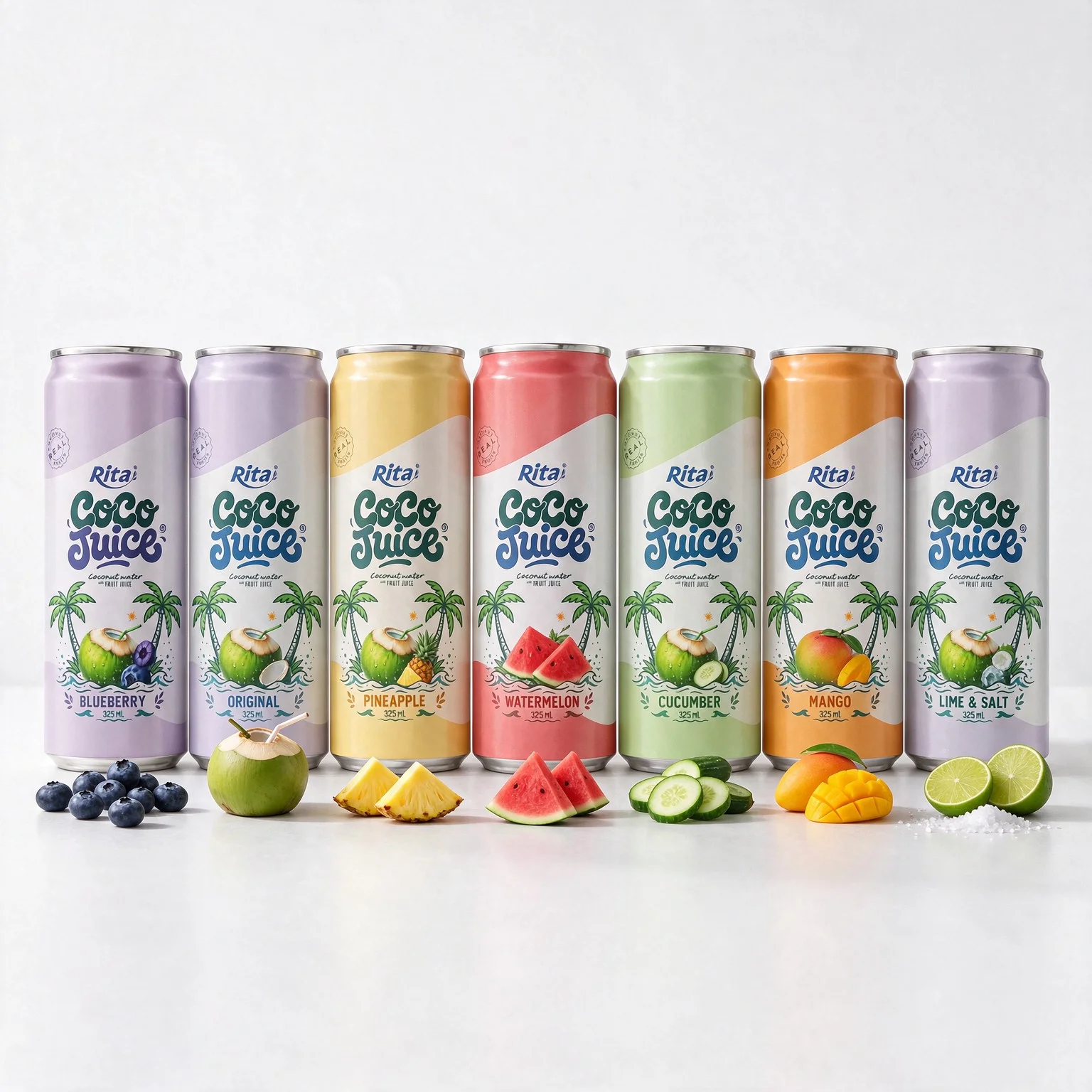
Scale matters for a multi-SKU coconut program. The Coco Juice line ships in seven variants, Original, Blueberry, Pineapple, Watermelon, Cucumber, Mango and Lime & Salt, each with its own color-coded can, hand-drawn tropical illustration and a Coconut Real Fruit stamp. Retailers get a display that reads as one family while still giving shoppers a clear flavor choice at a glance. The coconut water with blueberry juice can anchors the set in pale lavender, easy to pick out from the green, yellow and red siblings.
| Coco Juice Variant | Can Color Cue | Taste Direction |
|---|---|---|
| Original | Neutral tropical tones | Pure coconut water, light and clean |
| Blueberry | Pale lavender | Coconut base with sweet-tart berry notes |
| Pineapple | Yellow accents | Bright, tangy tropical fruit |
| Watermelon | Pink-red accents | Soft, juicy melon character |
| Cucumber | Green accents | Cool, crisp and understated |
| Mango | Orange-gold accents | Ripe stone-fruit sweetness |
| Lime & Salt | Zesty green accents | Tart lime with a savory edge |
Every can in the set is 325 ml, so a mixed display keeps a uniform height and depth across the wall. It is a small detail, but it simplifies planogram work for category managers who would otherwise juggle three or four can sizes in one brand block.
Certifications That Travel With the Product
Documentation is where many export deals stall, so the facility's certification list is worth reading closely.
The plant holds BRC, FSSC 22000, Halal Jakim, Halal HCA-GCC, Kosher, ISO, GMP, HACCP and SMETA, covering the requirements most North American and Middle Eastern buyers ask for during supplier qualification. The wider range is cataloged under RITA's coconut products portfolio, which groups coconut water, coconut milk and coconut-based blends in a single reference for buyers comparing formats side by side.
Private Label and OEM/ODM Flexibility
For distributors who want their own identity on the shelf, the same line supports private label production with flexible packaging options.
RITA's OEM service covers artwork adaptation, can sizing and run planning, while the broader fruit drink catalog gives partners a way to extend a coconut program into adjacent juice SKUs without switching suppliers. Monthly export capacity above 1,200 containers means a launch can scale from a regional trial to national distribution without a second qualification cycle, and the blueberry Coco Juice can is the reference sample most buyers start from.
Retail Execution and Category Context for Coconut Programs
Flavor novelty opens the door; shelf execution decides whether a coconut program stays.
Several recent industry developments point in the same direction. A debate over expanding ready-to-drink taxation in Europe has prompted beverage groups to argue against rushed policy changes, a reminder that regulators watch the RTD space closely even when a product sits outside the alcohol category. Non-alcoholic coconut cans are not part of those proposals, yet they compete for the same cooler real estate and the same shopper attention.
Supply-chain resilience is also back on the agenda after a major technology outage disrupted digital identity and ordering systems across several sectors. Importers and retailers are reviewing how dependent their replenishment cycles are on a single platform, which tends to favor suppliers that ship complete, well-documented containers on predictable schedules.
- Confirm that certification documents match the destination market's import requirements before the first container sails.
- Order mixed-flavor pallets so a new coconut display opens with variety rather than a single facing.
- Build shelf tags and signage around the color-coded can family to reduce merchandising labor.
- Work the 24-month shelf-life window into rotation planning to avoid end-of-life write-offs.
- Keep a sample set of all seven variants on hand for buyer presentations and staff tastings.
Manufacturers are also investing in plant efficiency, with waste-heat recovery and other energy-recovery measures gaining attention across food-and-beverage facilities. Buyers increasingly ask how a producer manages input costs over a multi-year contract, and efficiency investments are one of the more concrete answers a supplier can offer when margins are under review.
For North American retailers, the practical takeaway is straightforward. A coconut water with blueberry juice SKU with a 24-month shelf life, uniform can dimensions and a documented certification trail is an easy product to approve and a simple one to keep on shelf. The RITA Coco Juice blueberry 325 ml can is available for sampling through the company's US distribution desk.
Frequently Asked Questions
What is RITA Coco Juice Coconut Water With Blueberry Juice?
It is a 325 ml ready-to-drink blend of coconut water and real blueberry juice, sold in a slim aluminum can. The taste balances a light coconut base with sweet-tart berry notes and is positioned as a fruit-forward drink that is not overly sweet.
How long does the product keep, and what is the pack format?
Each can holds 325 ml and carries a 24-month shelf life. The slim single-serve format is designed for grab-and-go coolers, lunch boxes and gym bags, and it chills quickly while holding temperature longer than most plastic packs.
Which certifications support export of this coconut water can?
The producing facility holds BRC, FSSC 22000, Halal Jakim, Halal HCA-GCC, Kosher, ISO, GMP, HACCP and SMETA, alongside additional registrations requested by importers in different destination markets.
Can the blueberry variant be produced under a private label?
Yes. RITA supports OEM and ODM partnerships covering artwork adaptation, can sizing and run planning, with flexible packaging options and monthly export capacity above 1,200 containers.
How many flavors are in the Coco Juice line?
Seven: Original, Blueberry, Pineapple, Watermelon, Cucumber, Mango and Lime & Salt. Each variant uses color-coded packaging with hand-drawn tropical illustrations so shoppers can identify flavors quickly at shelf.