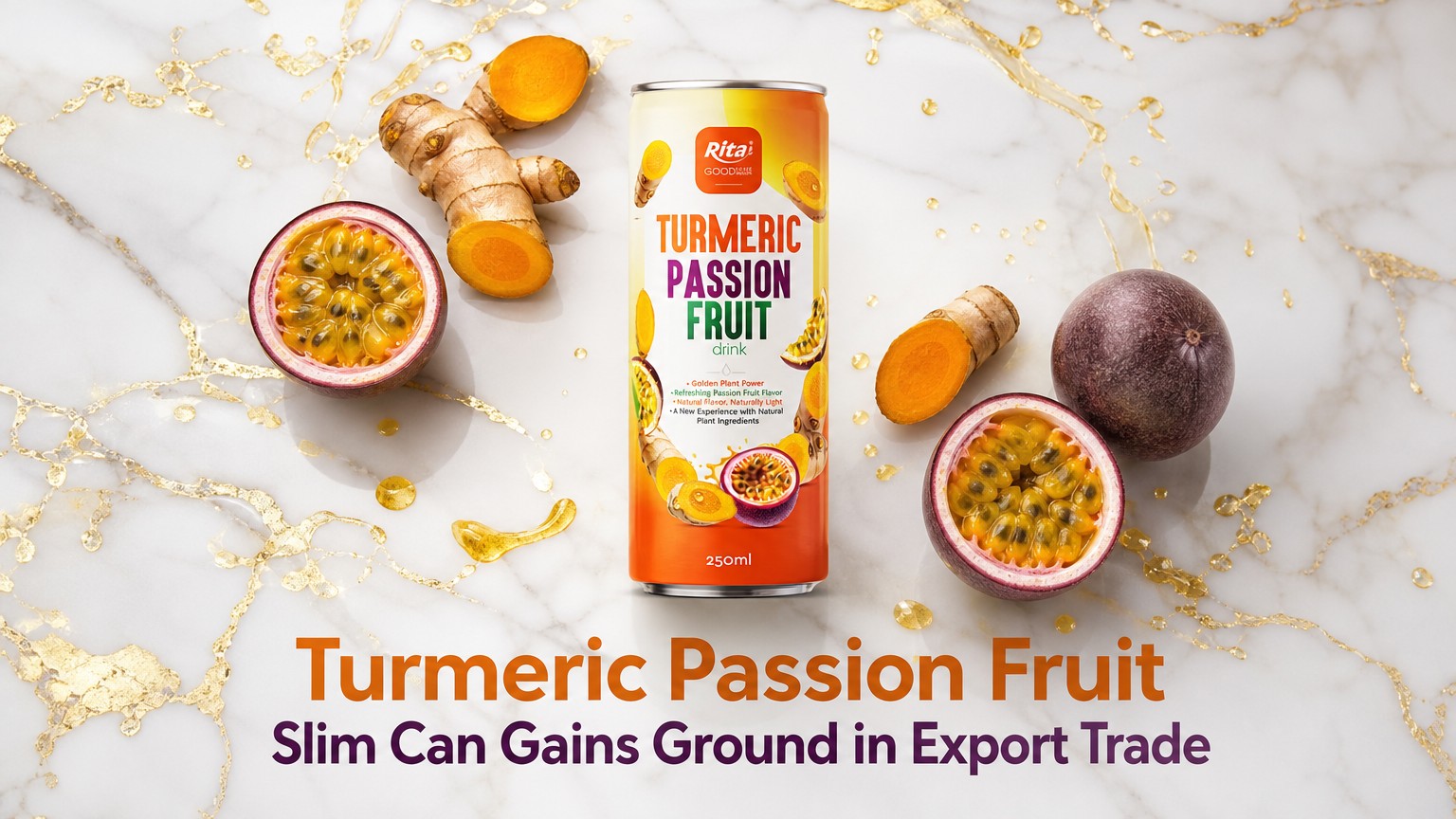
The intersection of turmeric and passion fruit is carving out a distinctive niche in the global beverage export landscape, and the 250ml Turmeric Passion Fruit Drink Slim Can from RITA is a case study in how OEM manufacturers are responding to shifting buyer preferences. As distributors across North America scout for clean-label, low-sugar tropical drinks with strong shelf presence, this slim-can format is drawing attention for its blend of bold flavor, natural sweetening, and recyclable packaging.
Key Takeaways
- Turmeric and passion fruit are emerging as a high-contrast flavor pairing in tropical beverage exports.
- Monk-fruit sweetening and a 10% passion-fruit juice base align with low-sugar buyer specifications.
- The 250ml aluminum slim can suits standard North American retail shelving and vending machines.
- RITA's OEM and private-label capacity spans 200+ countries with major international certifications.
- Export-oriented SKUs benefit from recyclable packaging and clean-label ingredient decks.
Tropical Flavor Pairing Meets Export Demand
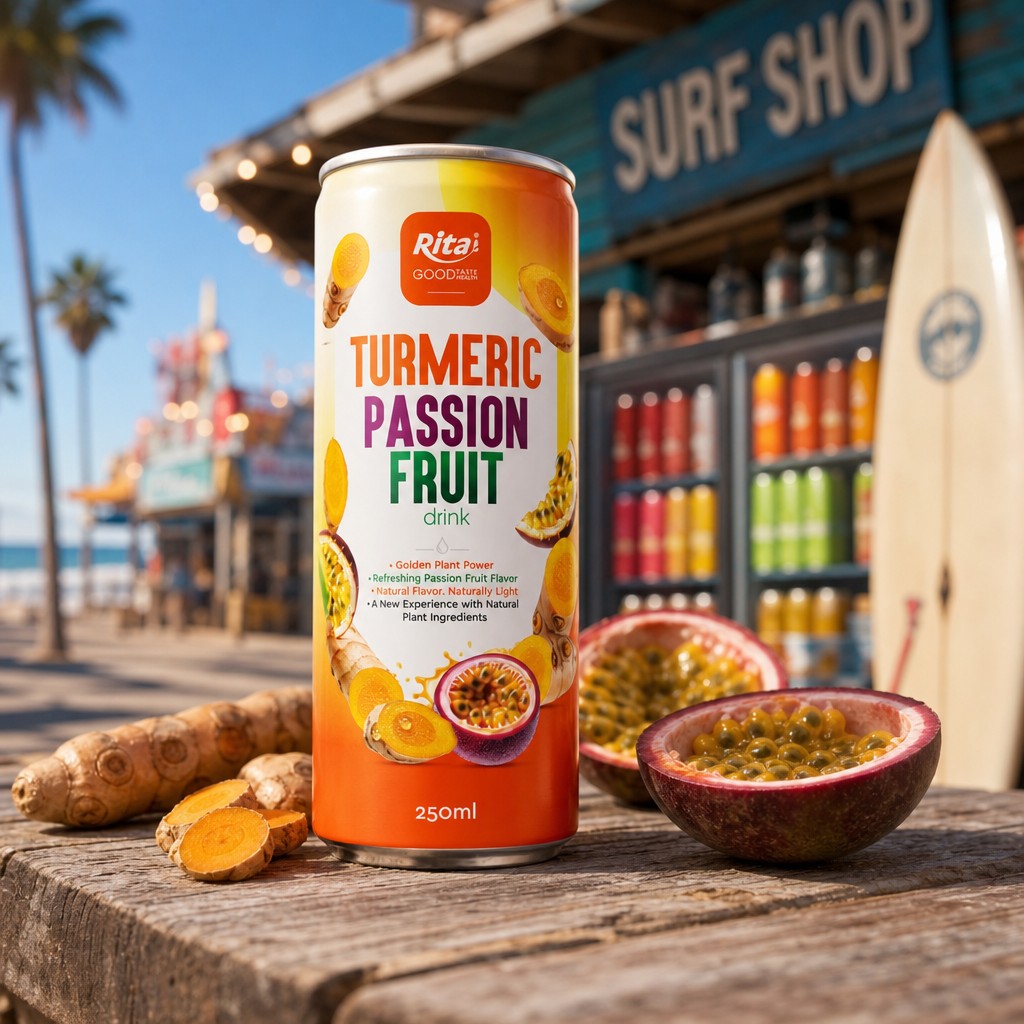
Trade chatter around tropical beverage SKUs has intensified as buyers look beyond mainstream mango and pineapple profiles. Turmeric's earthy, slightly bitter character paired with passion fruit's tart, aromatic punch creates a flavor contrast that stands out on tasting tables and in category reviews.
The 250ml Turmeric Passion Fruit Drink Slim Can delivers this pairing in a format designed for international distribution. Its 10% real passion-fruit juice content provides authentic tartness, while ground golden turmeric contributes the warm, aromatic note that has made the root a staple across global pantries. The combination reads as both familiar and novel, a balance that export buyers frequently cite when shortlisting SKUs for regional launches.
Flavor innovation aside, the formulation story matters just as much to procurement teams. Monk-fruit extract replaces refined sugar, giving the drink a naturally sweet finish without added sugars. Pure water and natural flavor components round out the ingredient list, producing a clean-label profile that aligns with the specifications many North American retailers now require from imported beverages.
Why the Slim Can Format Wins on Shelf
Packaging decisions ripple through the entire export chain, from pallet density to end-consumer perception. The 250ml aluminum slim can addresses both ends of that chain with a compact, lightweight footprint.
- Shelf fit: The slim profile slots into standard North American retail shelving and vending machine coils without custom fixtures.
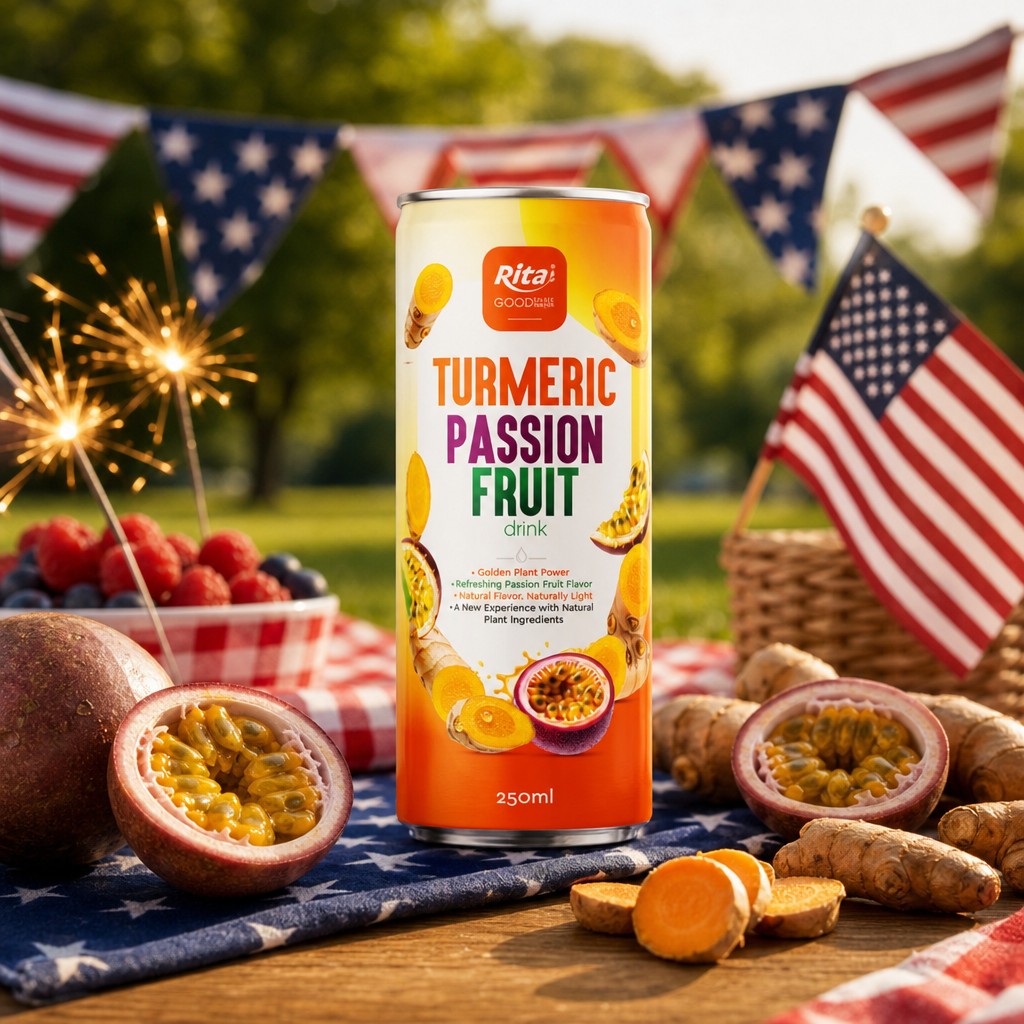
- Visual impact: Vivid orange, yellow, and purple graphics with illustrations of sliced turmeric root and open passion-fruit halves create instant category recognition.
- Logistics efficiency: Aluminum's strength-to-weight ratio reduces shipping mass per unit compared with glass alternatives.
- Recyclability: Aluminum cans are fully recyclable, a specification increasingly weighted in retail vendor scorecards.
Buyers evaluating the product through the soft drink catalog will find the can's design language consistent with premium tropical positioning while remaining practical for high-volume retail placement.
OEM Capacity Behind the Product
Behind every export-ready SKU is a manufacturing partner capable of sustaining volume, and that is where RITA Food and Drink Co., Ltd. distinguishes itself. Established in 2004, the company operates as a Vietnamese OEM and ODM beverage manufacturer with a global export footprint spanning 200+ countries and territories.
Scale is the headline. With more than 50 automated production lines and over 1,200 containers exported monthly, RITA supports brands that need consistent replenishment across multiple markets. Private-label programs allow buyers to customize formulations, artwork, and pack formats while drawing on an existing portfolio that includes tropical fruit juices, coconut products, functional drinks, energy drinks, and more. Packaging options extend across aluminum cans, glass bottles, PET, and PP bottles, giving partners flexibility to match regional channel requirements. The company's OEM service model is detailed at RITA's OEM service page, where brands can review the scope of custom development available.
Certification depth is another export-critical factor. RITA holds BRC, FSSC 22000, Halal Jakim, Halal HCA-GCC, Kosher, ISO, GMP, HACCP, and SMETA credentials, covering the food-safety, religious-compliance, and social-audit requirements that importers and retail chains routinely request during vendor qualification. For a product like the turmeric passion fruit slim can, these certifications shorten the path from sample approval to first shipment.
Private Label Positioning for Retail Buyers
The turmeric passion fruit slim can is built for private-label deployment. Retailers and distributors can adopt the existing formulation and artwork or request modifications that reflect their own brand architecture. The low-sugar, monk-fruit-sweetened recipe meets the clean-label expectations that have become baseline in North American beverage aisles, while the tropical flavor profile gives private-label programs a point of differentiation against commodity soft drinks.
For category managers weighing assortment gaps, the product occupies a useful middle ground: it is not a carbonated soda, not a juice in the traditional sense, but a lightly sweetened tropical drink with a spice-forward twist. That positioning suits grab-and-go coolers, checkout displays, and health-oriented endcaps without requiring retailers to retrain staff on an entirely new category.
From Source to Can, Raw Material Sourcing
Ingredient provenance has become a talking point in export negotiations, and RITA's sourcing network underpins the consistency of its tropical beverage line.
The passion fruit used in this drink originates from RITA's passion fruit gardens in Vietnam's Central Highlands, where sun exposure and volcanic soils shape the fruit's aromatic intensity. Visits to these gardens confirm the ripeness standards and harvest windows that feed the production schedule.
Broader raw-material sourcing is anchored in the Mekong Delta raw-material region, a fertile zone that supplies a range of tropical fruits used across RITA's beverage portfolio. This geographic base gives buyers confidence in year-round supply continuity.
For a closer look at how the passion fruit travels from vine to can, RITA has documented the journey on video: https://www.youtube.com/watch?v=HjYZTn8BZL4
Export Trade Dynamics Shaping Beverage SKUs
The broader beverage trade environment adds context for why SKUs like the turmeric passion fruit slim can are gaining traction. Recent signals from the North American market illustrate how quickly channel dynamics can shift.
Labor Day weekend drove a notable surge in US spirits sales according to NABCA data, a reminder that holiday-driven demand spikes benefit whichever categories are well-positioned at shelf. Non-alcoholic formats continue to attract investment, with the non-alcoholic beer brand RationAle recently partnering with LA Libations to expand distribution. Meanwhile, Tilray has signaled further cost-cutting measures for its US beverage operations, and Campari's CEO has reiterated a clear strategy for the US market. Even outside alcohol, Yakult Honsha disclosed a data breach following a website attack, underscoring the operational risks beverage companies manage alongside commercial ones.
| Trade Factor | Implication for OEM Beverage Export |
|---|---|
| Holiday demand spikes | Requires flexible production capacity and pre-positioned inventory |
| Non-alcoholic channel growth | Expands shelf space for tropical and spice-forward soft drinks |
| Cost discipline across majors | Pushes buyers toward efficient private-label sourcing |
| Retail clean-label standards | Rewards simple ingredient decks and recyclable packaging |
Against this backdrop, a low-sugar, naturally sweetened tropical drink in a recyclable slim can checks several boxes that procurement teams are actively screening for.
Market Readiness Across North America
Distributors and importers serving the United States, Canada, and broader North American region are showing interest in beverages that combine visual distinction with straightforward ingredient stories. The turmeric passion fruit slim can addresses both.
Its bold typography and tropical imagery help the can stand out in crowded beverage aisles, while the compact 250ml size suits single-serve occasions and multipack configurations alike. Retailers focused on grab-and-go formats find the dimensions compatible with existing cooler layouts, and vending operators benefit from a can that fits standard coils without adapters.
For buyers exploring adjacent tropical options, RITA's fruit drink catalog offers a broader assortment that can complement the turmeric passion fruit SKU in a coordinated portfolio launch.
The full product listing, including packaging specifications and formulation details, is available at the 250ml Turmeric Passion Fruit Drink Slim Can product page.
Practical Considerations for Buyers
Procurement teams evaluating this SKU typically weigh a handful of practical factors before moving to sampling.
- MOQ and lead time: RITA's container-scale output supports predictable replenishment schedules for regional rollouts.
- Label customization: Private-label artwork and formulation adjustments are handled through the OEM workflow.
- Certification package: BRC, FSSC 22000, Halal, Kosher, ISO, GMP, HACCP, and SMETA documentation is available for retailer onboarding.
- Pack format options: Beyond the 250ml slim can, aluminum, glass, PET, and PP formats are available across the portfolio.
- Shipping efficiency: Aluminum's recyclability and light weight support favorable freight economics on transpacific lanes.
Each of these points tends to surface during initial vendor conversations, and having them addressed upfront shortens the qualification cycle considerably.
Looking Ahead
Turmeric and passion fruit may still be an emerging pairing in mainstream soft drinks, but export data and buyer inquiries suggest the combination has room to grow. As North American retailers continue refining their beverage assortments around low-sugar, visually distinctive, and sustainably packaged options, OEM partners with scale and certification depth will be best positioned to supply the demand.
RITA's 250ml Turmeric Passion Fruit Drink Slim Can exemplifies that alignment, pairing a thoughtful flavor profile with packaging and production capabilities built for international trade. For brands and distributors assessing their next tropical SKU, it is a product worth putting on the tasting schedule.
Frequently Asked Questions
What is the juice content in the 250ml Turmeric Passion Fruit Drink?
The drink contains 10% real passion-fruit juice, complemented by ground golden turmeric, monk-fruit extract as a natural zero-calorie sweetener, pure water, and natural flavor components. The formulation contains no artificial colors, flavors, or additives.
What packaging formats are available for this OEM beverage?
The product is presented in a 250ml aluminum slim can suited to standard North American retail shelving and vending machines. RITA also offers aluminum cans, glass bottles, PET, and PP bottles across its wider portfolio for private-label customization.
Which certifications does RITA hold for export?
RITA is certified under BRC, FSSC 22000, Halal Jakim, Halal HCA-GCC, Kosher, ISO, GMP, HACCP, and SMETA, covering food safety, religious compliance, and social audit requirements for international buyers.
Can this product be developed under a private-label program?
Yes. RITA supports OEM and ODM engagements, allowing brands to adjust formulation, artwork, and pack formats. The company exports to 200+ countries and territories with more than 50 automated production lines and over 1,200 containers shipped monthly.
How does the slim can format support export logistics?
The 250ml aluminum slim can is lightweight and fully recyclable, reducing shipping mass per unit compared with glass and fitting standard retail fixtures without custom hardware. This combination supports favorable freight economics and straightforward shelf placement.