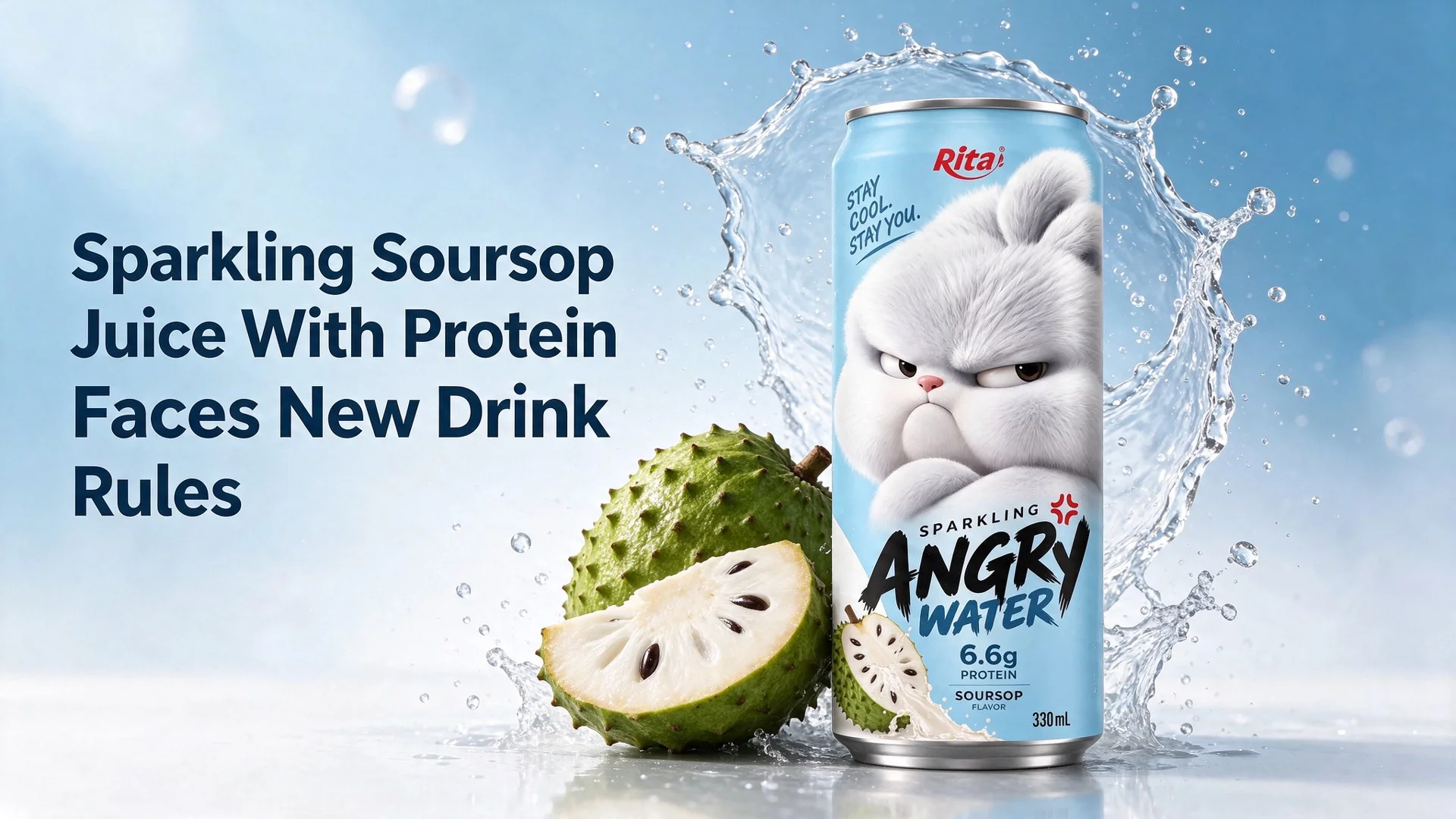
Regulatory pressure is building across the beverage industry as governments weigh new tax categories, tighter advertising rules and stricter front-of-pack expectations. Into that environment steps sparkling soursop juice with protein, a 330 mL carbonated drink from RITA Food and Drink Co., Ltd. that blends tropical soursop flavor with 6.6 grams of protein per can under the Angry Water label. The launch shows how policy debate, packaging design and sourcing transparency now converge into a single go-to-market decision for drink brands and retail buyers.
Key Takeaways
- Tax expansion proposals and advertising restrictions in several markets are forcing beverage brands to revisit positioning and label claims before launch.
- The Angry Water can puts 6.6 g of protein on the front label, catering to shoppers who scan packaging in seconds.
- A 24-month ambient shelf life removes cold-chain requirements, simplifying warehousing and distribution for regional retailers.
- RITA runs more than 50 automated production lines and holds BRC, FSSC 22000, Halal, Kosher, ISO, GMP, HACCP and SMETA certifications.
- Soursop sourcing is traceable to the company's own raw material area, giving buyers a documented origin narrative.
Sparkling Soursop Juice With Protein Enters the North American Shelf
Retail buyers across the United States and Canada are encountering a can that does not look like the rest of the sparkling water aisle.
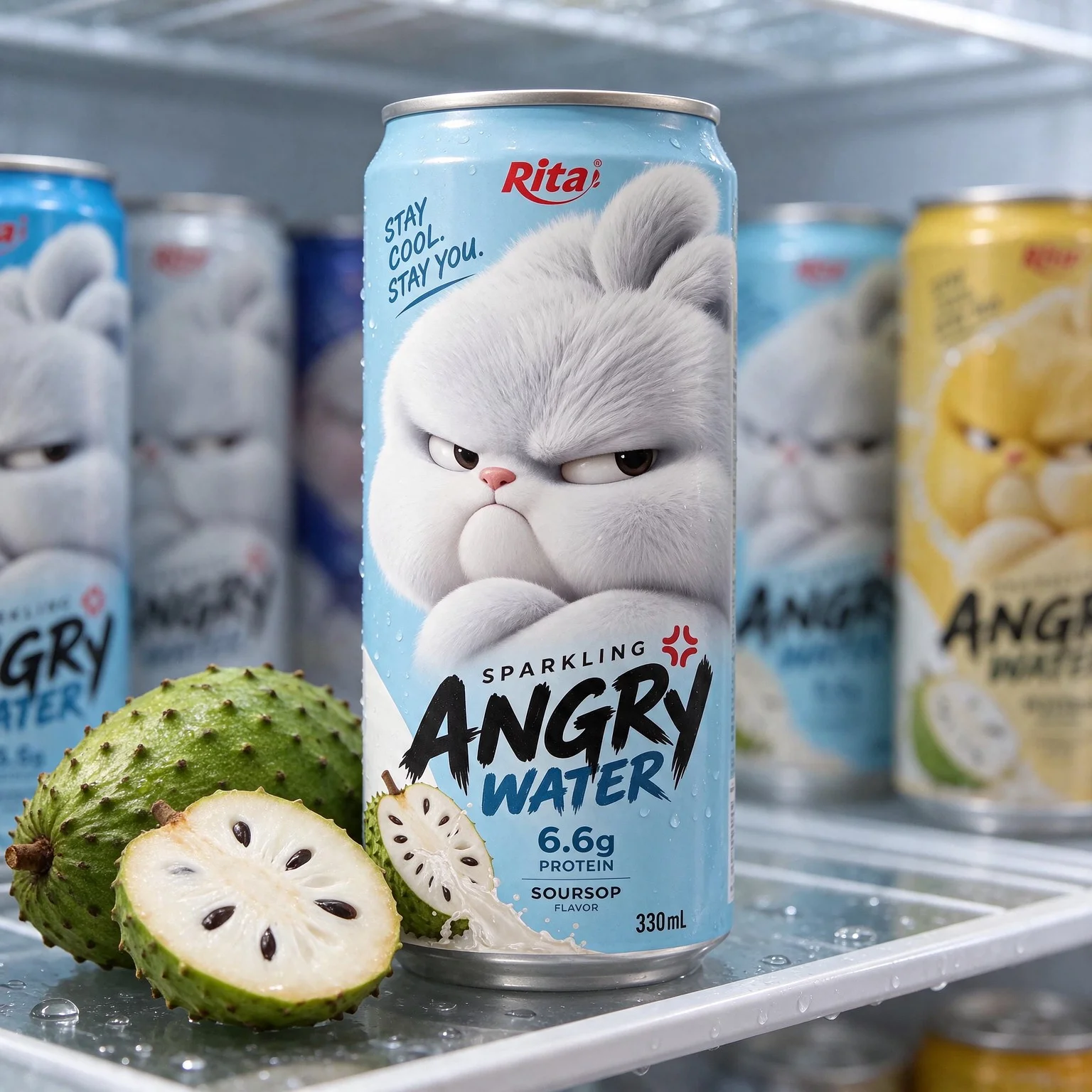
The sparkling soursop juice with protein ships in a slim 330 mL aluminum can with a silver rim, a sky-blue body, bold hand-drawn ANGRY lettering and a grumpy white cat mascot. The tagline Stay Cool. Stay You. anchors a personality-driven identity that sits deliberately loud next to the muted pastels common in the category. Packaging was built for strong shelf visibility and quick chilling, a practical detail for convenience-store coolers where decisions happen in seconds.
Inside, carbonated water, soursop juice concentrate, added protein and natural flavors deliver a tropical taste with a creamy, smooth finish and a crisp, effervescent mouthfeel. The recipe separates the soursop protein drink from mainstream citrus and berry sparkling waters by leaning into a fruit most North American shoppers still associate with Caribbean and Southeast Asian desserts rather than soda.
Why the front label carries the protein claim
Protein content has become a scanning cue rather than a talking point. Shoppers read the front of the can first, so a clear gram count does more work than a paragraph of copy.
Angry Water prints 6.6 g where it can be seen through a cooler door, next to the flavor name and the volume. Because the figure is quantitative and sits beside the serving size, it survives reformulation discussions and packaging refreshes without requiring a new narrative. For retailers building comparisons across a planogram, that kind of consistency is genuinely useful.
Category context matters as well. The carbonated drinks lineup on ritadrinks.us now spans fruit-forward sparkling options, letting buyers test tropical profiles alongside familiar lemon and berry variants while the regulatory conversation continues.
Regulatory and Tax Debates Reshape Beverage Launch Strategies
Policy debate is no longer a background concern for drink manufacturers; it now shapes timelines, formulas and media plans.
In Europe, the spirits sector has publicly criticized a government plan to widen the Ready-to-Drink tax as rushed, arguing that the category has become a growth engine for smaller producers and that an abrupt levy would distort pricing across formats. The dispute reaches well beyond distilled spirits, because RTD cans increasingly share cooler space and consumer attention with non-alcoholic sparkling drinks. When a tax line is redrawn, buyers start asking which side of it their next purchase order falls on.
Ready-to-Drink tax expansion draws industry criticism
The objection centers on process as much as on rate. Producers say consultation was too short to model effects on packaging, contract filling and export pricing.
They also warn that a hasty rule would ripple through shared filling slots used by multiple categories at once. For brands planning launches, the lesson is procedural: build regulatory review into the product brief instead of treating it as a final compliance check. Teams that model tax scenarios early can defend a price point rather than absorb it later.
The same questions surface in any sparkling beverage tax policy debate, whether the trigger is a sugar levy, a can-size threshold or a flavor-based surcharge. A 330 mL can is a common reference unit across markets, which makes it a natural anchor when legislators discuss tiered taxation by volume. Brands that can state volume, ingredient list and claim structure precisely respond faster when rules shift.
Advertising oversight widens beyond alcohol
Australian media regulators have pressed television networks to limit alcohol advertising during sports broadcasts, a signal that placement is becoming regulated territory rather than a purely editorial choice.
Non-alcoholic sparkling brands that sponsor teams or festivals should expect questions about audience composition and time slots. Commercial pressure compounds the regulatory one. Asahi has warned that its Europe and Asia Pacific divisions are tracking below plan for the current fiscal year, and when large players flag softness, retailers renegotiate terms while buyers hunt for products with defensible margins. A distinctive can with a clear protein figure and a tropical story is easier to defend in a line review than a generic sparkling water.
Supply chains carry their own exposure. Analyst commentary on the recent Microsoft outage highlighted vulnerabilities in digital identification and order systems, showing that documentation failures can stall shipments as effectively as a customs dispute.
Utility rules belong to the same picture. Trade coverage of waste heat recovery in food and beverage plants shows how efficiency investments are increasingly framed as compliance measures rather than pure cost savings, and manufacturers that document energy performance gain ground when buyers apply environmental criteria to a supplier scorecard.
For retail buyers, a practical checklist before the next category review:
- Confirm which tax tier applies to the format and volume of the can in each destination market.
- Verify that front-of-pack claims match the nutrition panel and the certificate of analysis.
- Check that sponsorship and advertising plans respect placement rules for the relevant audience.
- Request current copies of food safety and social compliance certifications.
- Ask how documentation is archived in case of customs holds or platform outages.
From the Soursop Orchard to the Can
Origin stories have become a due-diligence item rather than a marketing extra, and buyers now ask for field records early.
The soursop behind the drink traces to the company's own growing area. Documentation of the soursop raw material area at Song Hau farm explains how fruit is selected, handled and moved into processing, giving importers a traceable line from field to can. For teams preparing supplier questionnaires, that record shortens the audit conversation considerably.
Field footage from the same origin offers a visual reference for merchandising and quality teams alike: https://www.youtube.com/watch?v=9K3pYlvemOU
Sourcing control also protects flavor consistency. Soursop varies in sweetness and acidity with ripeness, so a documented harvest and intake process helps keep the creamy tropical profile stable across production runs. Buyers planning multi-container programs generally ask for that stability in writing before committing to annual volumes.
Export Readiness and Market Outlook for Retail Buyers
Scale, certification depth and lead time decide whether a promising can turns into a repeat order for a retail chain.
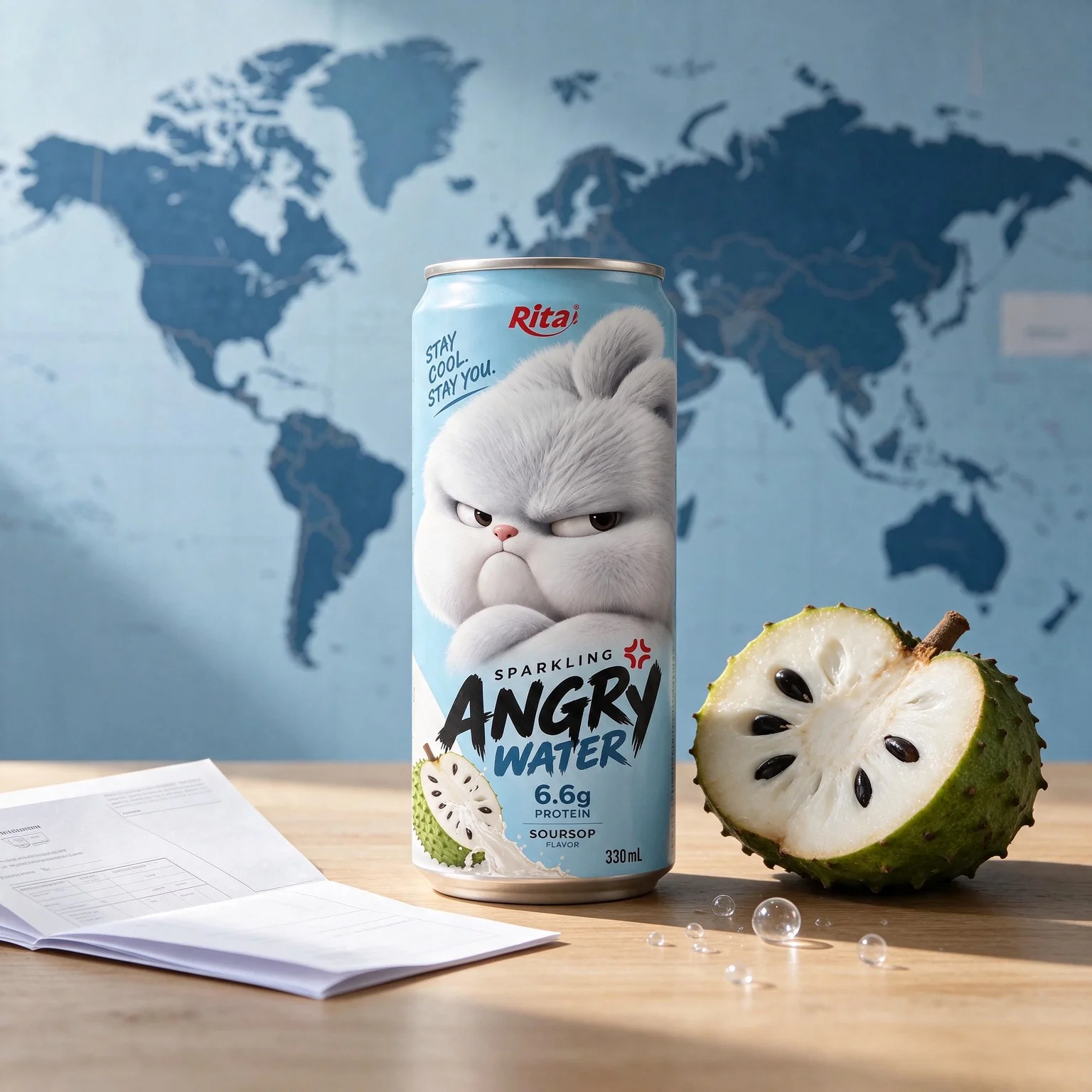
Established in 2004, RITA Food and Drink Co., Ltd. operates as an OEM and ODM beverage manufacturer with more than 50 automated production lines and monthly exports exceeding 1,200 containers, supplying brands in more than 200 countries and territories. The Sparkling Soursop Juice With Protein 330ml product page lists full specifications for the Angry Water format, including volume and protein content, while the adjacent fruit drink range gives buyers a non-carbonated reference for the same shelf.
Shelf-life economics deserve attention in any launch model. A 24-month ambient shelf life lets the product move through standard warehousing without refrigerated storage, which lowers holding costs and makes promotional timing more forgiving. For a slim aluminum can, pallet configurations also stay predictable across distribution centers.
Certification depth is the other half of readiness. The product is manufactured under BRC, FSSC 22000, Halal Jakim, Halal HCA-GCC, Kosher, ISO, GMP, HACCP and SMETA frameworks, alongside FDA registration that supports carbonated drink export to the United States. Retailers that require third-party audits usually recognize these schemes without translation work, which removes weeks from supplier approval.
Private Label Pathways and What Buyers Should Verify
Private label demand keeps climbing as retailers look for shelf differentiation without building a brand from scratch.
A certification stack that shortens review cycles
RITA's beverage OEM services cover formulation, packaging selection across aluminum cans, glass, PET and PP, and export documentation under one roof, which keeps a private label brief inside a single conversation.
Buyers can start from an existing recipe such as the Angry Water sparkling soursop juice with protein profile or brief a new tropical variant, then choose a format that fits their cooler footprint. Because the major food safety and social compliance certifications already sit in place, the company can act as a private label beverage manufacturer with a shorter approval path than most new entrants. Retail teams often compress weeks of qualification work when the certificate stack arrives with the first proposal.
Capacity deserves an early question. With more than 50 automated lines and a monthly supply capacity reported at 600 twenty-foot containers for selected programs, the operation can support national rollouts as well as regional pilots. That range lets a buyer test one flavor in a single chain before expanding.
Practical questions to put to a supplier during the first call:
- Which certification covers the specific site that will fill the order?
- How are lot codes and production dates applied to the 330 mL can?
- What are lead times for artwork approval and first shipment?
- Can the protein figure and flavor name be adapted for a private-label front label?
- Which documents travel with each container for customs clearance?
For teams evaluating the format directly, the Angry Water 330ml can listing brings images, volume and ingredient detail into one place, a useful starting point before samples go out for a shelf test.
Frequently Asked Questions
What is Sparkling Soursop Juice With Protein by Angry Water?
It is a 330 mL carbonated drink made from carbonated water, soursop juice concentrate, added protein and natural flavors, produced by RITA Food and Drink Co., Ltd. and sold under the Angry Water label with a sky-blue can and a white cat mascot.
How much protein does each can contain?
Each 330 mL can delivers 6.6 grams of protein, a figure printed on the front label next to the soursop flavor name and the volume statement.
What is the shelf life of the Angry Water 330ml can?
The product carries a 24-month ambient shelf life and does not require a cold chain, which simplifies storage and distribution planning for retailers.
Which certifications support export of this product?
Production runs under BRC, FSSC 22000, Halal Jakim, Halal HCA-GCC, Kosher, ISO, GMP, HACCP and SMETA frameworks, with FDA registration covering shipments into the United States.
Can the product be produced under a private label?
Yes. RITA offers OEM and ODM programs covering formulation, packaging formats and export documentation, so buyers can adapt the soursop profile or brief an entirely new variant.