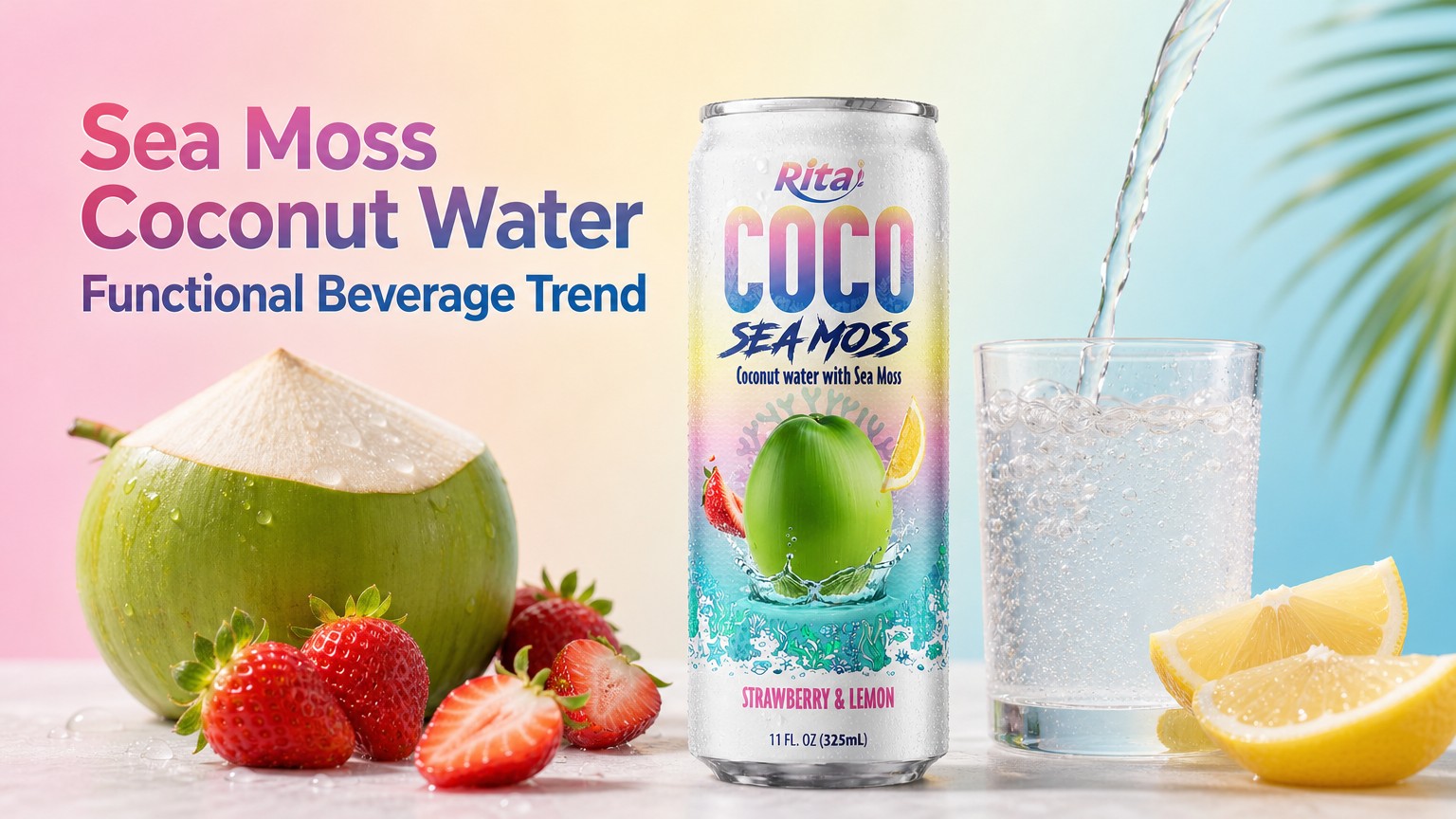
The functional beverage category continues to evolve at a remarkable pace, and one of the most closely watched developments in recent months is the rise of sea moss coconut water as a mainstream retail offering. Combining the naturally hydrating profile of young coconut water with mineral-rich sea moss extract, these drinks are attracting attention from buyers, distributors, and private-label partners across North America. The Coco Sea Moss Coconut Water with Strawberry and Lemon Flavor, offered in a 325ml sleek can by RITA, exemplifies how manufacturers are responding to consumer demand for convenient, ingredient-transparent refreshments.
Key Takeaways
- Sea moss-infused coconut water represents a fast-growing sub-segment within the broader functional beverage market.
- Consumers are gravitating toward low-calorie, minimally processed drinks with recognizable ingredient lists.
- Sleek aluminum cans are increasingly preferred for portability, shelf stability, and recyclability.
- Established OEM/ODM manufacturers like RITA are scaling production to meet North American demand.
- Private-label opportunities in the coconut water category are expanding for retailers and distributors.
Functional Beverages Reshape Retail Shelves Across North America
Functional beverages have moved well beyond niche health stores and into mainstream grocery aisles, c-stores, and online marketplaces throughout the United States and Canada. Shoppers are reading labels more carefully than ever, and the shift toward drinks with short, recognizable ingredient lists is unmistakable. Coconut water, long a staple of the natural beverage set, has found new momentum when paired with trending additions like sea moss extract, botanical infusions, and fruit-forward flavor profiles.
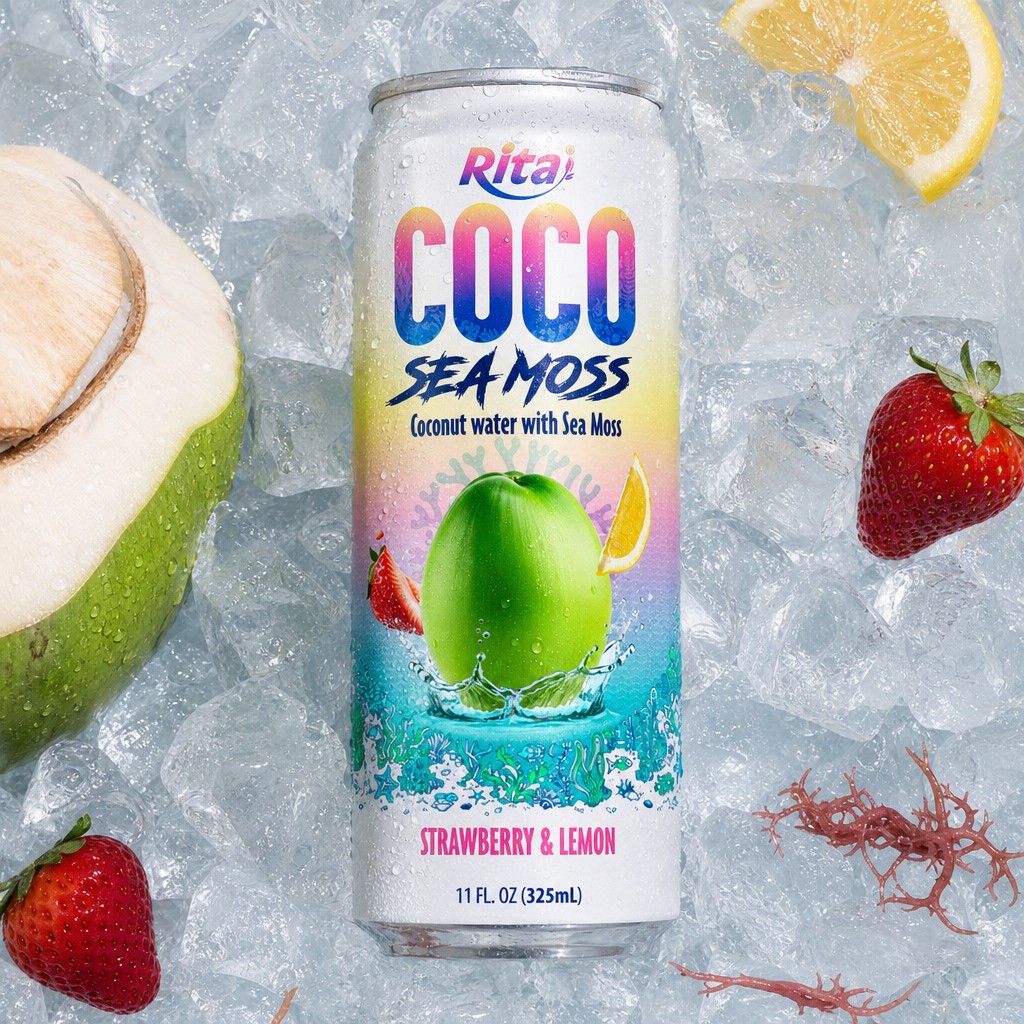
The Coco Sea Moss Coconut Water with Strawberry and Lemon Flavor is a case in point. Its formulation pairs 80% pure young coconut water with natural strawberry and lemon juices, a measured dose of sea moss extract, and plant-derived colorants from beetroot and hibiscus. Sweetened with sucralose and free of artificial flavors, the drink delivers a bright, crisp taste experience at approximately 65 calories per 325ml can.
Why Coconut Water Continues to Command Attention
Coconut water remains one of the most versatile bases in the beverage industry. Its naturally occurring electrolyte profile and clean taste make it an appealing canvas for flavor innovation. Manufacturers have layered everything from turmeric and ginger to hibiscus and sea moss onto the coconut water platform, and retailers report strong repeat purchase rates for these extended variants. The category's resilience through shifting consumer preferences speaks to the enduring appeal of the core ingredient.
For brands looking to differentiate, the addition of sea moss introduces a story element that resonates with wellness-minded shoppers. Sea moss, a red algae harvested from coastal waters, has gained significant visibility on social platforms and in specialty retail. Its inclusion in a coconut water format gives consumers a familiar delivery vehicle for an ingredient they have already encountered in powders, capsules, and gummies.
Sleek Can Packaging Meets Modern Consumption Habits
Packaging plays an outsized role in purchase decisions, and the 325ml sleek aluminum can format has emerged as a favorite among on-the-go consumers. The slim profile fits comfortably in cup holders, lunch bags, and gym totes, while the light-tight, airtight construction preserves product quality for up to 24 months. Aluminum's recyclability also aligns with the sustainability expectations that increasingly influence buying behavior in the North American market.
For retailers, the sleek can translates into efficient shelf utilization. Cases stack cleanly, facings are visually consistent, and the tall, narrow silhouette stands out against bulkier PET bottles. Distributors appreciate the weight advantage during shipping, which reduces freight costs per unit compared to glass alternatives. These practical considerations, paired with consumer preference, are accelerating the shift toward cans in the premium water and functional drink segments.
Ingredient Transparency Drinks Formulation Choices
Modern beverage consumers treat ingredient panels as decision-making tools. They scan for artificial additives, excessive sweeteners, and unrecognizable chemical names, and they reward brands that keep formulations short and legible. This scrutiny has pushed manufacturers to rethink recipes and to source colorants, flavors, and functional additions from recognizable botanical sources.

The Coco Sea Moss Coconut Water formulation reflects this shift directly. Beetroot and hibiscus extracts provide the drink's color, replacing synthetic dyes that have fallen out of favor with label-conscious shoppers. Strawberry and lemon juices contribute natural flavor depth, while the sea moss extract is included at a deliberate 0.08% concentration that supports the ingredient story without overwhelming the palate. The result is a layered taste profile: initial strawberry sweetness, a citrus lift from the lemon, and a subtle mineral undertone from the sea moss.
Low-Calorie Positioning Without Sacrificing Flavor
Calorie count remains a primary filter for many shoppers, particularly in the ready-to-drink segment where single-serve formats invite frequent consumption. At 20 kcal per 100ml, this coconut water variant sits comfortably within the low-calorie band while still delivering a satisfying flavor experience. The use of sucralose rather than sugar enables the sweetness level consumers expect without the caloric load.
This positioning opens doors in several retail contexts. Fitness-oriented outlets, workplace micro-markets, and airline amenity programs all prioritize lower-calorie options. For private-label partners, the calorie profile simplifies marketing claims and aligns with the nutritional messaging already established across their beverage portfolios.
Balancing Novelty and Familiarity in Flavor Development
Flavor innovation in coconut water follows a delicate balance. Consumers want novelty, but they also want a taste they can predict and enjoy repeatedly. Strawberry and lemon are among the most universally recognized fruit flavors, and pairing them with coconut water creates a profile that feels both new and approachable. The sea moss undertone adds a layer of intrigue without introducing the polarizing notes that more adventurous botanicals can carry.
Market data suggests that fruit-forward combinations continue to outperform experimental pairings in mainstream retail. Buyers at national chains report that strawberry-lemon variants consistently rank among the top performers in flavored water and coconut water sets, making this particular combination a strategically sound choice for broad distribution.
From Coconut Groves to Cans, Sourcing Sets the Standard
Raw material quality underpins everything in the beverage supply chain, and coconut water is no exception. The freshness of the young coconut at the time of processing directly influences the taste, clarity, and overall character of the finished drink. Manufacturers with direct access to established growing regions maintain tighter control over these variables than those relying on spot-market sourcing.
RITA's supply chain traces its coconut water back to the Ben Tre coconut farm in Vietnam's Mekong Delta, a region long recognized for producing consistent, high-quality raw materials. The plantation-to-product journey ensures that coconuts are harvested at peak maturity and processed promptly, preserving the clean, mildly sweet character that defines the base of this drink.
Beyond coconut, the strawberry and lemon components are sourced through a broader network of growing regions. RITA maintains relationships across the Mekong Delta's diverse fruit farming landscape, which supplies a range of tropical and subtropical ingredients used across its beverage portfolio. This integrated sourcing model supports consistent flavor profiles from batch to batch.
For a closer look at the growing conditions and harvest practices behind these ingredients, the following video offers an inside view of RITA's coconut sourcing operations:
https://www.youtube.com/watch?v=I7hlTL3FT_0
Manufacturing Scale Meets Export Expertise
Behind every can on a retail shelf is a manufacturing operation capable of delivering volume, consistency, and compliance. RITA Food and Drink Co., Ltd., established in 2004, has grown into one of the region's leading OEM/ODM beverage manufacturers, operating more than 50 automated production lines and exporting over 1,200 containers monthly to brands in more than 200 countries and territories. The company's portfolio spans tropical fruit juices, coconut products, functional drinks, energy beverages, and more, packaged across aluminum cans, glass bottles, PET, and PP formats.
Quality assurance runs through every stage of production. RITA holds BRC, FSSC 22000, Halal Jakim, Halal HCA-GCC, Kosher, ISO, GMP, HACCP, and SMETA certifications, providing the documentation and process rigor that North American buyers require. For retailers and brands evaluating private-label partners, this certification stack reduces onboarding friction and accelerates time to shelf.
Private Label and OEM Opportunities in the Coconut Water Space
The coconut water category presents a particularly attractive canvas for private-label development. Retailers can differentiate their house brands with unique flavor combinations, packaging formats, and positioning while leaning on an established manufacturer's production capacity and regulatory expertise. RITA's OEM service model supports this approach, allowing partners to specify formulations, packaging, and labeling within a framework that meets international standards.
Distributors exploring the category can also leverage RITA's coconut products catalog to build multi-SKU offerings that span plain coconut water, flavored variants, and coconut-based blends. This breadth simplifies assortment planning and strengthens negotiating position with retail buyers.
For buyers specifically interested in the featured product, the Coco Sea Moss Coconut Water with Sea Moss Strawberry and Lemon Flavor is available for review with full specifications, ingredient details, and packaging information.
Export Readiness for North American Distribution
Entering the North American market requires more than a compelling product. Import documentation, shelf-life validation, labeling compliance, and cold-chain or ambient logistics all factor into a successful launch. RITA's export infrastructure, refined over two decades of shipping to demanding markets, addresses these requirements as a matter of standard practice rather than exception handling. The 24-month shelf life enabled by the light-tight aluminum can simplifies inventory planning for distributors and reduces write-off risk for retailers. Products can be staged in regional warehouses without the urgency that shorter-lived formats impose, giving partners greater flexibility in promotional timing and assortment rotation.
Where the Category Goes Next
The trajectory of sea moss coconut water will likely be shaped by three converging forces: continued consumer interest in mineral-rich botanicals, retailer appetite for differentiated functional offerings, and manufacturer willingness to innovate within established coconut water frameworks. Each of these forces is strengthening, suggesting that the category has room to expand well beyond its current footprint.
For brands and retailers, the strategic implication is clear. Early movers in the sea moss coconut water space can establish shelf presence and consumer recognition before the segment becomes crowded. The combination of a recognizable base ingredient, a trending botanical addition, and a convenient single-serve format creates a proposition that is easy to merchandise and straightforward to communicate.
The Coco Sea Moss Coconut Water in its 325ml sleek can represents one such opportunity, backed by a manufacturer with the scale, certifications, and export experience to support sustained North American distribution.
Frequently Asked Questions
What is sea moss coconut water?
Sea moss coconut water is a beverage that combines young coconut water with an extract of sea moss, a red algae. The Coco Sea Moss Coconut Water with Strawberry and Lemon Flavor blends 80% pure young coconut water, natural strawberry and lemon juices, and 0.08% sea moss extract in a 325ml sleek can.
How many calories are in a 325ml can?
The drink contains approximately 20 kcal per 100ml, which works out to roughly 65 kcal per 325ml can. It is sweetened with sucralose rather than sugar and contains no artificial flavors.
What flavors are available?
The featured variant combines strawberry and lemon flavors with coconut water and sea moss extract. The strawberry provides sweetness while the lemon adds a citrus lift, with a subtle mineral undertone from the sea moss.
Who manufactures this product?
The product is manufactured by RITA Food and Drink Co., Ltd., an OEM/ODM beverage producer established in 2004 that operates more than 50 automated production lines and exports to over 200 countries and territories. The company holds BRC, FSSC 22000, Halal, Kosher, ISO, GMP, HACCP, and SMETA certifications.
Is the product available for private label?
Yes. RITA offers OEM and ODM services that allow retailers and brands to develop private-label beverage programs, including coconut water variants, using the company's existing production capacity and quality systems.