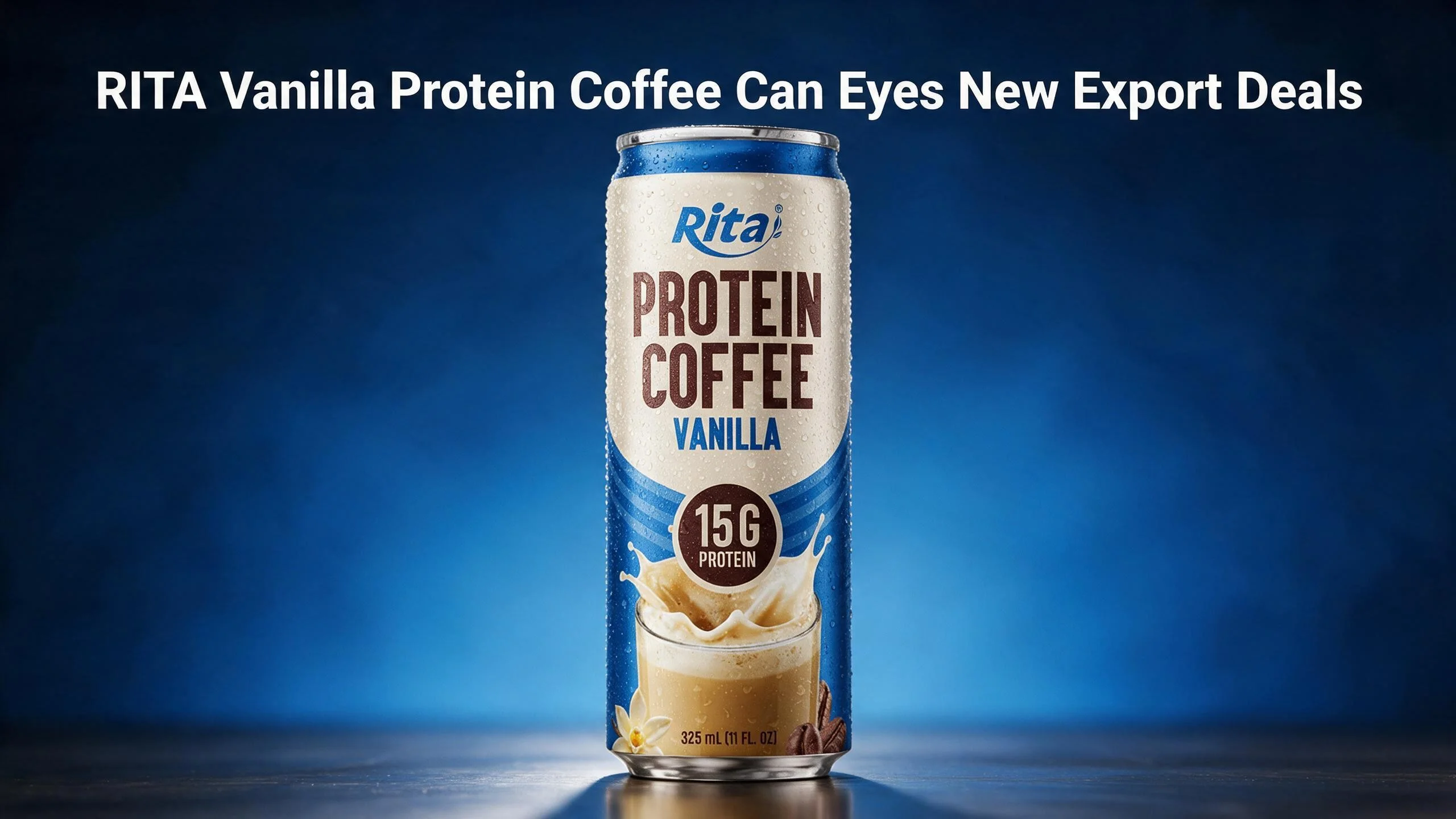
The ready-to-drink coffee aisle is absorbing a new format at speed, and RITA Vanilla Protein Coffee arrives as the category reorganizes around convenience-led formats. Packaged as a 325ml slim aluminum can delivering 15 grams of protein alongside coffee and natural vanilla flavor, the SKU sits exactly where canned coffee and protein beverages now overlap on shelf. For buyers, distributors and private-label operators evaluating trade opportunities across the United States and Canada, the format matters as much as the flavor, because it collapses preparation time into a single pull-tab.
Key Takeaways
- RITA Vanilla Protein Coffee delivers 15g of protein in a 325ml slim can, built for on-the-go consumption occasions.
- The can is produced by RITA Food and Drink Co., Ltd., an OEM/ODM beverage manufacturer exporting to more than 200 countries and territories.
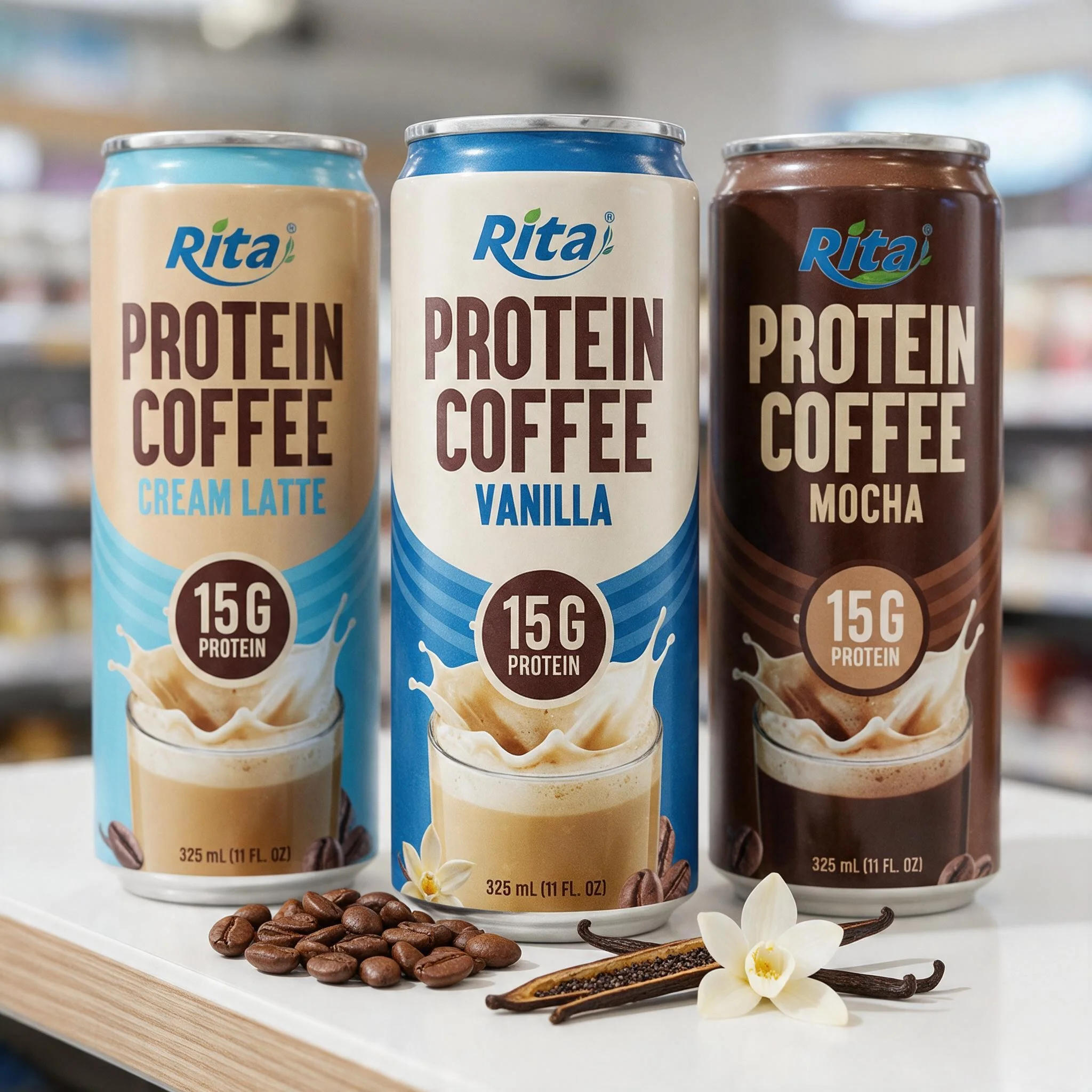
- Color-coded packaging and a prominent "15G PROTEIN" badge give retailers clear shelf differentiation across the flavor range.
- Certifications spanning BRC, FSSC 22000, ISO, HACCP, Halal and Kosher support import documentation requirements in regulated markets.
- Wholesale and private-label programs give North American distributors a route to range protein coffee without production investment.
Why North American Buyers Are Watching Protein Coffee
Two once-separate aisles are converging, and the protein coffee can is where they meet.
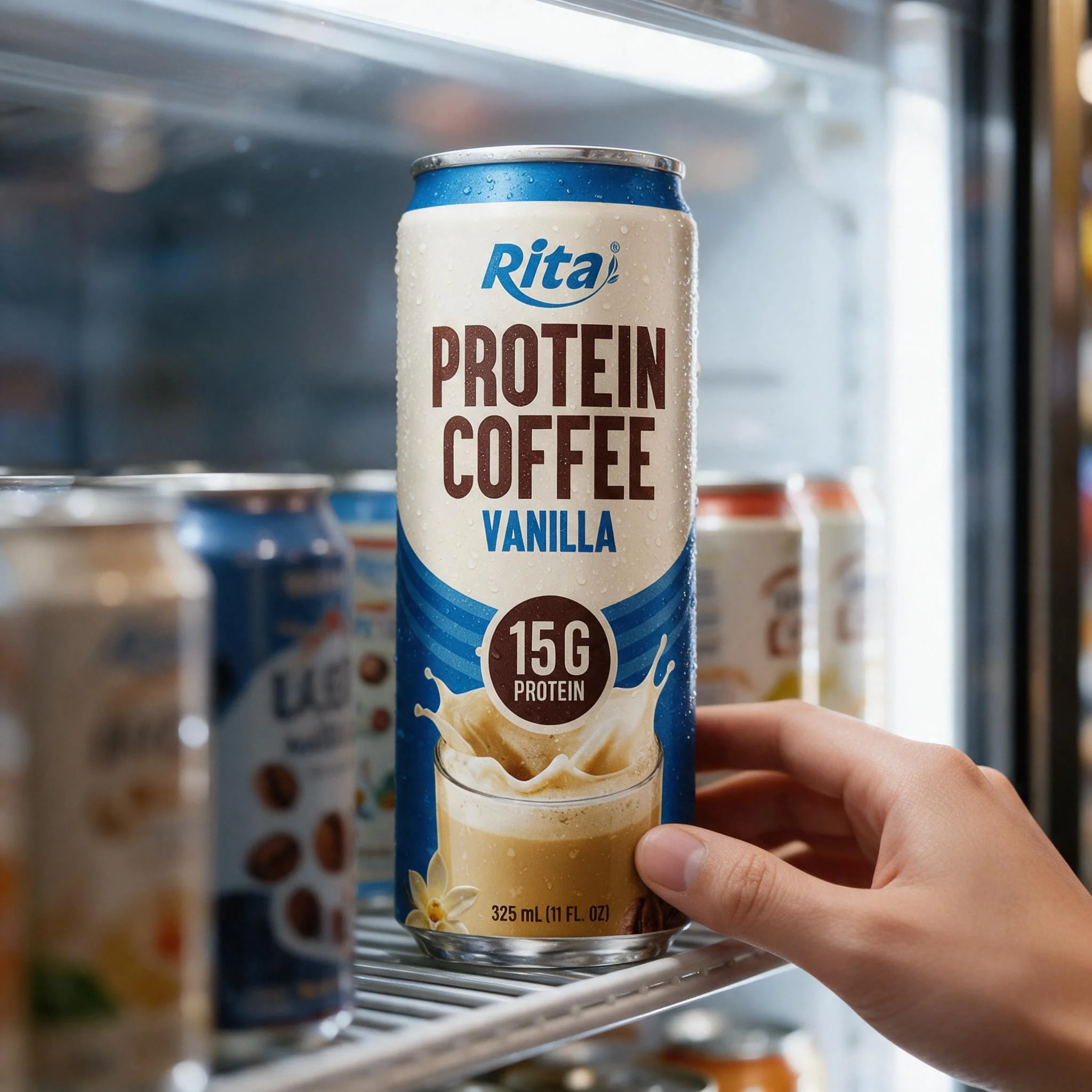
Industry reporting through recent quarters has repeatedly flagged protein beverages as one of the few sub-categories attracting genuinely fresh capital. Del Monte's decision to invest in the Canadian protein-shake brand Good Protein is a telling data point: established food companies are buying their way into protein formats rather than building them from scratch. Coffee brands have taken notice, and ready-to-drink coffee producers are responding with formulations that pair a familiar caffeine ritual with a measurable protein count printed on the front label.
North American buyers feel the pull first. Convenience-store operators, grocery category managers and e-commerce sellers describe the same shopper behaviour: the decision is made in seconds, in front of the cooler door, based on what the can communicates before it is even picked up. A clear protein number, a recognizable flavor name and a format that fits a cupholder do most of the work.
The result is a shelf that increasingly rewards products designed for rapid comprehension. This is where vanilla protein coffee variants perform well, because vanilla is a broadly recognized flavor cue across age groups and retail channels, requiring no explanation at point of sale and no education campaign behind it.
A Format Built for Convenience-Driven Shoppers
The 325ml volume is deliberate. It is large enough to register as a substantial drink, small enough to chill quickly and ship efficiently, and it matches the portion size shoppers already associate with canned coffee in North American retail.
Readiness is the second half of the proposition. There is no shaker bottle, no powder scoop and no mixing step, which makes the format a natural fit for fuel stations, hotel pantries, workplace coolers and vending machines. For operators, that removes an entire category of preparation equipment and staff training from the equation.
Stability inside a sealed aluminum can also simplifies distribution planning. Product moves through warehouse and last-mile channels without cold-chain complexity until the point of consumption, an attribute that matters when shipments are consolidated across long routes and multiple distribution centers.
Flavor Range and Shelf Presentation of RITA Vanilla Protein Coffee
The vanilla variant anchors a three-flavor lineup that also includes Cream Latte and Mocha. Each can carries its own color signature, with a bright blue top rim and silver base for vanilla, vanilla flower and coffee bean artwork, and a frothy coffee glass image wrapped around the lower panel. Condensation droplet styling signals a chilled serve before the shopper reads a single word.
- Flavor lineup: Vanilla, Cream Latte and Mocha, color-coded for rapid shelf identification.
- Protein callout: a circular "15G PROTEIN" badge printed on the front panel.
- Volume: 325 ml (11 fl. oz) in a tall slim aluminum can.
- Visual system: cream splash imagery, vanilla flower motif and roasted coffee bean graphics.
- Material: lightweight, recyclable aluminum suited to standard retail and vending fixtures.
The full specification, artwork details and case configuration for the vanilla variant are published on the RITA Vanilla Protein Coffee 325ml can product page, where buyers can review packaging notes and product data before requesting samples for evaluation.
From Coffee Gardens to the Can
Sourcing credibility starts upstream, and RITA documents the journey from field to finished beverage. During peak harvest, the company's team visited Vietnam's coffee gardens in peak harvest season to observe cherry selection, drying practice and grade separation before beans move into beverage production.
The field visit is documented on video for trade partners who want to see raw-material handling firsthand: https://www.youtube.com/watch?v=F2yJLjUYiuo
Traceability of this kind is requested more often in tender processes, where buyers ask for evidence of origin rather than a generic sourcing statement. It also gives sales teams a concrete story to tell on shelf talkers, e-commerce product pages and buyer presentations.
For the vanilla variant specifically, the flavoring component is positioned as a natural vanilla flavor in the formulation brief, keeping the ingredient declaration short and legible on the can's back panel, an advantage when importers review labeling against local rules.
Manufacturing Scale and Private Label Capacity
Behind the vanilla can sits an industrial platform rather than a small-batch operation. RITA Food and Drink Co., Ltd., established in 2004, operates more than 50 automated production lines and moves over 1,200 containers per month, with products reaching buyers in more than 200 countries and territories.
That scale matters to importers for two practical reasons. Volume commitments can be met without extended lead times when a promotion or a new listing goes live, and consistency of specification across repeat orders shortens the renegotiation cycle that usually accompanies new supplier onboarding. The company's coffee range sits within a broader portfolio of tropical fruit juices, coconut products, functional drinks and energy drinks, and the wider coffee drinks catalog covers canned and bottled formats for buyers building a mixed container.
Quality documentation runs in parallel with production capacity. The portfolio is manufactured under internationally recognized schemes including BRC, FSSC 22000, ISO, GMP, HACCP, SMETA, Halal Jakim, Halal HCA-GCC and Kosher, a combination that smooths customs review and retailer approval in most import destinations.
Private Label Route for Retailers
For buyers who would rather own the brand than the recipe, RITA operates both OEM and ODM programs, taking a concept from flavor development and label design through to canning and export logistics inside a single workflow.
The current specification for the vanilla protein coffee variant, including its 15g protein count and 325ml fill, is available at the RITA Vanilla Protein Coffee product listing for buyers comparing private-label routes against branded distribution.
As a private label beverage manufacturer with two decades of export experience, RITA can also hold artwork, adjust protein levels within technical limits and develop new flavor extensions for a client range without requiring the buyer to source separate suppliers for formulation, filling and freight.
Export Trade and Market Outlook for RITA Vanilla Protein Coffee
Trade flows for canned coffee and protein beverages have become a line item in category planning rather than an afterthought.
Whatever the headline numbers show, one operational constant remains: shipments that arrive with complete certification dossiers and accurate case data spend less time in document review. For a protein coffee drink moving in full-container volumes, those days translate directly into landed-cost variance.
Documentation Buyers Should Request Before Shipment
- Product specification sheet with ingredient declaration, net volume and shelf-life statement.
- Current copies of BRC, FSSC 22000, ISO, HACCP, Halal and Kosher certificates.
- Batch analysis and label artwork proof approved for the destination market.
- Case dimensions, pallet configuration and gross weight for freight calculation.
- Storage and handling guidance covering temperature range before and after opening.
Buyers preparing a first purchase order should also confirm Incoterms, artwork ownership and whether the supplier retains or transfers the formula for private-label variants, since those terms shape margin structure for the life of the listing.
Positioning RITA Vanilla Protein Coffee in Retail and Foodservice
Merchandising, not messaging, decides most of these listings.
Convenience stores and fitness-adjacent retail have proven receptive to the format, but the same can travels into hotel mini-bars, airline snack boxes, corporate pantries and subscription boxes without difficulty, because nothing about it requires a blender, a spoon or a refrigerator before purchase. That flexibility gives distributors more than one channel to open in the same quarter.
Pricing architecture is the next decision. Buyers typically evaluate the vanilla protein coffee can against both premium canned coffee and multi-pack protein shake formats, positioning it as a hybrid that avoids cannibalizing either shelf neighbor.
Building a Range, Not a Single SKU
Single-SKU listings rarely survive a category reset. The color-coded three-flavor structure lets a retailer face a full block of product with a consistent visual identity while giving shoppers a reason to trial a second variant on the next visit. Buyers browsing the coffee drink series catalog can see how the protein line sits alongside conventional RTD coffee formats and where a mixed order makes sense.
Freight economics also favor the format. Aluminum cans are stackable, pallet-efficient and recyclable, attributes that resonate with procurement teams reporting on packaging commitments in annual reviews, and the slim profile allows more units per tray than wider beverage cans.
For North American importers, the practical next step is a sample case, an Incoterm quotation and a certification pack, after which the range can be tested in a limited regional rollout before a national listing is discussed. The ready to drink coffee segment rewards suppliers who can repeat a shipment exactly, and that repeatability is where an OEM platform of this size earns its place on a shortlist.
Frequently Asked Questions
How much protein is in each RITA Vanilla Protein Coffee can?
Each 325 ml (11 fl. oz) slim aluminum can delivers 15 grams of protein alongside coffee and natural vanilla flavor, with the protein figure displayed prominently on the front panel for quick recognition on shelf.
What flavors are available in the range?
The lineup includes Vanilla, Cream Latte and Mocha. Each variant uses a distinct color treatment and artwork so shoppers and store staff can differentiate the cans at a glance.
Who manufactures the product and where does it ship from?
RITA Food and Drink Co., Ltd., established in 2004, produces the range at scale with more than 50 automated production lines and exports to over 200 countries and territories, serving retail, foodservice and private-label buyers.
Can the product be ordered under a private label?
Yes. OEM and ODM programs cover flavor development, artwork, filling and export logistics, allowing buyers to launch their own branded version of a protein coffee format without investing in production assets.
Which certifications accompany shipments?
Manufacturing is carried out under BRC, FSSC 22000, ISO, GMP, HACCP, SMETA, Halal Jakim, Halal HCA-GCC and Kosher certifications, supporting documentation requirements during import review and retailer onboarding.