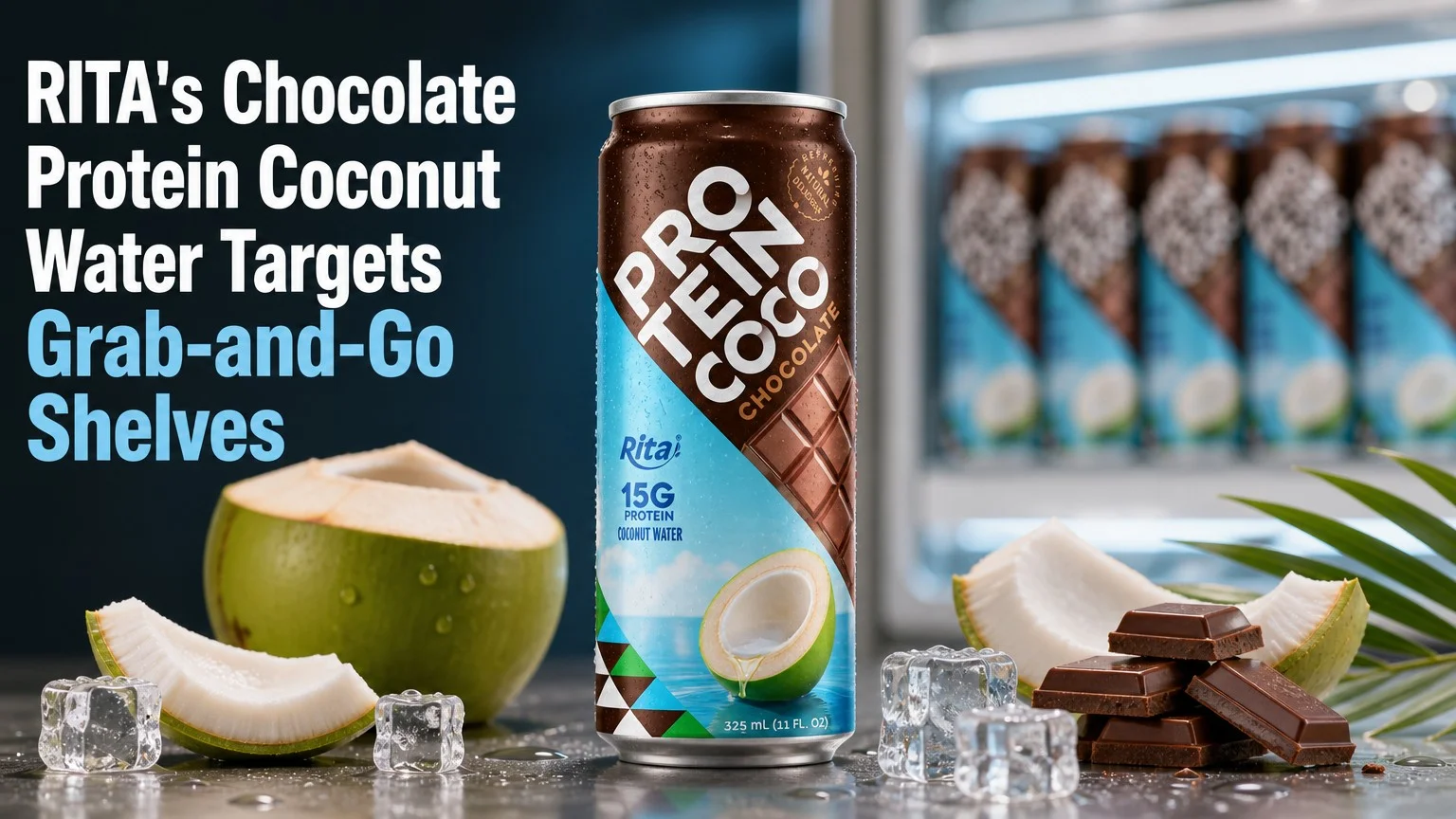
Ready-to-drink protein beverages are moving well beyond the gym cooler, and chocolate protein coconut water is one of the formats now competing for mainstream shelf space. Vietnamese manufacturer RITA Food and Drink Co., Ltd has introduced a 325 ml aluminum can that pairs a coconut water base with 15 g of protein per serving, aimed at grab-and-go placements across the United States, Canada, and broader North America. The launch arrives as the ready-to-drink protein category consolidates around flavor, format, and shelf presence rather than single-ingredient claims.
Key Takeaways
- RITA's 325 ml Chocolate Protein Coconut Water delivers 15 g of protein per can in a ready-to-drink format.
- The product anchors a four-flavor PROTEIN COCO family built for cross-selling at retail.
- Packaging uses a diagonal chocolate-and-ocean color split designed to trigger impulse purchases without extra signage.
- RITA operates more than 50 automated production lines and exports to over 200 countries and territories.
- North American beverage retail keeps rearranging itself, from spirits promotions to non-alcoholic brand partnerships.
Brand Spotlight: RITA Pushes Protein Coconut Water Into Mainstream Retail
For RITA, the can is a statement of range rather than a single-item bet, and the timing reflects how crowded the cooler has become.
RITA Food and Drink Co., Ltd was established in 2004 and has grown into a Vietnamese OEM and ODM beverage manufacturer supplying brands in more than 180 countries. Its portfolio covers tropical fruit juices, coconut products, energy drinks, and milk-based beverages, packed in aluminum cans, glass bottles, PET, and PP containers. The chocolate variant sits inside the coconut line while borrowing protein credentials from the company's milk range, letting retailers tell two familiar shelf stories with a single SKU.
The company frames the can as part of a broader protein beverage proposition aimed at shoppers who track protein intake and want a single-serve option with no preparation step. Early retail conversations, according to RITA's product team, have centered on convenience formats where the drink travels from cooler to checkout without a second thought.
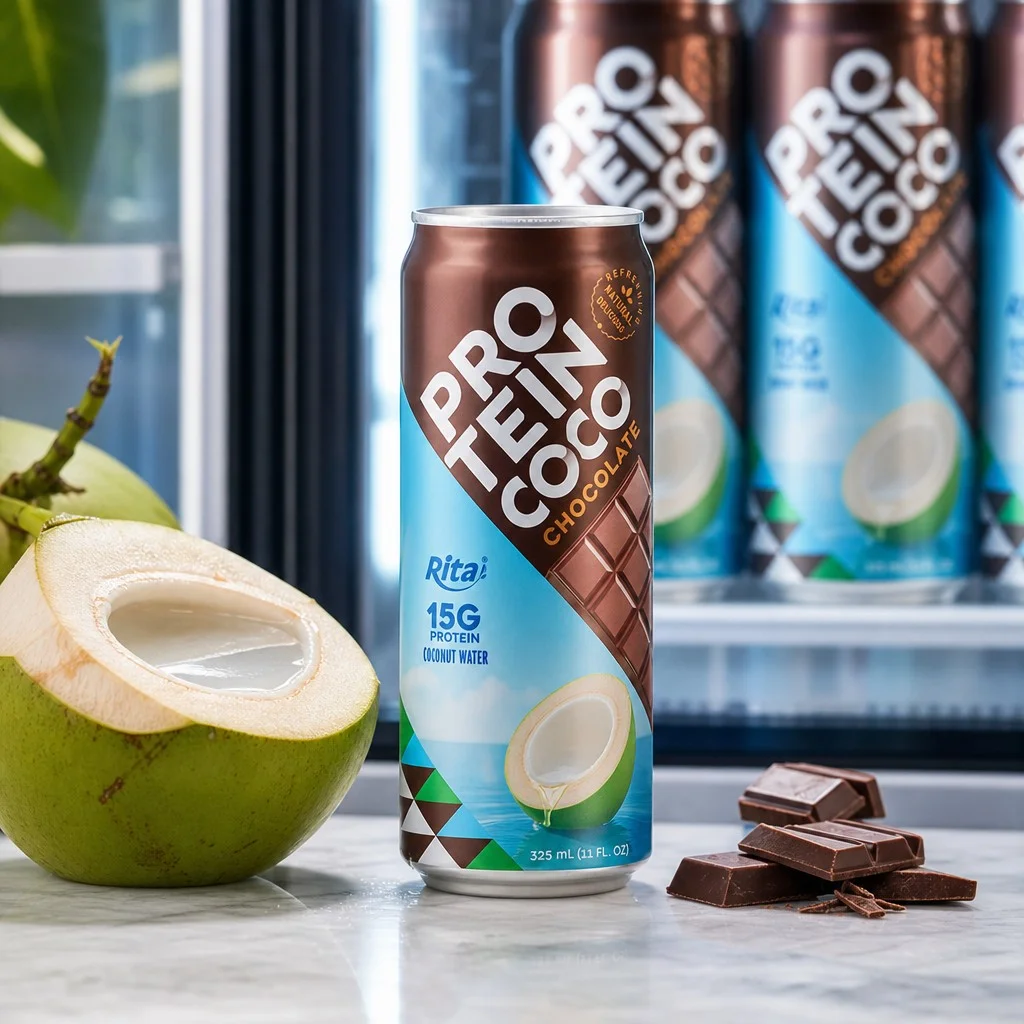
The full specification for the RITA Chocolate Flavored Protein Coconut Water 325 ml can confirms a net volume of 325 ml, or 11 fl oz, alongside the 15 g protein declaration printed on the front label.
A Formulation Built Around Taste and Convenience
Taste leads the pitch, and the formulation is built to keep coconut water's clean profile intact while cocoa carries the front note.
The chocolate protein coconut water uses natural coconut water as its base, enriched with milk protein concentrate and whole milk powder for protein content. Sucralose and acesulfame potassium supply sweetness without pushing sugar levels high, which keeps the chocolate note rounded rather than cloying. The brand describes the result as a dual experience: rich cocoa meeting the light, straightforward refreshment of coconut water.
That combination matters at retail, because chocolate remains one of the most reliably performing flavors in the ready-to-drink set while coconut water already carries an established shopper base, reducing the education a buyer needs at the moment of choice.
Packaging Designed for the Grab-and-Go Cooler
The can itself does half the marketing work, which matters when shelf-signage budgets are thin and resets happen fast.
Each 325 ml unit carries a bold diagonal split: a glossy dark chocolate-brown upper-right section against a sky-blue to ocean-tone gradient on the lower left. A realistic chocolate bar and a halved green coconut anchor the artwork, while geometric triangle mosaics and oversized diagonal PROTEIN COCO typography in white complete the layout. The design reinforces the brand's refreshing, natural, delicious promise and is built for placements where a shopper decides in seconds.
Retail buyers scanning a cooler wall will recognize the family resemblance immediately, since diagonal color blocking has become a common device across RTD protein drink retail and survives both planogram lighting and the small thumbnails used by online grocery platforms.
North American Shelves Are Being Redrawn
The backdrop for any new ready-to-drink protein SKU is a market that keeps rearranging itself channel by channel.
Recent signals illustrate the pace. The National Alcohol Beverage Control Association reported higher spirits sales around Labor Day, a reminder that promotional calendars still move baskets. The non-alcoholic beer brand RationAle partnered with LA Libations to widen distribution, Tilray outlined additional cost-cutting measures for its US beverage operations, and Campari's chief executive voiced confidence in addressing US market challenges. Yakult Honsha, meanwhile, disclosed a data breach stemming from a website attack, a reminder that digital risk now sits inside every beverage company's operating picture.
Shelf strategy follows the noise.
For a manufacturer exporting at scale, the numbers behind cross-border demand matter more than any single shelf story, and this coconut water export manufacturer is built for that kind of scrutiny. RITA reports more than 1,200 containers shipped each month, a volume that gives buyers confidence in replenishment cycles and seasonal promotions alike.
Sourcing the Base From Ben Tre Coconut Groves
Coconut water is the foundation of the drink, and its sourcing story starts in the Mekong Delta.
RITA traces its coconut raw material to Ben Tre province, where the company maintains a plantation program covering cultivation, harvesting, and intake checks before the water enters the beverage stream. The region's growing conditions and long coconut trade history make it a reference point for exporters supplying coconut-based drinks worldwide, and origin transparency has become a routine question in retail vendor audits.
The company's Ben Tre coconut farm program documents the journey from plantation to finished product, tracing how green husks are selected, trimmed, and evaluated before processing. That record gives buyers an origin story they can repeat to their own customers without leaning on vague sourcing language.
For buyers who want to see the groves directly, a video walkthrough of the plantation is available at https://www.youtube.com/watch?v=I7hlTL3FT_0
Manufacturing and Certification Behind the Can
Scale and paperwork decide whether a new SKU can actually ship on schedule, and this is where the RITA beverage manufacturer's infrastructure becomes part of the pitch.
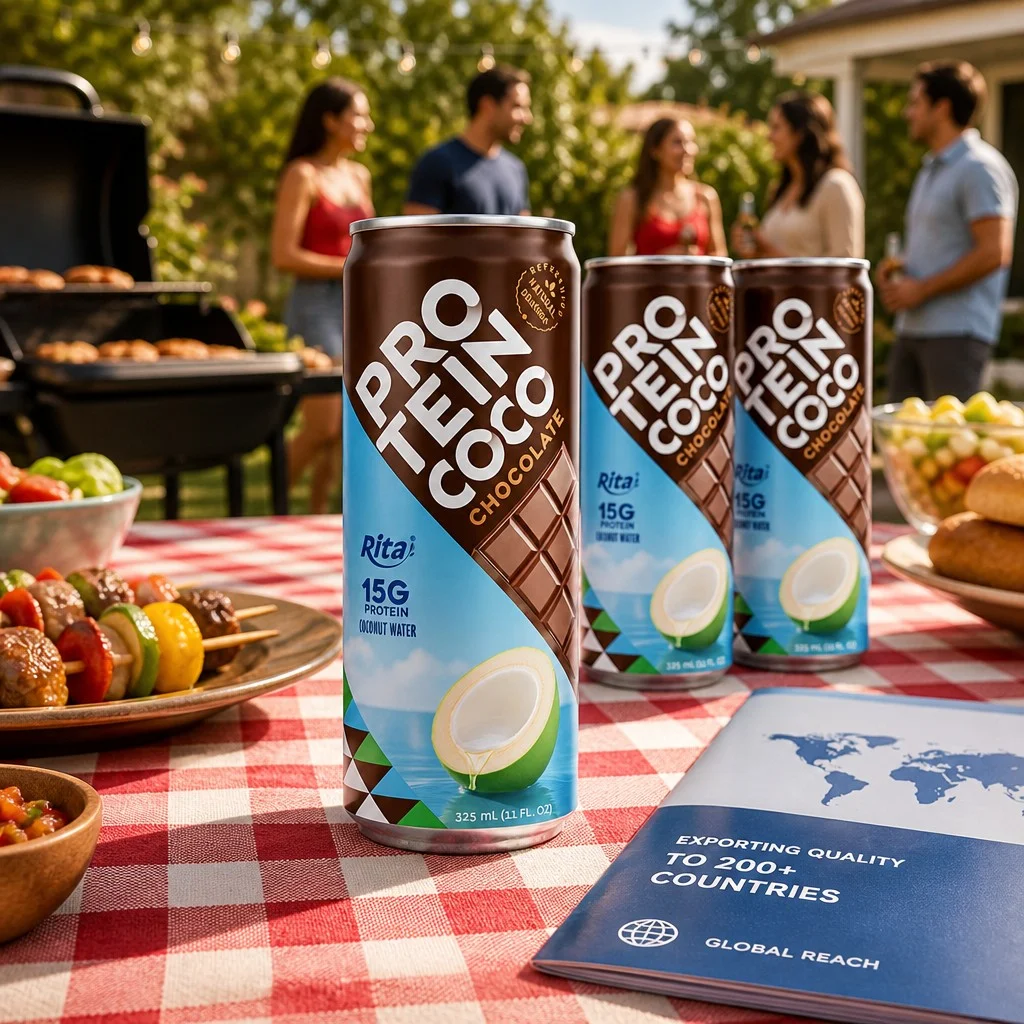
RITA operates more than 50 automated production lines and reports exporting over 1,200 containers per month to more than 200 countries and territories. Aluminum cans, glass bottles, PET, and PP formats run through the same quality framework, which lets a buyer mix packaging types across a single order without changing suppliers.
Certifications held by the manufacturer include BRC, FSSC 22000, Halal Jakim, Halal HCA-GCC, Kosher, ISO, GMP, HACCP, and SMETA, covering the audit requirements most retail programs ask for before a first purchase order.
- BRC and FSSC 22000 for food safety management systems
- Halal Jakim and Halal HCA-GCC for Gulf and Southeast Asian distribution
- Kosher certification for specialty and premium retail channels
- ISO, GMP, HACCP, and SMETA for process and social compliance audits
The coconut products catalog shows how the chocolate protein can sits alongside coconut water, coconut milk, and coconut juice variants, giving a buyer one supplier across the whole coconut block. The milk series lineup covers the protein-bearing formats that informed this formulation, and the overlap matters for retailers who want consistent lead times, shared documentation, and a single point of contact when an order spans both categories.
Private Label and OEM Flexibility
OEM beverage manufacturing lets a retailer or distributor specify flavor, protein level, sweetener system, and packaging before a single can is produced.
That model matters for North American buyers testing a regional flavor or a seasonal promotion, because development, labeling, and certification work can be handled inside one relationship rather than split across a co-packer, a flavor house, and a distributor. The company reports advanced research and development alongside private label solutions, a combination that shortens the path from concept to shelf.
For chocolate protein coconut water specifically, the same infrastructure supports both a branded push and a private label version aimed at a retailer's own protein line, with the 325 ml can format and 15 g protein specification applied under different artwork.
A Four-SKU Family Built for Cross-Selling
The chocolate flavor does not travel alone, and that is deliberate: it sits inside a four-can family designed to be merchandised together.
The PROTEIN COCO range covers Original, Mango, Chocolate, and Pineapple, each in the same 325 ml aluminum can with the same protein declaration. Presenting all four as a block gives retailers a unified protein beverage story, simplifies shelf planning, and raises the odds that a shopper who tries one flavor returns for another. It also gives a distributor a reason to order a mixed case rather than a single SKU.
Shoppers and buyers can review the full chocolate can specification on the product page for RITA Chocolate Flavored Protein Coconut Water, which lists ingredients, packaging details, and volume in one place alongside the rest of the coconut range offered by the manufacturer.
Why Protein Coconut Water Wins at the Cooler
Two familiar categories meet in one can, and shoppers do not have to learn anything new.
The protein coconut water format combines a base drink people already recognize with a protein declaration they already look for, which removes friction at the moment of choice. Chocolate adds an indulgent front note without turning the drink into a dessert, and the 325 ml size keeps the portion predictable for a commute, a desk, or a gym bag.
Distributors ordering the range can pair the chocolate protein coconut water can with coconut water SKUs from the same manufacturer, keeping lead times, documentation, and delivery expectations consistent across the assortment. That consistency is what turns a one-time trial order into a recurring program.
Frequently Asked Questions
What is RITA Chocolate Flavored Protein Coconut Water?
It is a ready-to-drink beverage in a 325 ml aluminum can that combines a natural coconut water base with milk protein concentrate and whole milk powder, delivering 15 g of protein per can with a chocolate flavor profile.
How much protein does each can contain?
Each 325 ml can, equal to 11 fl oz, declares 15 g of protein on the front label, a consistent specification across the PROTEIN COCO family.
Which flavors are available in the PROTEIN COCO family?
The range includes Original, Mango, Chocolate, and Pineapple, all packaged in the same 325 ml aluminum can so retailers can merchandise them as one block.
Who manufactures the product and where is it exported?
RITA Food and Drink Co., Ltd, a Vietnamese OEM and ODM beverage manufacturer established in 2004, produces the can on more than 50 automated production lines and exports to over 200 countries and territories. Specifications are published on the RITA Chocolate Flavored Protein Coconut Water product page.
What certifications does the manufacturer hold?
The manufacturer holds BRC, FSSC 22000, Halal Jakim, Halal HCA-GCC, Kosher, ISO, GMP, HACCP, and SMETA certifications, covering food safety, process, and social compliance requirements for international retail programs.