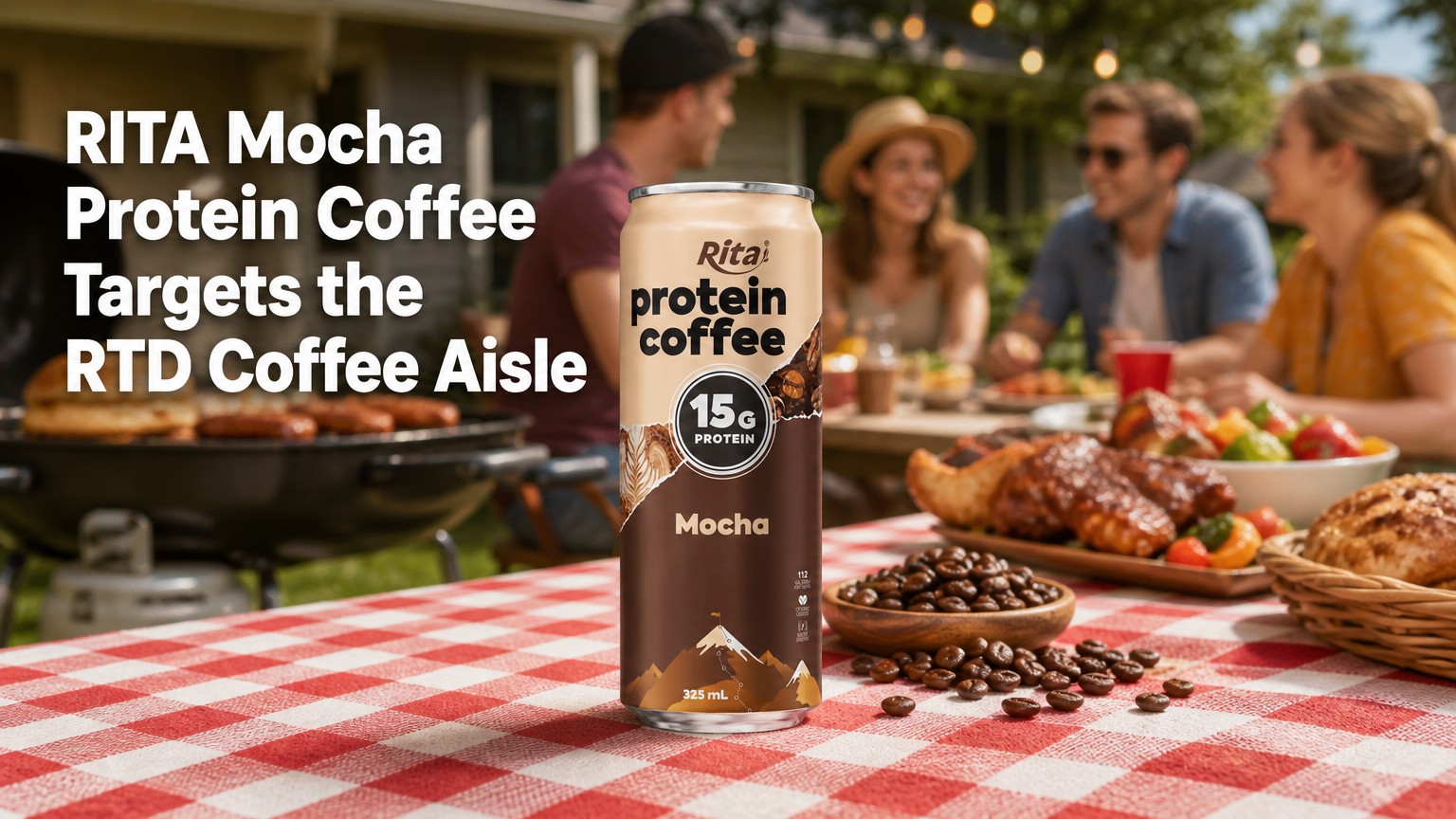
The high protein coffee mocha drink has moved out of specialty coolers and onto mainstream convenience aisles, and the newest release from RITA Food and Drink Co., Ltd reflects that shift. The Vietnam-based manufacturer has introduced a 325ml ready-to-drink coffee beverage that layers a mocha flavor profile over 15g of protein per serving, packed in a slim aluminum can built for grab-and-go retail. The launch arrives as buyers across North America weigh coffee formats that deliver more than caffeine alone, and as contract manufacturers compete on formulation flexibility, certification depth and shelf stability.
Key Takeaways
- RITA has launched a 325ml aluminum RTD coffee can combining a mocha flavor profile with 15g of protein per serving.
- Milk protein concentrate, sodium caseinate and whole milk powder shape the texture, while instant coffee and alkalised cocoa define the flavor.
- The beverage is produced under ISO, HACCP, BRC, FSSC 22000, Halal, Kosher, GMP and SMETA certifications.
- RITA operates more than 50 automated production lines and exports to over 200 countries and territories.
- A 24-month shelf life and ambient-stable can format suit convenience stores, gyms, offices and retail chains.
Why North American Buyers Want a High Protein Coffee Mocha Drink
Protein-forward coffee has stopped behaving like a side experiment and now commands dedicated shelf space.
Across the United States and Canada, convenience chains, gym lobbies and office micro-markets are reorganizing cold beverage sets around drinks that pair familiar coffee taste with a heavier protein load. Category managers note that mocha remains one of the most dependable flavor bridges between indulgent espresso drinks and protein-based formulations, which is why the RITA High Protein Coffee Mocha Drink 15g Protein arrives with a flavor-first positioning rather than a supplement-style one.
A mocha profile that reads as coffee first
Flavor sequencing matters more than protein count when it comes to repeat purchases. The drink combines instant coffee powder with alkalised cocoa powder to build a rounded coffee-chocolate profile, backed by 91 mg of caffeine per can and a Brix reading of 14.0 plus or minus 0.5 that keeps sweetness in check. Per 100 ml the beverage carries 62 kcal, 5.4 g protein, 2.5 g fat and 4.4 g carbohydrates, with a pH held at 6.5 plus or minus 0.5 for a consistent taste across production runs. The result reads as a mocha coffee first and a protein drink second, a sequencing that tends to travel well with mainstream shoppers who do not want a beverage that tastes like a powdered mix.
Packaging built for grab-and-go retail
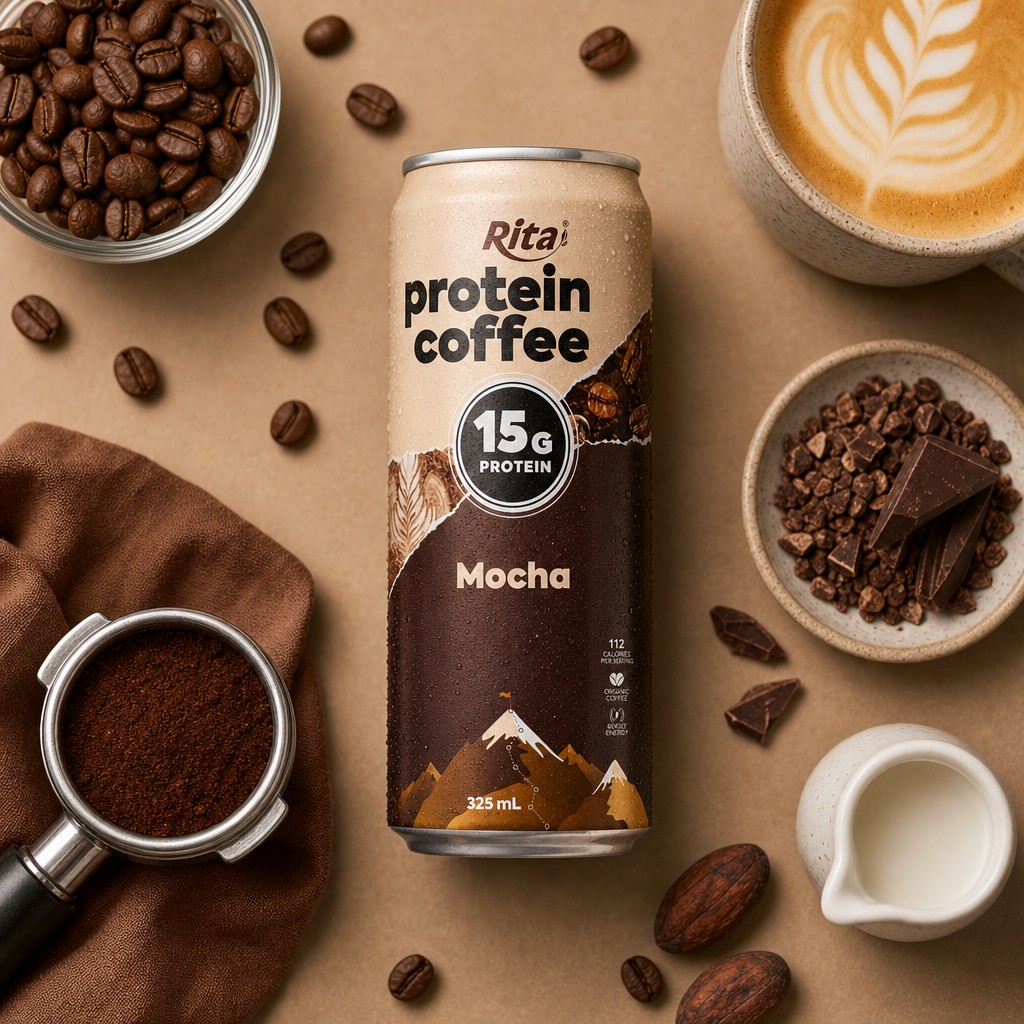
The 325 ml aluminum can carries a beige-and-dark-brown design with bold typography, a torn-paper coffee-bean graphic and mountain imagery that signals both the mocha identity and the protein content. Aluminum protects flavor and color through long distribution cycles, and the format slots into standard cooler doors without any retooling of fixtures.
A 24-month shelf life under cool, dry storage lets distributors hold inventory through seasonal swings, which matters for any shelf-stable coffee drink moving through several hands before it reaches a shopper.
Competitively, the can sits between cold brew cans on the premium end and powdered protein shakers on the value end, a middle position that gives buyers a familiar coffee experience with a heavier label story attached. Retailers building a mixed set can pair it with lighter coffee formats without cannibalizing the same occasion.
Inside the High Protein Coffee Mocha Drink, Ingredients and Packaging
Ingredient selection drives both mouthfeel and label clarity, and the formula here leans on a dairy protein blend rather than a single isolate.
Milk protein concentrate and sodium caseinate supply the 15 g of protein per serving, or 17.6 g across a full can, while whole milk powder rounds out the body so the drink pours creamy rather than thin. The coffee component comes from instant coffee powder and the chocolate note from alkalised cocoa powder, keeping the ingredient list short enough for a front-of-pack story. Sodium sits at 99 mg per 100 ml and total sugar at roughly 12.7 g per can, numbers that fall inside ranges buyers already accept from mainstream ready-to-drink coffee beverages on the same shelf.
The full specification for the high protein coffee mocha beverage is published on the product page, where distributors can review nutrition panels, can dimensions and case configurations before requesting samples. Technical sheets also list the Brix range, pH window and storage conditions that govern the 24-month shelf life.
Protein sourcing and texture
Texture is where protein drinks usually lose consumers. A blend of milk protein concentrate and sodium caseinate, supported by whole milk powder, gives this can a smooth, cohesive mouthfeel that stays integrated after gentle shaking rather than separating into sediment at the base. That stability matters on a shelf where cans may sit upright for weeks before purchase, and it removes a common complaint logged against cheaper protein RTDs.
Shelf life and distribution handling
At a pH of 6.5 plus or minus 0.5 and 14.0 plus or minus 0.5 Brix, the beverage holds a consistent sensory profile from fill date to expiry. The aluminum can requires no refrigerated chain in transit, which simplifies routing for wholesalers serving multiple banner types across wide geographic footprints.
| Specification | Value |
|---|---|
| Format | 325 ml aluminum can |
| Protein per serving | Approximately 15 g |
| Protein per full can | 17.6 g |
| Caffeine per can | 91 mg |
| Energy per 100 ml | 62 kcal |
| Brix | 14.0 plus or minus 0.5 |
| pH | 6.5 plus or minus 0.5 |
| Shelf life | 24 months, cool and dry storage |
Source: RITA product specification sheet.
Buyers comparing the mocha variant against the wider RITA coffee drink series will find that the protein positioning is specific to this line, while flavor formats and can sizes across the range give retailers room to build a coordinated set rather than a single isolated facing.
From Our Coffee Gardens, Where the Raw Materials Come From
Ingredient traceability has become a routine question in supplier audits, and RITA documents its sourcing routes publicly.
The company's field reporting on its visits to Vietnam's coffee gardens during peak harvest season follows cherry selection, drying and grading decisions that ultimately shape the instant coffee powder used in the mocha blend.
Cocoa for the chocolate note is traced through the company's broader ingredient base, described in the Mekong Delta raw material area overview, where supplier qualification and intake checks are applied before materials move into production planning.
Footage from the growing regions is available here: https://www.youtube.com/watch?v=F2yJLjUYiuo
Export Capacity and Market Positioning
Scale determines whether a product launch can be sustained beyond its first container, and RITA's export volume answers that question quickly.
The wider packaged beverage landscape is being managed conservatively in some corners and aggressively in others. Heineken's finance leadership has kept a measured outlook for the Americas while relocating beer production in Czechia, Danone has adopted an offensive posture to correct underperformance in its North America dairy and plant-based division, and Simply Good Foods is preparing pricing moves aimed at resetting gross margins. Against that backdrop, a differentiated RTD coffee format with a clear protein story gives distributors a product that does not depend on discounting to earn its shelf placement.
For RITA, the infrastructure behind the mocha can is substantial: more than 50 automated production lines, roughly 1,200 containers shipped monthly across the portfolio, and distribution reaching over 200 countries and territories. Certifications spanning BRC, FSSC 22000, Halal Jakim, Halal HCA-GCC, Kosher, ISO, GMP, HACCP and SMETA cover ingredient sourcing, processing, filling and packaging, which shortens the compliance review an importer has to run before the first pallet lands.
For retail buyers, that combination of certification coverage and ambient stability reduces the number of variables in a category already crowded with cold brew, energy coffee and dairy-based options competing for the same cooler door.
OEM and Private Label Options for Distributors
The mocha can functions as a template as much as a finished SKU, which is where the commercial opportunity widens.
RITA runs full OEM and ODM programs, allowing buyers to adjust protein levels, sweetness and flavor intensity, then rebuild labeling, artwork and can specifications around their own brand identity. Capacity of around 600 twenty-foot containers per month means a private label coffee beverage program can scale without opening a second sourcing conversation. Samples of the RITA High Protein Coffee Mocha Drink 15g Protein are available through the product page for evaluation by category and procurement teams.
Typical channels where the format is being placed include:
- Convenience stores and fuel retail looking for chilled impulse purchases
- Gym and studio counters stocking protein-oriented ready-to-drink coffee
- Office micro-markets and vending programs that require ambient-stable cans
- Grocery and mass retail building a coordinated coffee set
- Wholesale and distribution partners serving several banner types at once
Buyers already working with the RITA milk series will recognize the same dairy-protein formulation logic behind this can, which makes cross-merchandising straightforward across two adjacent shelf zones.
Additional reference material sits in the company's coffee drinks catalog, where the broader range of coffee formats, can sizes and flavor options is laid out for review.
The company's wider OEM capability, detailed on its company profile, gives importers a single point of contact for formulation, artwork approval, certification documentation and shipment scheduling.
Frequently Asked Questions
What is the RITA High Protein Coffee Mocha Drink?
It is a 325 ml ready-to-drink coffee beverage packed in an aluminum can, combining instant coffee powder and alkalised cocoa powder for a mocha flavor with approximately 15 g of protein per serving. It is manufactured by RITA Food and Drink Co., Ltd and distributed through ritadrinks.us.
How much protein is in one 325 ml can?
Each serving delivers approximately 15 g of protein, and a full 325 ml can contains 17.6 g, sourced from milk protein concentrate and sodium caseinate with whole milk powder supporting texture and body.
Which certifications cover the production of this RTD coffee beverage?
Production runs under ISO, HACCP, BRC, FSSC 22000, Halal Jakim, Halal HCA-GCC, Kosher, GMP and SMETA certifications, covering ingredient sourcing, processing, filling and packaging.
Can distributors order this mocha protein coffee under their own brand?
Yes. RITA offers OEM and ODM programs with adjustable protein levels, sweetness, flavor intensity, artwork and can specifications, supported by capacity of around 600 twenty-foot containers per month.
What is the shelf life and storage requirement?
The can carries a 24-month shelf life when stored in a cool, dry place, and the aluminum format does not require a refrigerated chain during transit.