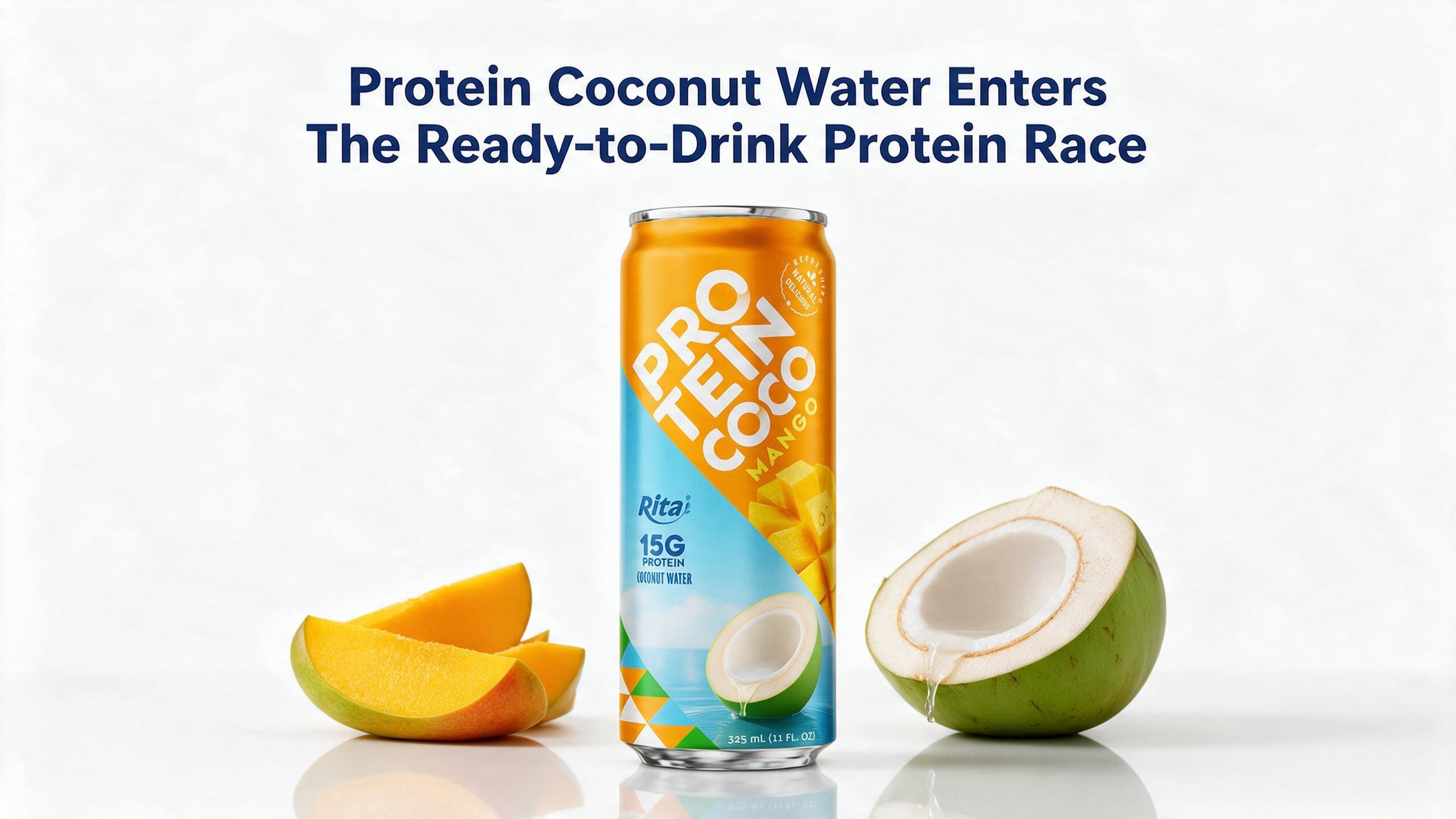
The ready-to-drink protein beverage category is expanding rapidly, and RITA Mango Flavored Protein Coconut Water arrives at a moment when consumers are looking for portable formats that pair familiar hydration with added protein content. The 325ml slim aluminum can format, delivering 15g of protein per serving, positions the drink at the intersection of two established shelf segments — coconut water and RTD protein — a combination that importers and distributors across North America are watching closely as portfolio strategies shift toward multi-benefit convenience formats.
Key Takeaways
- RITA Mango Flavored Protein Coconut Water delivers 15g of protein per 325ml (11 FL OZ) slim aluminum can, combining coconut water with milk protein concentrate and natural mango flavor.
- The Protein Coco line spans four flavors — Original, Mango, Chocolate, and Pineapple — under a unified color-coded visual identity designed for shelf recognition.
- RITA Food and Drink Co., Ltd. operates 50+ automated production lines and exports to 200+ countries, backed by BRC, FSSC 22000, ISO, HACCP, Halal, Kosher, and GMP certifications.
- Supply capacity reaches 600 twenty-foot containers monthly, with a 24-month shelf life supporting long-distance distribution to the USA, Canada, and broader North American markets.
- OEM and ODM services allow importers to customize formulation, label design, and packaging specifications for private label programs.
North American Demand For Convenient Protein Formats
Convenience is the defining purchase driver in this category.
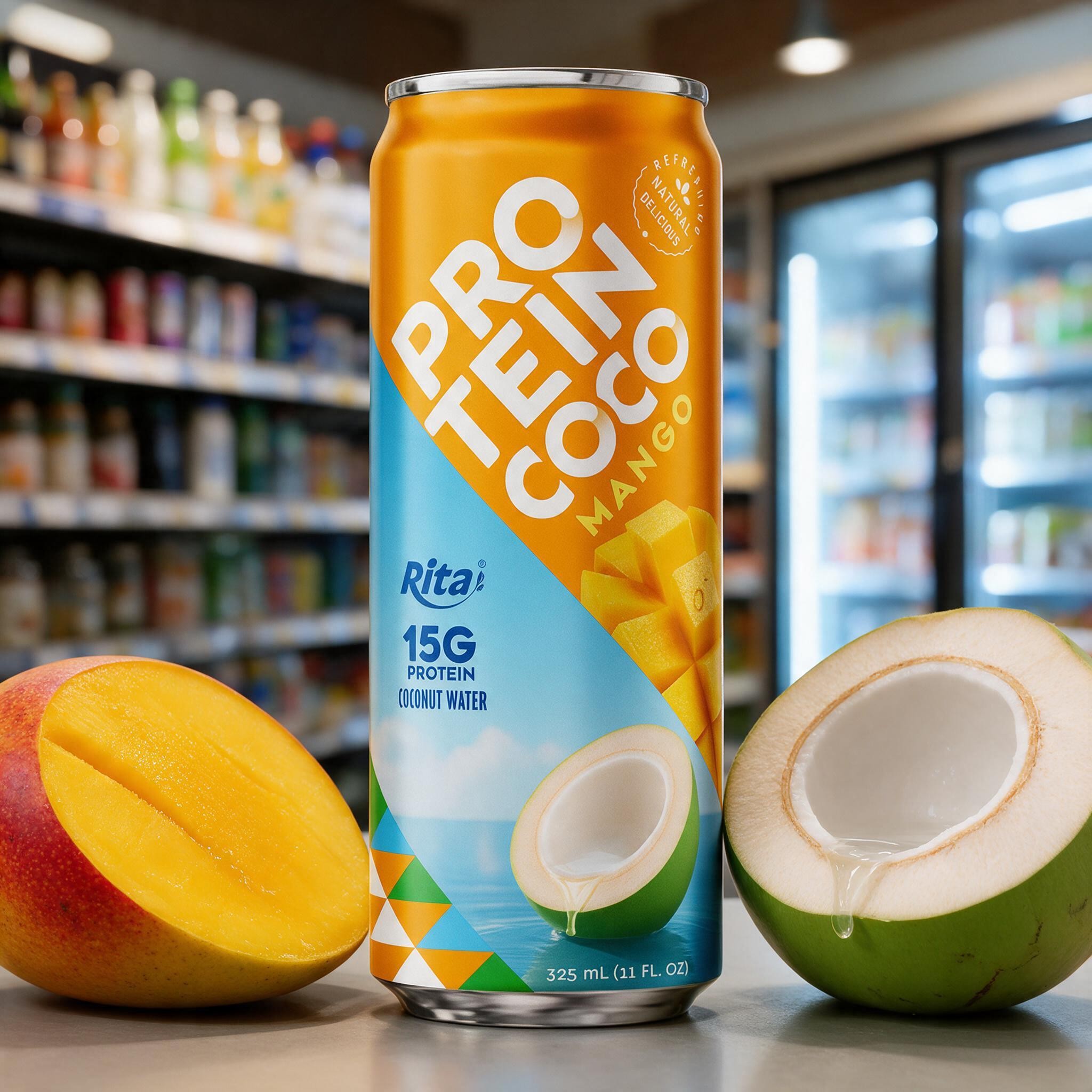
Retail buyers across the United States and Canada have steadily expanded cooler space for chilled single-serve cans that travel well from store shelf to gym bag to office desk. The RITA Mango Flavored Protein Coconut Water 325ml can with 15g protein fits squarely into this pattern, arriving chilled and ready to consume without preparation, shaker bottles, or mixing steps that slow down traditional powder-based protein routines.
Category observers note that shoppers increasingly scan labels for two things at once — a recognizable base ingredient and a clear protein number. Coconut water carries broad familiarity as a hydration choice, while the prominent 15g protein callout on the can label answers the second question immediately. This dual signal is what shelf planners look for when deciding whether a new SKU earns a slot in an already crowded cooler door.
The Role Of Flavor In Repeat Purchase
Mango brings a tropical sweetness that softens the naturally light profile of coconut water.
RITA describes the formulation as balancing sweetness against the coconut base without heaviness, a positioning that supports everyday consumption occasions rather than being confined to post-workout windows. For distributors, repeat purchase behavior matters more than first-trial curiosity, and flavor profiles that remain approachable across morning, afternoon, and evening occasions tend to sustain velocity over longer shelf cycles.
The broader Protein Coco range reinforces this logic. Alongside the mango variant, the line includes Original, Chocolate, and Pineapple options, each carrying the same diagonal split label design with distinct color coding and tropical imagery. Retailers stocking multiple flavors from a single visual family report faster shopper recognition and simpler planogram decisions, since the range reads as one cohesive block on shelf rather than scattered individual items.
Inside The Protein Coco Range And Its Shelf Design
Visual consistency across flavors is a deliberate commercial strategy.
The PROTEIN COCO branding uses a diagonal split layout — orange on the upper portion, blue on the lower — with mango cubes, a halved young coconut showing white flesh, and water imagery anchoring the lower artwork. A circular badge reading "Refreshing Natural Delicious" sits alongside the bold 15G PROTEIN claim, while the 325 mL (11 FL. OZ) volume marker completes the front-of-pack hierarchy. The design is built for quick decoding at arm's length in a cooler or vending machine.
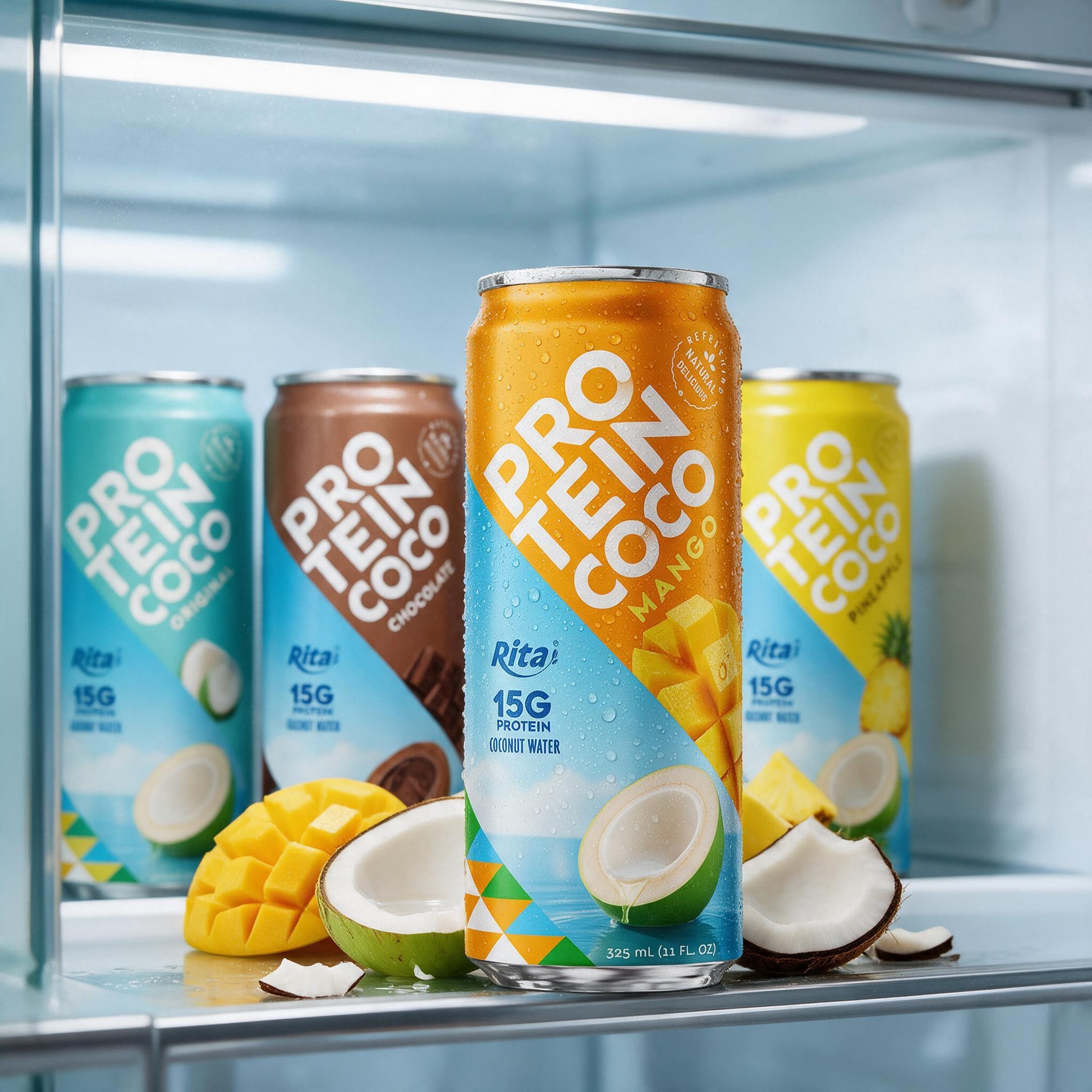
Each flavor variant shifts the dominant color while retaining the structural layout, so a four-flavor display creates a recognizable band of color that shoppers can locate from several feet away. This matters in North American convenience and grocery channels where planogram slots are contested and a new entrant often has seconds to register before a shopper moves on.
Nutritional Positioning Within The Can
The formulation pairs coconut water with milk protein concentrate and natural mango flavor.
Per 100ml, the drink delivers approximately 183 calories, 6.2g total fat, 13g total carbohydrates, and 3.5g sugars, giving label readers a transparent breakdown as they compare options within the cooler set. For buyers evaluating where a new protein RTD sits relative to dairy-based shakes or plant-protein beverages, these figures provide the reference points needed to map the product into an existing assortment without overlap.
The 325ml slim can format itself is part of the positioning. Slim cans signal a modern, portion-controlled format that consumers associate with premium RTD beverages, and the aluminum construction supports chilled distribution chains already standard across North American retail. A 24-month shelf life under dry, cool storage conditions further simplifies inventory planning for importers managing warehouse space across multiple distribution points.
Supply Chain Strength Behind RITA's Export Model
Scale and certification are the two levers that determine whether an export beverage program can sustain North American retail commitments.
RITA Food and Drink Co., Ltd., established in 2004, operates more than 50 automated production lines and exports over 1,200 containers monthly to brands in 200+ countries and territories. That infrastructure allows the company to support both its own branded lines and private label programs simultaneously, a flexibility that importers evaluating long-term supply agreements tend to weigh heavily during vendor selection.
The company's quality framework includes BRC, FSSC 22000, Halal Jakim, Halal HCA-GCC, Kosher, ISO, GMP, HACCP, and SMETA certifications. For North American buyers, this breadth of credentials reduces the diligence burden during onboarding, since the certification stack already addresses food safety management, manufacturing practice, and social compliance in one package. The full catalog of RITA's coconut-based offerings is available through the Coconut Products catalog, where buyers can review the wider portfolio alongside the Protein Coco line.
Container Capacity And Distribution Planning
Supply capacity reaches 600 twenty-foot containers per month.
That volume, paired with logistics networks already serving 180+ countries, gives distributors a credible basis for forecasting seasonal demand spikes — summer cooler programs, new-year wellness launches, or promotional cycles tied to retail events. The 24-month shelf life means stock can be positioned ahead of peak windows without the urgency that shorter-dated categories impose on inventory rotation.
For North American importers specifically, the combination of a chilled-ready single-serve format and long ambient stability before chilling offers dual handling options. Containers can move through standard dry freight, then transition to refrigerated display at the retail level, a workflow that aligns with how convenience chains and grocery coolers already receive and merchandise RTD beverages.
From Orchard To Can — Sourcing The Core Ingredients
Ingredient traceability is increasingly part of buyer conversations.
RITA sources its coconut water from established growing regions in Vietnam, with the company documenting plantation-to-plantation practices that feed its coconut beverage lines. The Ben Tre coconut farm journey from plantation to high-quality products illustrates the upstream steps involved in securing consistent raw material for large-scale production.
Mango sourcing follows a parallel path, with the company maintaining direct relationships with growers to secure fruit at the flavor profile its formulations require. The mango farm to premium juice process details how fruit selection and handling shape the final taste character that reaches the can.
Together, these two ingredient streams — coconut water and mango — form the base of the Mango Flavored Protein Coconut Water variant, with milk protein concentrate added to complete the protein specification. Buyers interested in the full coconut beverage range can explore additional formats through the RITA Mango Flavored Protein Coconut Water product page on ritadrinks.us.
For a visual look at the coconut sourcing environment, this field footage captures the plantation conditions behind the raw material: https://www.youtube.com/watch?v=I7hlTL3FT_0
OEM And Private Label Opportunities For Distributors
Private label remains the fastest route to differentiated shelf presence.
RITA offers OEM and ODM services covering formulation adjustments, label design, and packaging specifications, allowing importers to adapt the Protein Coco platform to their own brand architecture. The company's OEM Service program walks through the customization workflow, from initial brief through production release, for buyers building branded ranges from an established manufacturing base.
This matters in North America because private label protein RTDs have gained shelf space alongside national brands, and retailers increasingly expect suppliers to offer both. A manufacturer that can deliver a unified visual identity across multiple flavors — as the Protein Coco line demonstrates — gives private label partners a head start on range coherence without starting the design process from zero.
Portfolio Expansion Without Fragmentation
The four-flavor Protein Coco structure offers a ready-made range blueprint.
Importers can launch with the mango variant as an anchor, then extend into Original, Chocolate, and Pineapple under the same design system, or rework the visual identity entirely through the ODM track. Either path preserves the underlying formulation logic and packaging format, reducing the number of variables a distributor must manage when scaling from a single-SKU trial to a full cooler door commitment.
For buyers comparing coconut-based beverage options across categories, the broader RITA coconut products portfolio provides context on how the Protein Coco line fits alongside coconut water, coconut milk, and other coconut-derived formats in the company's export catalog.
What Retail Buyers Should Watch Next
Shelf dynamics in the protein RTD segment continue to evolve.
Recent industry moves — including Heineken's acquisition of Brazilian beverage company Better Drinks, Zevia raising its full-year forecast after strong quarterly results, and Super Bock elevating its CFO to chief executive — signal that beverage companies across categories are consolidating leadership and chasing growth in adjacent formats. For coconut water and protein RTD specifically, the takeaway is that portfolio breadth and supply reliability are becoming competitive differentiators as much as flavor.
Buyers evaluating the RITA Mango Flavored Protein Coconut Water 325ml can should weigh three factors: the clarity of the 15g protein claim on-pack, the cohesion of the four-flavor Protein Coco range for planogram efficiency, and the manufacturer's export infrastructure for sustained replenishment. Each addresses a different point in the buying decision — consumer comprehension, retail presentation, and supply continuity.
As North American cooler sets continue to absorb new functional formats, products that arrive with proven certification stacks, scalable container capacity, and flexible private label options will have the clearest path from container ship to retail shelf. The Protein Coco line enters that conversation with all three elements already in place.
Frequently Asked Questions
How much protein does RITA Mango Flavored Protein Coconut Water contain?
Each 325ml (11 FL OZ) slim aluminum can delivers 15g of protein, sourced from milk protein concentrate combined with coconut water and natural mango flavor.
What flavors are available in the Protein Coco range?
The Protein Coco line includes four flavors — Original, Mango, Chocolate, and Pineapple — sharing a unified PROTEIN COCO visual identity with color-coded diagonal split labels for shelf recognition.
What certifications does the manufacturer hold?
RITA Food and Drink Co., Ltd. holds BRC, FSSC 22000, Halal Jakim, Halal HCA-GCC, Kosher, ISO, GMP, HACCP, and SMETA certifications covering food safety, manufacturing practice, and social compliance.
What is the shelf life of the product?
The beverage carries a 24-month shelf life under dry, cool storage conditions, supporting long-distance export and extended inventory planning for distributors.
Does RITA offer private label options for this product?
Yes. RITA provides OEM and ODM services covering formulation adjustments, label design, and packaging specifications, allowing importers to build private label ranges on the Protein Coco platform.