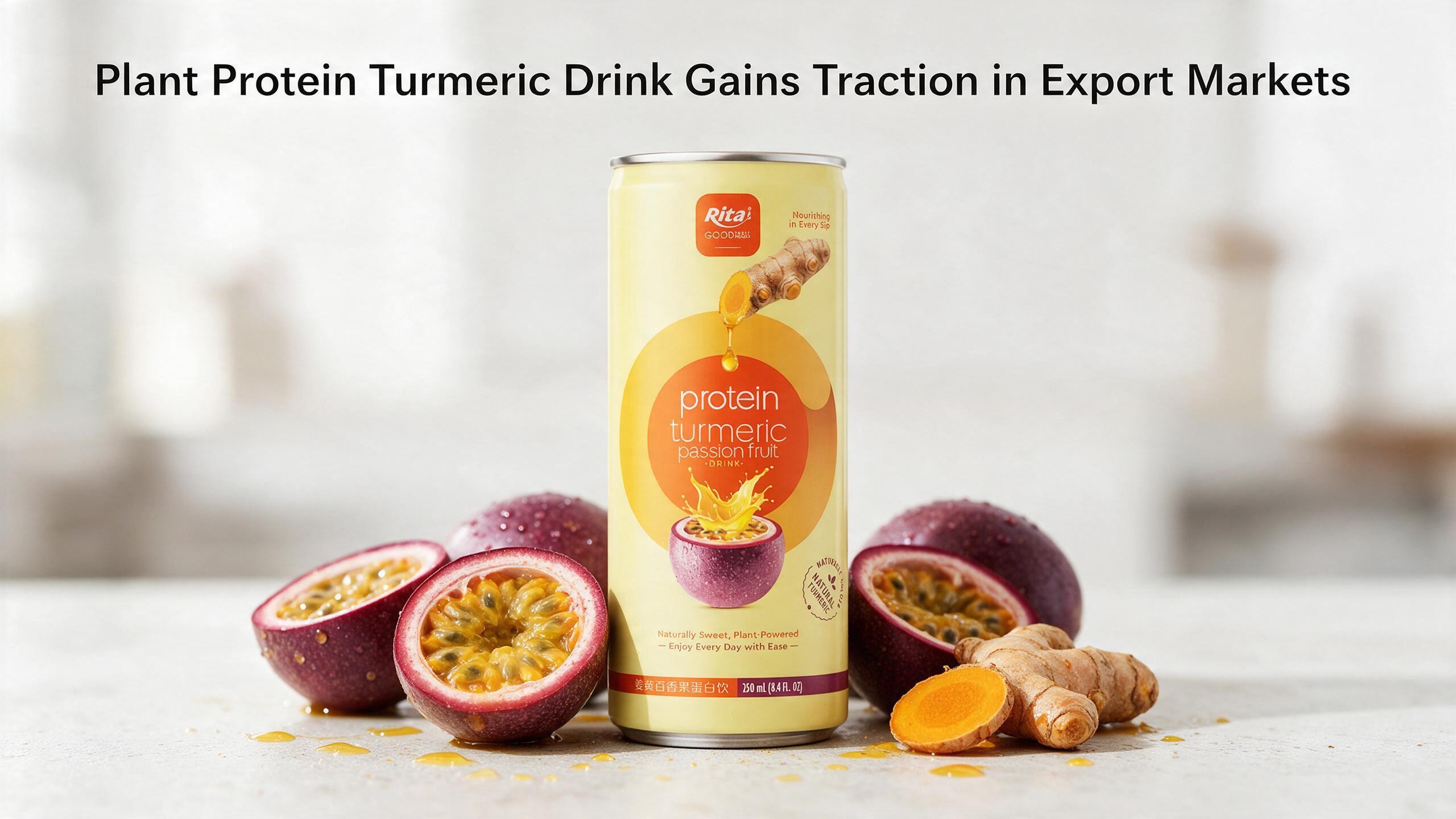
The arrival of the protein turmeric passion fruit drink in a 250ml slim can illustrates how export-minded beverage producers are packaging plant-based protein for modern retail shelves. RITA Food and Drink Co., Ltd., a Vietnamese OEM and ODM manufacturer founded in 2004, has positioned the tropical formulation as a single-serve option for distributors scanning sets for cans that read clearly from several feet away. The drink pairs 10% real passion fruit juice with natural turmeric and 3% plant-based protein per serving.
Sweetened with monk fruit rather than conventional sugar, the beverage sits in the fast-moving low-sugar canned segment while keeping a bright golden color and a light, refreshing taste. Packaging follows the same commercial logic, with a sleek aluminum slim can carrying yellow, orange and purple graphics that render a turmeric root and a halved purple passion fruit in sharp detail. For importers, shelf legibility combined with a 24-month shelf life shortens the buying conversation considerably.
Key Takeaways
- Plant-based protein beverages are moving from specialty channels into mainstream single-serve cans across North America.
- The formulation combines 10% passion fruit juice, natural turmeric and 3% plant protein, sweetened with monk fruit.
- High-contrast aluminum artwork gives the slim can beverage strong presence in a crowded retail set.
- RITA operates more than 50 automated production lines and exports over 1,200 containers monthly to 200+ countries and territories.
- A 24-month shelf life and a broad certification stack support long-distance distribution and private label programs.
Export Packaging Meets North American Shelf Demand
The buying conversation is concentrated in the United States and Canada, where single-serve plant-based cans have moved from specialty shelves into mainstream sets.
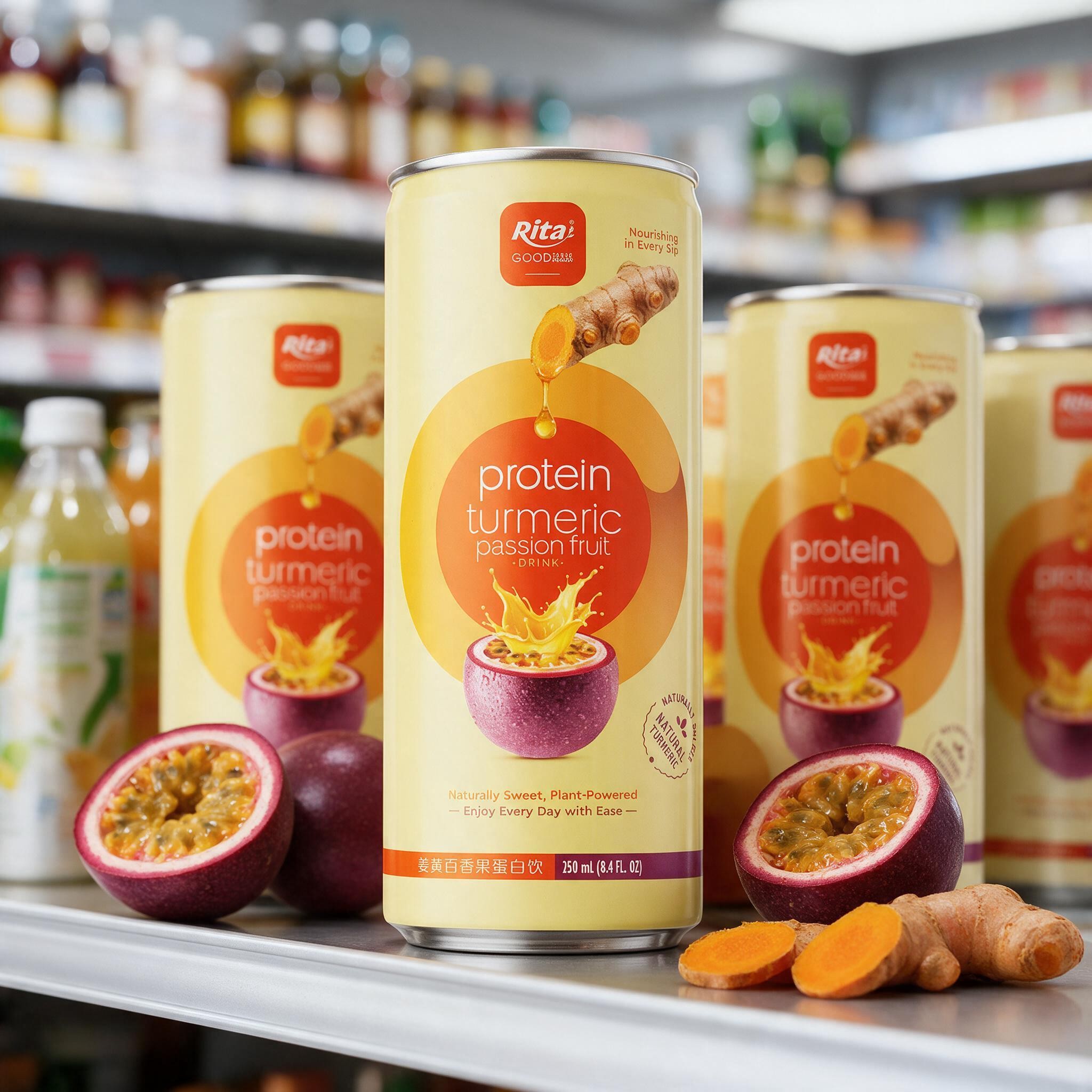
Retail buyers reviewing the protein turmeric passion fruit drink find a 250ml aluminum slim can listed with a 325ml total volume, a 24-month shelf life and artwork that leads with ingredients rather than brand narrative. An orange circular panel sits at the center of the label, flanked by a turmeric root dripping golden liquid and a halved purple passion fruit mid-splash. The flavor story is legible before a shopper reads a single line of copy, which matters in a set where cans are often viewed at an angle and in motion.
Shelf appeal has become a commercial variable rather than a design afterthought. Yellow, orange and purple tones separate the can from the blue and green palettes that dominate adjacent protein and hydration sets, while the purple base band anchors the design and carries the 250 mL (8.4 FL. OZ) declaration. A short descriptor reading naturally sweet and plant-powered appears low on the can as a quiet cue rather than a headline, which suits label-reading shoppers who scan for ingredient signals first.
Behind the visuals sits an export-grade documentation package. The product is manufactured under ISO, HACCP, GMP, BRC, FSSC 22000, Kosher, Halal Jakim, SMETA and FDA-aligned procedures, a stack that importers increasingly treat as a screening filter rather than a bonus. For distributors evaluating a soft drink catalog entry, that paperwork often decides whether a sample shipment clears customs without a second round of questions.
Inside the Can: Protein Turmeric Passion Fruit Drink Formulation
Three ingredients carry the concept, and each one has to hold its own in the same sip.
Flavor Architecture
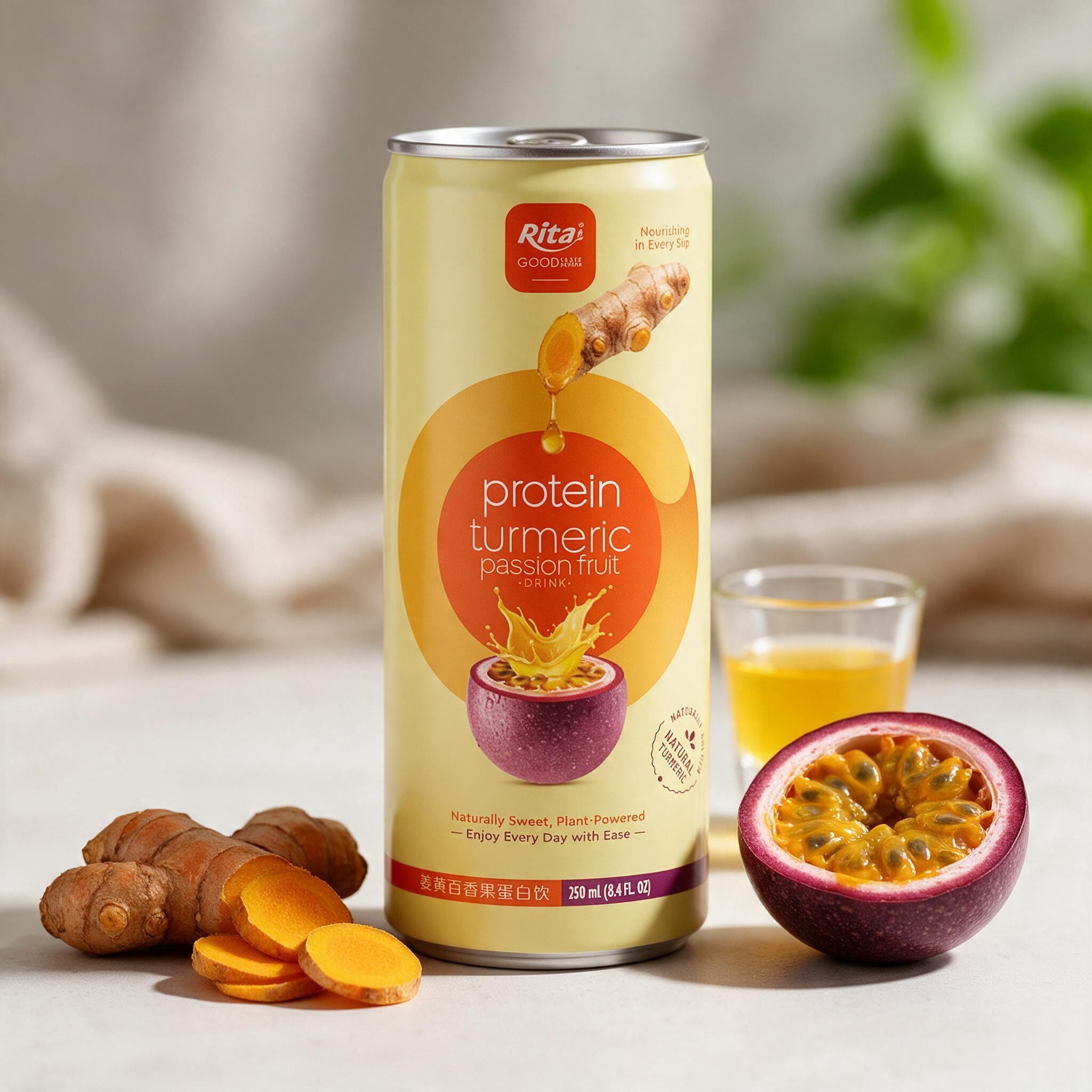
Passion fruit leads. At 10% real juice, it delivers the tart, aromatic top note that tropical drinkers expect, with visible pulp character rather than a flat candy profile. Turmeric arrives underneath as an earthy, slightly peppery counterweight, and its natural pigment gives the liquid the golden hue visible through the can opening. The plant protein component, at 3% per serving, is formulated to stay in the background so the fruit and spice remain the first impression, which is what makes the product read as a passion fruit juice drink first and a protein format second.
Sweetener Strategy
Monk fruit does the sweetening work, which keeps sugar low without pushing the drink into the stevia-heavy aftertaste that shoppers have learned to recognize. The result reads as a monk fruit sweetened drink with a clean finish, light and refreshing rather than syrupy. That profile suits afternoon consumption occasions and pairs naturally with the tartness of passion fruit instead of masking it, a balance that matters when a formula has only a handful of components.
Label design reinforces the formulation rather than competing with it. A circular badge noting natural turmeric sits beside the ingredient visuals, while the upper corner carries a short brand sentiment and the base carries the line enjoy every day with ease. The protein turmeric passion fruit drink is framed as an everyday purchase rather than an occasional indulgence. In a slim can beverage segment where shoppers compare three or four options in under a minute, that kind of immediate visual clarity earns its place.
From Our Orchards: Passion Fruit Sourcing in Vietnam
Raw material sourcing sets the tone for everything that follows in the export story.
Passion fruit used across RITA's tropical line is traced to growing areas in Vietnam's Central Highlands, where the company has documented garden visits, flowering cycles and harvest windows in a field report on passion fruit gardens in Vietnam's Central Highlands. Traceability of this kind gives buyers something concrete to reference when a retailer asks where the fruit in a can actually comes from.
https://www.youtube.com/watch?v=HjYZTn8BZL4
Vietnam's tropical belt supplies a broad range of fruit raw materials, and RITA's sourcing footprint extends across the Mekong Delta and Central Highlands regions, where climate and soil conditions support consistent sugar and acid levels in passion fruit. That consistency matters for a formulation holding 10% juice, because batch-to-batch variation would surface immediately in a drink with so few masking ingredients. Stable raw material quality is also what allows a 24-month shelf life claim to hold across production runs.
Trade Flows and Market Signals
Export readiness is only half the story; the other half is where volumes actually move.
Importers tracking canned tropical and plant-protein formats report steady interest from markets where domestic tropical fruit supply is limited and cold-chain alternatives are costly. Shelf-stable aluminum formats travel well across long routes, and a 24-month shelf life gives distributors room to hold inventory through seasonal swings without write-offs.
| Packaging format | Typical use | Export consideration |
|---|---|---|
| Aluminum slim can | Single-serve fruit and protein drinks | Lightweight, high graphic impact, long shelf life |
| Glass bottle | Premium juices and concentrates | Higher freight cost, strong recyclability profile |
| PET bottle | Still drinks and large formats | Cost efficient for regional distribution routes |
| PP bottle | Dairy-style and blended drinks | Durable for multi-stop retail delivery |
Source: RITA Food and Drink Co., Ltd. packaging and export portfolio.
The turmeric drink export conversation also depends on labeling discipline. Claims printed on a can travel with it across borders, so wording is kept descriptive: ingredients, percentages, volumes and certifications, with no implied promises beyond what the label states. For a North American beverage market that scrutinizes labels closely, that restraint is a practical advantage rather than a marketing limitation.
OEM and Private Label Pathways for Drink Brands
Behind the single SKU sits a manufacturing platform built for volume.
Private Label Development
RITA operates more than 50 automated production lines and ships over 1,200 containers monthly, a scale that lets the company support branded programs and private label briefs without reallocating capacity. Buyers exploring adjacent formats can review the company's wider fruit juice products range, which covers tropical juices, blended drinks and concentrates across cans, glass, PET and PP packaging. For brands entering the category for the first time, that breadth shortens development cycles because base formulations already exist and only need adjustment.
Certification Stack for Export
Every export program inherits the same documentation layer. The certification set includes BRC, FSSC 22000, Halal Jakim, Halal HCA-GCC, Kosher, ISO, GMP, HACCP and SMETA, which covers most retailer onboarding requirements in North America and beyond. A full product dossier for the protein turmeric passion fruit drink is available for distributor review, including label artwork, specification sheets and shelf-life data.
- Formula adjustment for sugar level, juice percentage and protein content
- Can artwork adaptation, including private label graphics and language variants
- Pack size configuration for retail trays, club formats and foodservice
- Documentation bundles for customs, retailer onboarding and Halal or Kosher verification
Distributors who prefer to start from an existing shelf position can browse the fruit drink catalog on ritadrinks.us, where tropical and protein-forward options are grouped for quick comparison. The same team also handles OEM beverage manufacturer briefs for brands that want a formulation built from scratch rather than adapted from an existing base.
Industry Context: What Beverage Executives Are Watching
The wider sector is moving quickly enough that leadership changes and ownership questions now arrive monthly.
Super Bock promoted its chief financial officer to chief executive, a governance move that usually signals a tightening focus on margins and capital discipline rather than a change in product direction. Meanwhile, a Russian firm is reportedly seeking control of Coca-Cola HBC assets, a development that would reshape distribution economics across several territories if it proceeds. Both stories point to the same underlying pressure: beverage companies are being valued on route-to-market strength as much as on brand equity.
Heineken acquired Brazilian beer and yerba-mate company Better Drinks, extending its reach into non-alcoholic adjacencies where canned formats dominate. Zevia raised its full-year forecast after a strong third quarter, evidence that the low-sugar canned segment continues to outpace the broader soft drink category in retail scans. Raisio's chairman resigned as the Finnish group lowered its outlook, a reminder that ingredient-cost volatility still reaches boardrooms.
For exporters of plant-based protein beverage formats that travel well, the pattern is consistent: buyers want cans that read instantly, labels that document compliance without delay and suppliers who can scale without renegotiating lead times. That is precisely the brief the protein turmeric passion fruit drink was built to answer.
Frequently Asked Questions
What is the RITA Protein Turmeric Passion Fruit Drink?
It is a plant-based tropical beverage in a 250ml aluminum slim can that combines 10% real passion fruit juice, natural turmeric and 3% plant-based protein per serving, sweetened with monk fruit and presented with vibrant yellow, orange and purple label artwork.
How is the drink sweetened?
The formulation uses monk fruit rather than conventional sugar, which keeps the sugar level low while preserving a light, refreshing taste and the tart character of the passion fruit juice.
What packaging and shelf life does it offer?
It is filled in a sleek 250ml aluminum slim can listed with a 325ml total volume and carries a 24-month shelf life, making it suitable for long-distance shipping and extended retail inventory cycles.
Can the formulation be produced under private label?
Yes. RITA offers OEM and ODM services covering formula adjustment, can artwork adaptation, pack size configuration and documentation bundles for brands developing their own tropical or protein-forward drink lines.
Which certifications support export of this drink?
Production runs under ISO, HACCP, GMP, BRC, FSSC 22000, Kosher, Halal Jakim, Halal HCA-GCC, SMETA and FDA-aligned procedures, covering most retailer onboarding requirements across export destinations.