The Yuzu Peach Electrolyte Water Drink is a 325 mL low-sugar hydration beverage that pairs the bright citrus aroma of yuzu with the gentle sweetness of ripe peach, entering the market at a moment when buyers across the United States, Canada and the wider North American region are refreshing their chilled beverage sets. It is produced by RITA Food and Drink Co., Ltd, a Vietnamese OEM and ODM manufacturer established in 2004 that exports to more than 200 countries and territories. The format reflects a broader portfolio shift toward lighter calorie counts, compact cans and flavor-led refreshment rather than heavy, high-sugar sports formulations.
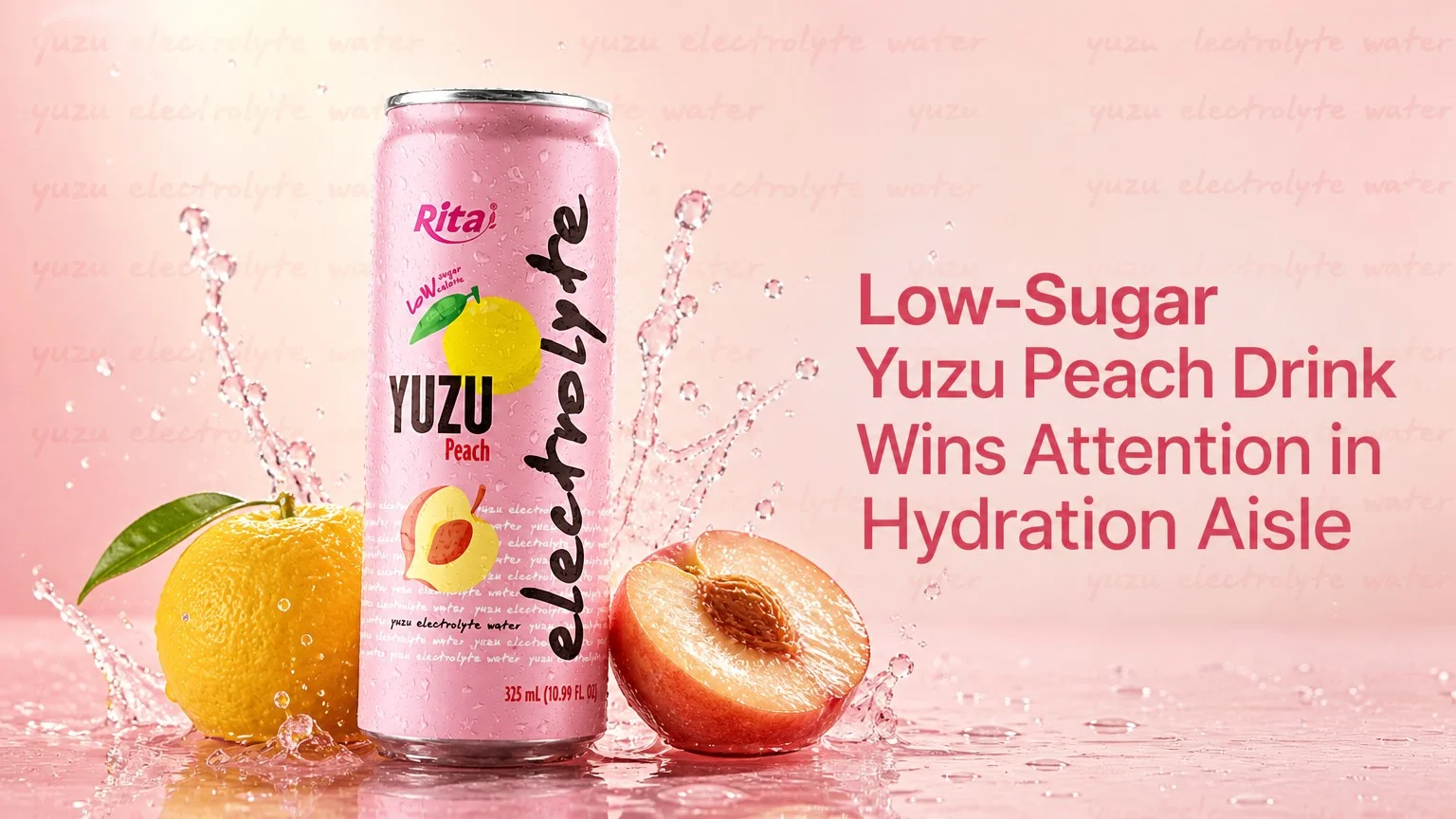
Key Takeaways
- The drink ships in a 325 mL slim aluminum can designed for single-serve occasions such as commutes, gym lockers and desk-side consumption.
- Label values sit at approximately 26 kcal and 4.5 g of carbohydrates per 100 mL, placing it in the low-sugar tier of the hydration category.
- Yuzu and peach combine for a tangy opening and a mellow, lightly sweet finish that separates the drink from plain water and conventional sports beverages.
- RITA supports private label and OEM customization for retailers, distributors and beverage brands entering the category.
Low-Sugar Hydration Formats Gain Shelf Space in North America
Low-sugar drink formats are moving from niche placement toward mainstream facings across North American retail.
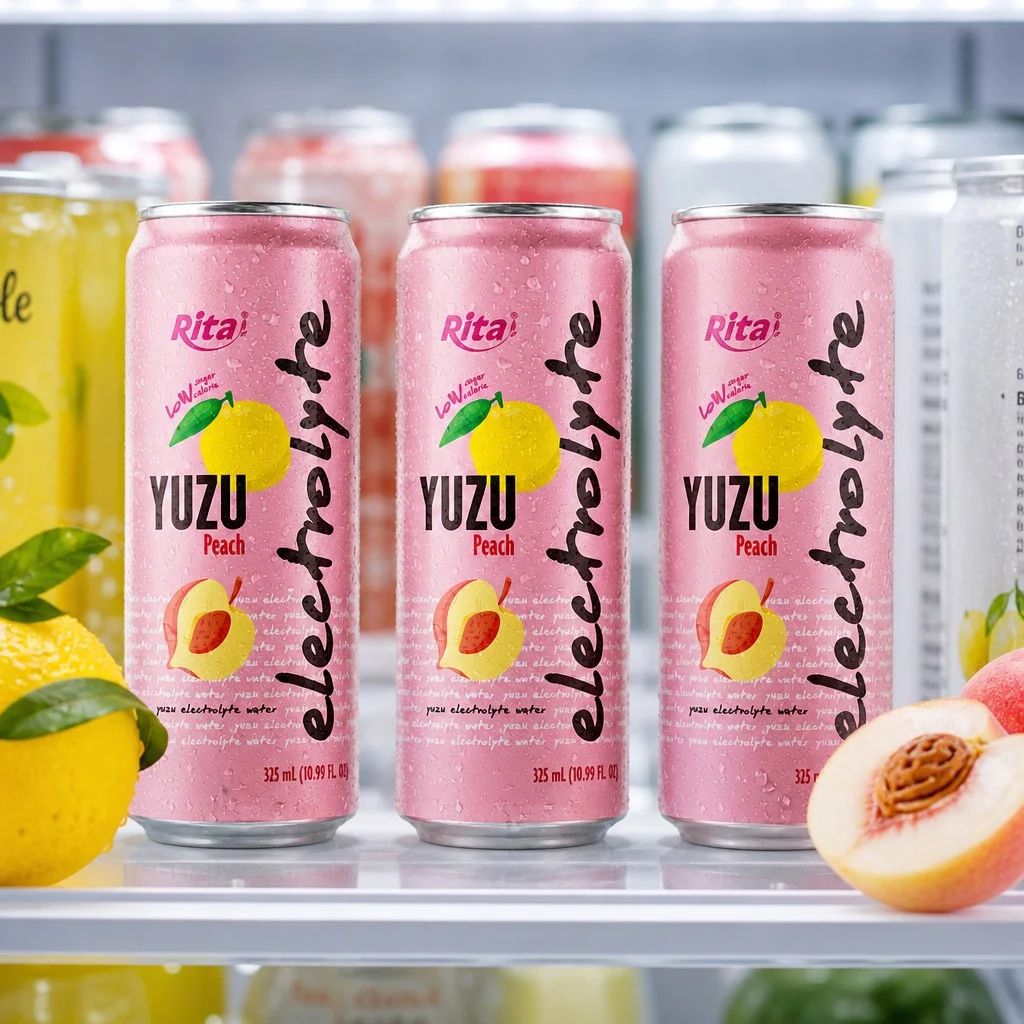
The Yuzu Peach Electrolyte Water Drink sits within RITA's carbonated drink catalog, a range that has expanded alongside demand for lightly sparkling, fruit-forward refreshment. Category managers describe a shelf where flavor novelty now carries as much weight as label values, since shoppers compare cans on taste cues as often as on brand heritage. The yuzu-peach pairing offers a recognizable citrus entry point with a stone-fruit finish that few mainstream hydration products currently use, giving buyers a distinct story for shelf talkers and end-cap displays.
Convenience formats are part of the appeal. A 325 mL can fits cup holders, lunch bags and gym lockers without the commitment of a larger bottle, which suits the single-serve purchase pattern that dominates impulse chilled beverage baskets. Distributors serving convenience chains, campus stores and travel retail have reported steady interest in cans that chill quickly and travel well.
For retail buyers, the pitch is a familiar occasion delivered through an unfamiliar flavor.
What the Yuzu Peach Electrolyte Water Drink Tastes Like
Flavor, rather than formulation, is where this particular drink asks to be judged on the shelf.
The taste balances tangy yuzu against soft, juicy peach notes, opening with a zesty citrus character before settling into a mellow, lightly sweet finish. The beverage keeps a gently acidic, fruit-forward profile, which makes each sip more engaging than plain unflavored water. RITA's flavor team describes the brief as a contrast exercise: the sharpness of yuzu has to arrive first, then step back so the peach can close the sip without leaving a heavy sugar impression.
That sequencing matters in a category where aftertaste drives repeat purchase. A drink that finishes sweet tends to read as a treat, while one that finishes dry tends to read as a utility. The yuzu peach flavor balance aims somewhere in between, offering enough fruit character to feel like a deliberate choice while staying light enough to fit a low calorie drink positioning.
Balancing Tangy Citrus with Mellow Peach
Yuzu brings a fragrant, slightly bitter citrus note that is more aromatic than lemon, while peach contributes roundness and a soft stone-fruit sweetness. Together they create a profile that reads as refreshing rather than syrupy, an important distinction for shoppers who want a flavored can without the heaviness of a traditional sports beverage. The result is a gently acidic profile that stands apart from conventional water and electrolyte water drink products aimed mainly at athletic performance occasions.
Reading the Label Numbers
The can carries approximately 26 kcal and 4.5 g of carbohydrates per 100 mL, figures that place it firmly in the low-sugar, low-calorie segment of the hydration aisle. On a full-can basis that translates to roughly 85 kcal and 14.6 g of carbohydrates across the 325 mL serving. Buyers reviewing supplier specifications often weigh these values alongside flavor intensity and packaging format, since the three together determine where a product can realistically be merchandised.
| Label value | Per 100 mL | Per 325 mL can |
|---|---|---|
| Energy | Approx. 26 kcal | Approx. 85 kcal |
| Carbohydrates | Approx. 4.5 g | Approx. 14.6 g |
| Packaging | Not applicable | 325 mL slim aluminum can |
Figures are derived from the published product specification for the 325 mL can.
Yuzu Peach Electrolyte Water Drink Packaging Built for Mobility
The can is small, slim and deliberately designed to be carried rather than poured.
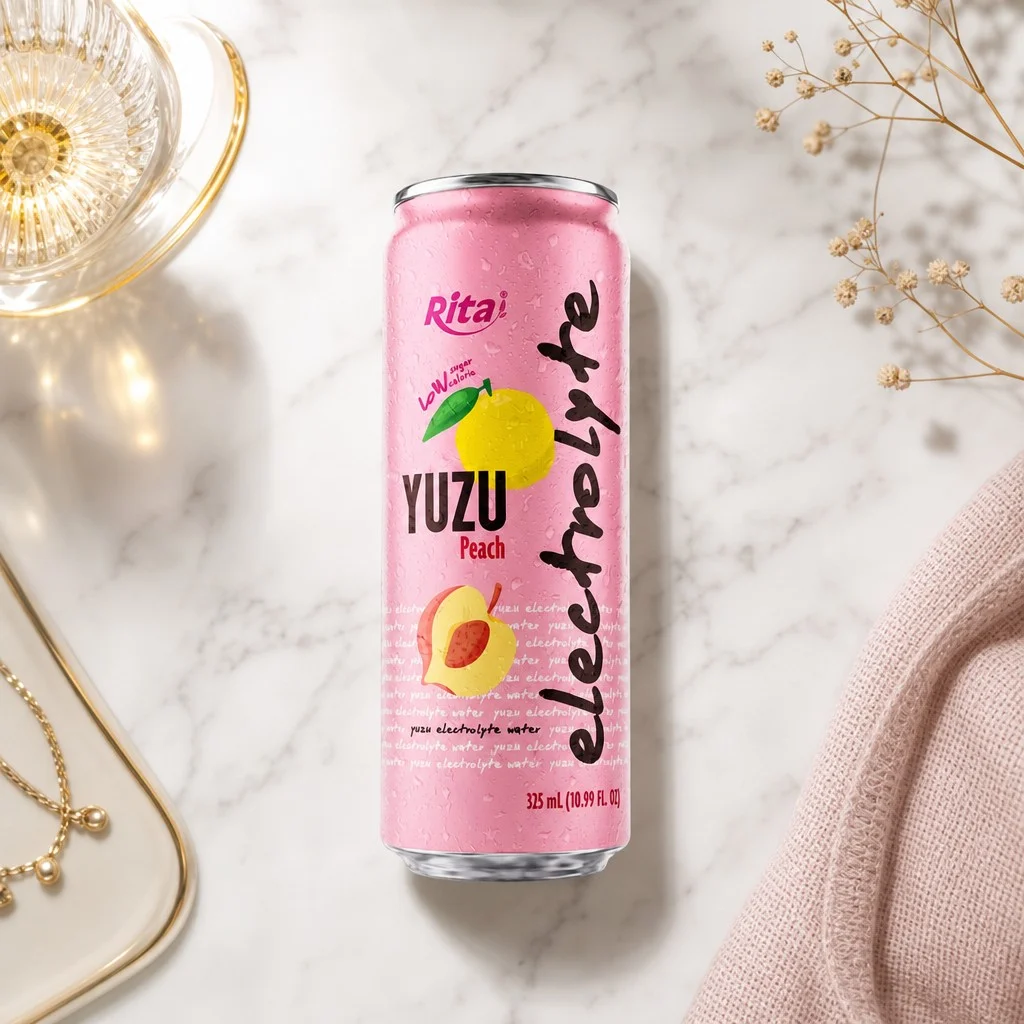
Visually, the 325 mL slim aluminum can uses a soft pink background with stylized yuzu fruit and sliced peach illustrations, prominent electrolyte lettering and subtle condensation imagery that reinforces a cool, fresh impression. The RITA wordmark sits at the top of the design, while a light repeating pattern of yuzu electrolyte water text runs behind the main graphics. Net volume is stated clearly as 325 mL (10.99 FL OZ), a detail that matters for retailers working with standard shelf planning templates. This kind of aluminum can beverage packaging also gives brand teams a consistent canvas for private label artwork.
The compact format suits a long list of single-serve settings, and that versatility is a selling point for buyers who need one SKU to perform across several channels:
- Commuter bags and car cup holders during daily travel
- Gym lockers and sports bags for pre- and post-session occasions
- Lunch bags, office desks and study spaces
- Convenience coolers, campus stores and travel retail displays
Retailers have found that slim cans also photograph well for social content and delivery-app thumbnails, which adds a marketing dimension to what is otherwise a logistical choice. The pink palette and fruit illustrations give the product a recognizable silhouette in a crowded cooler door, helping it hold its own next to larger, louder packaging.
How RITA Scales Flavor Innovation for Export Markets
Behind the can sits a beverage manufacturer built for scale, compliance and long-term export relationships.
RITA Food and Drink Co., Ltd was established in 2004 and operates more than 50 automated production lines, exporting over 1,200 containers per month to brands in more than 200 countries and territories. The company manufactures tropical fruit juices, coconut products, hydration beverages, energy drinks and more, packed in aluminum cans, glass bottles, PET and PP bottles. That breadth matters to buyers because flavor development, filling format and label design can be handled under a single supplier relationship rather than split across several vendors.
Quality documentation is a recurring requirement in export tenders, and RITA's certification portfolio covers the checkpoints most buyers ask about:
- BRC and FSSC 22000 food safety certification
- Halal Jakim and Halal HCA-GCC certification
- Kosher certification for religious-market distribution
- ISO, GMP, HACCP and SMETA social compliance audits
For North American importers, that paperwork shortens the evaluation cycle considerably. The Yuzu Peach Electrolyte Water Drink is one of several flavor-led formats available for listing, and buyers can review the wider fruit drink selection to benchmark taste direction and pack sizes before requesting samples.
Private label work is where the relationship often deepens, and RITA's OEM service program lets brands adjust flavor, sweetness level, artwork and case configuration before a first production run.
For a retailer testing a low-sugar hydration line, that flexibility means the yuzu-peach profile can be tuned to local preference, the can artwork can carry a house brand, and case packs can match existing distribution norms. Starting from an established formulation shortens development timelines and reduces the risk attached to a first launch in a competitive aisle, which is why OEM beverage manufacturing conversations tend to start with samples rather than with blue-sky concepts.
Raw Material Sourcing and Flavor Development
Flavor work starts long before artwork is approved, in the sourcing of raw fruit materials.
Vietnam's fruit sourcing network gives RITA a broad base for developing new profiles, and the company documents its ingredient sourcing across the Mekong Delta raw material area, where tropical fruit is grown for the beverage industry. Citrus grown in the region informs the aromatic side of citrus-led flavor work, while stone-fruit notes such as peach are refined through blending trials that adjust sweetness, acidity and aroma balance.
The company's field footage from the region offers a closer look at the ingredient landscape behind its beverage portfolio: https://www.youtube.com/watch?v=jiBixXjeG8A
Consistency across markets depends on repeatable inputs. For an exporter shipping more than 1,200 containers a month, raw material specifications, supplier audits and batch documentation are what allow the same flavor to taste the same in a convenience cooler in one market and a campus store in another. That discipline is also the first thing private label partners evaluate when they compare manufacturers.
Market Signals from the Global Beverage Trade
Recent moves across the trade point to contracts, courts and sugar policy shaping supplier conversations.
UK brewer Adnams is reviewing its packing contracts, a reminder that packaging supply remains an active line item in beverage planning. In Greece, Heineken has been ordered to pay damages in a competition case, keeping competition litigation on the radar of legal and commercial teams. Meanwhile, German trade bodies have launched an advertising campaign against a sugar tax, a policy debate that directly affects how low-sugar products are positioned in European markets and, by extension, how importers frame label claims elsewhere.
Expansion stories run alongside the policy debate. UK ready-to-drink firm Whitebox Cocktails has entered the United States, showing how quickly format innovation crosses borders once a brand finds a distribution partner. Carlsberg is investing in a German brewery site, signalling continued commitment to capacity.
For buyers evaluating a new hydration SKU, the pattern is consistent: supply-chain contracts, competition outcomes, sugar policy and capacity investment all feed into the same sourcing decision. A product like the Yuzu Peach Electrolyte Water Drink arrives with documented certifications, a compact 325 mL format and a flavor profile that is easy to explain on shelf, which is a practical starting point for conversations with category teams. Samples and specifications are available through the product page for retail and distribution partners comparing hydration options.
Frequently Asked Questions
What is the Yuzu Peach Electrolyte Water Drink?
The Yuzu Peach Electrolyte Water Drink is a 325 mL low sugar hydration beverage from RITA that combines yuzu citrus aroma with ripe peach sweetness, finished with essential electrolytes and packaged in a slim aluminum can.
How many calories and how much carbohydrate does one can contain?
Values are approximately 26 kcal and 4.5 g of carbohydrates per 100 mL, which works out to roughly 85 kcal and 14.6 g per 325 mL can.
What does the packaging look like?
The can uses a soft pink design with stylized yuzu fruit, a sliced peach illustration, prominent electrolyte lettering and subtle condensation imagery, with net volume marked as 325 mL (10.99 FL OZ).
Can retailers request private label or OEM production?
Yes. RITA offers OEM and ODM services covering flavor, sweetness level, artwork and case configuration, backed by BRC, FSSC 22000, Halal, Kosher, ISO, GMP, HACCP and SMETA certifications.