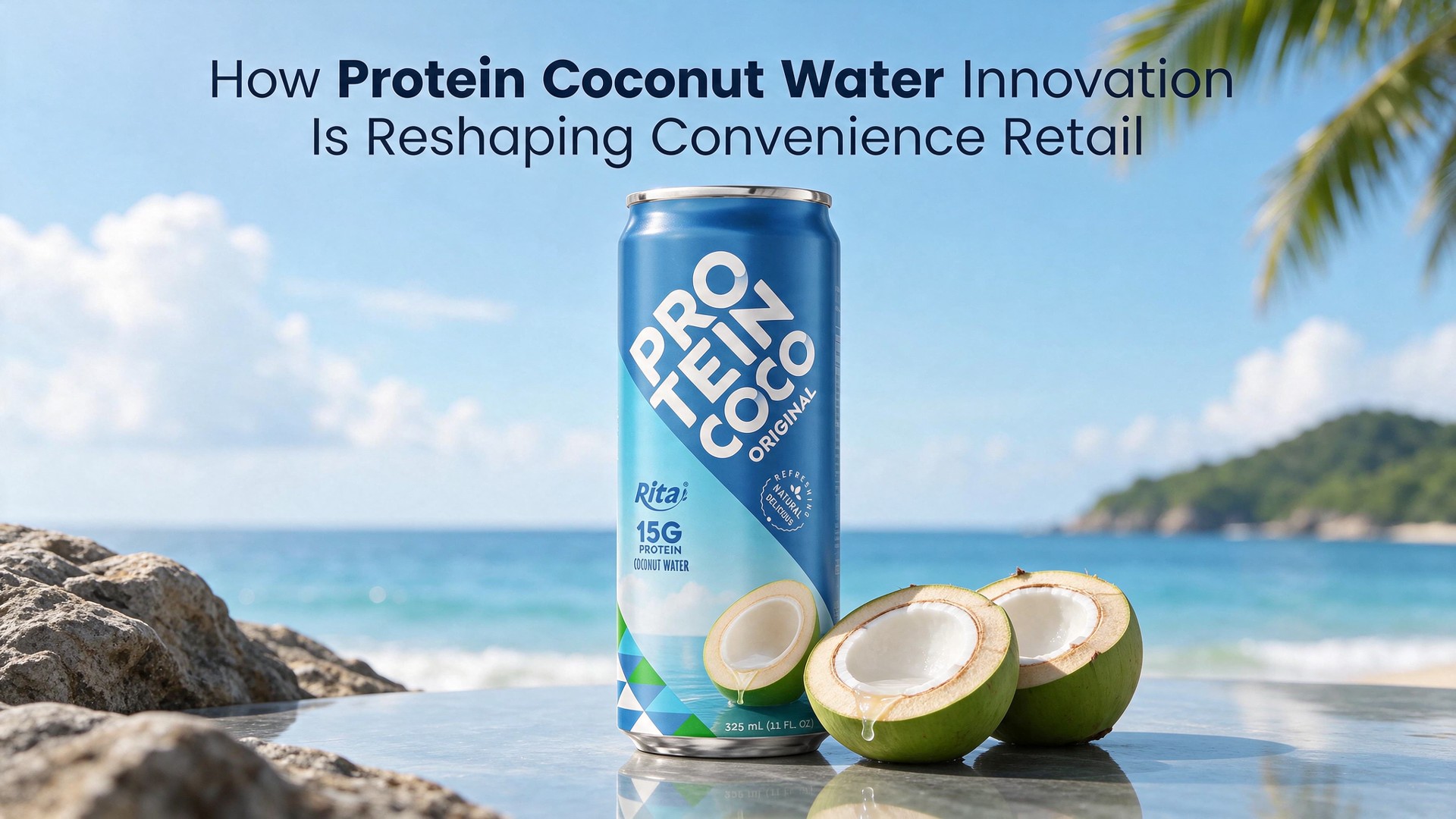
The intersection of two of the fastest-moving beverage categories — coconut water and protein-enriched refreshment — has created a format that importers, distributors and retail buyers across the United States, Canada and the wider North American market are now watching closely. RITA Original Protein Coconut Water, a 325ml aluminum can delivering 15g of protein per serving, sits squarely at that intersection, and it is already reshaping how buyers think about the chilled beverage set.
Key Takeaways
- Protein coconut water merges two established categories into one shelf-ready SKU that suits several consumption occasions.
- The RITA Original Protein Coconut Water 325ml can carries 15g of protein with a light, clean coconut profile.
- A coordinated four-flavor range — Original, Mango, Chocolate and Pineapple — supports block merchandising in retail.
- A 24-month ambient shelf life and flexible minimum order quantities lower the risk of a first listing.
- Production is backed by BRC, FSSC 22000, ISO, HACCP, GMP, Kosher and Halal certifications.
Why Protein Coconut Water Is Gaining Ground in North America
Category lines in the cold vault are blurring faster than most planograms can keep up with.
Coconut water spent the past decade establishing itself as a mainstream refreshment option in North American retail, moving from specialty grocers into mass channels, convenience stores and foodservice. The next phase of that evolution is additive: brands are layering protein, flavor and format innovation onto a base that shoppers already recognize. Protein coconut water is the clearest expression of that shift, and it arrives at a moment when shelf space is being reallocated toward drinks that do more than quench thirst.
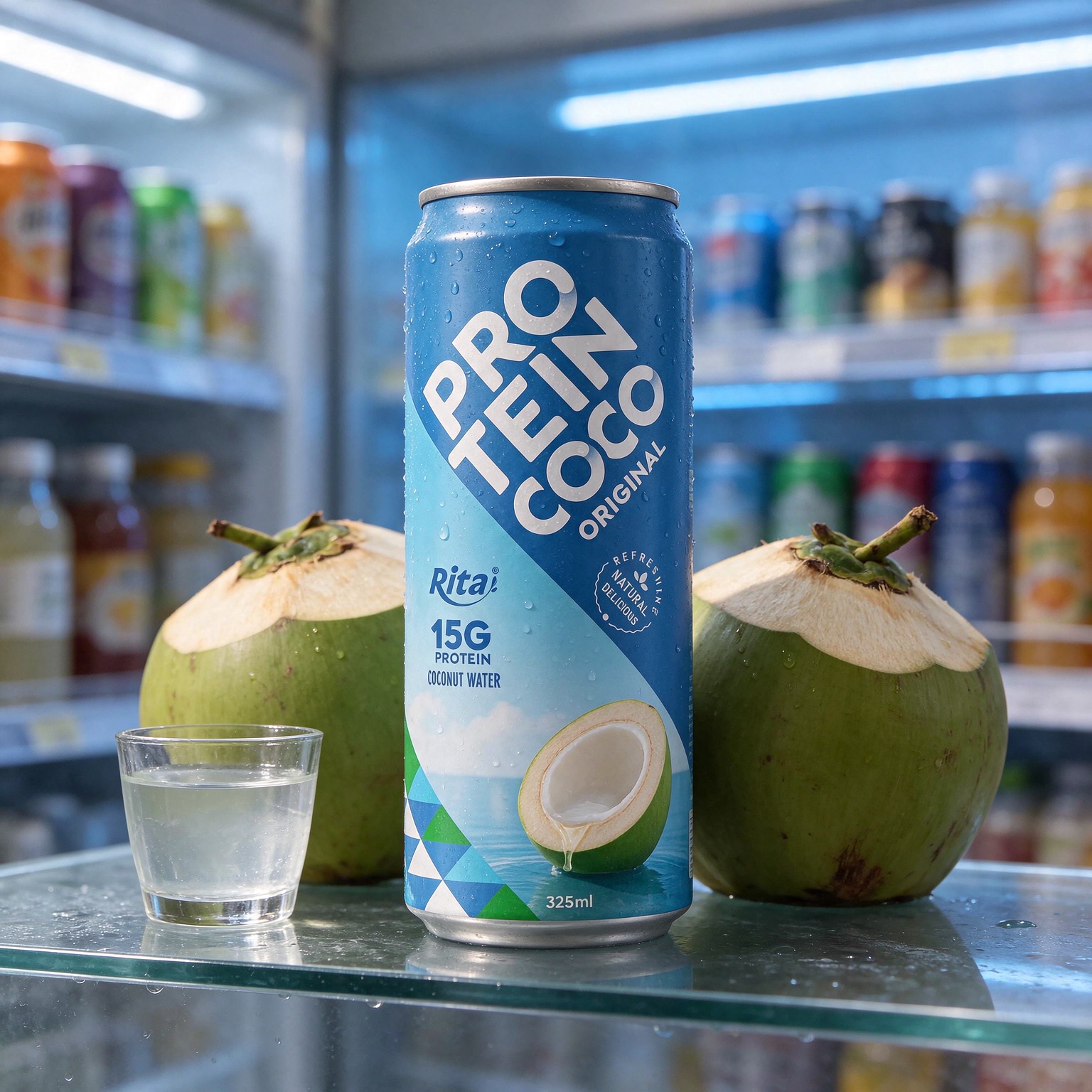
For buyers, the appeal is structural rather than seasonal. A single SKU can serve several occasions — a mid-morning pickup, a post-training stop, a road-trip cooler — which improves rotation and reduces the risk of dead stock. Distributors in the United States and Canada have also noted that protein-enriched formats tend to command higher price points than standard coconut water, giving retailers room to protect margins without stepping into unfamiliar categories.
The Shift Toward Protein-Enriched Refreshment
Protein has migrated out of the shaker bottle and into the everyday cooler.
Ready-to-drink protein formats have expanded well beyond sports nutrition aisles. Shoppers who once reserved protein drinks for training days now treat them as general refreshment, and they increasingly expect those drinks to taste like something they would have chosen anyway. Coconut water provides a naturally light, gently sweet base that carries added protein without the dense, chalky texture that has historically limited the category's reach.
That texture question is the technical crux of the format. Formulators must balance protein load, mouthfeel and stability so the drink stays clean-tasting and refreshing across a long shelf life. The 325ml can size helps here: it is large enough to carry a meaningful 15g protein claim, yet compact enough to be finished in one sitting, which avoids the half-empty bottles that frustrate shoppers and category managers alike.
Broader beverage industry signals reinforce the case for flexibility. Several large manufacturers have reported regional sales tracking below internal plans, and regulators in various markets continue to scrutinize how ready-to-drink categories are taxed and advertised. For importers, that environment rewards suppliers who can scale production up or down quickly and adapt formulations without rebuilding a supply chain from scratch.
What Retail Buyers Look For Now
Buyers are not shopping for a single can; they are shopping for a program.
A standalone protein coconut water SKU can perform on its own, but a coordinated range performs better. Color-coded flavors, consistent can dimensions and a unified visual identity let a retailer build a block on shelf that reads instantly to a shopper walking past at speed. That block effect is one of the most reliable drivers of trial in the chilled beverage set.
- Consistent can format across flavors to simplify planogram design
- A protein callout legible at arm's length
- Shelf-stable logistics with a 24-month window
- Flexible minimum order quantities for regional rollouts
- Documentation that clears import and retail compliance checks
Each of those criteria is easier to satisfy when the supplier controls the full production chain rather than assembling a product from third-party components.
Inside the RITA Original Protein Coconut Water 325ml Can
The flagship Original SKU is a study in restraint, and that is precisely the point.
Each unit is a slim 325ml (11 fl. oz.) aluminum can with silver top and bottom rims. The label runs a striking diagonal blue gradient behind a halved green coconut graphic, with bold PROTEIN COCO typography and a circular badge reading REFRESHING · NATURAL · DELICIOUS. The word ORIGINAL sits alongside the 15G PROTEIN COCONUT WATER callout, so the proposition is readable in under a second.
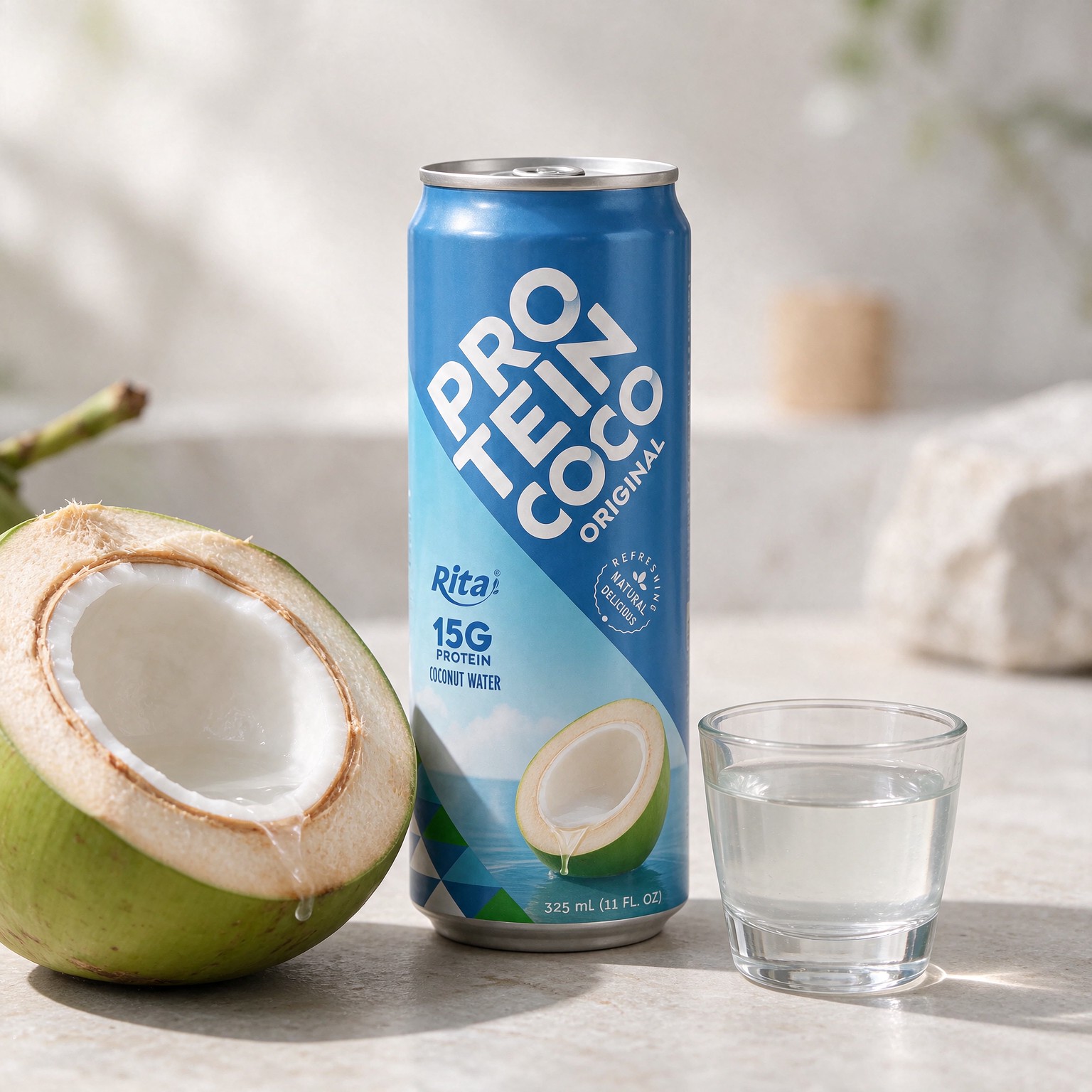
The formulation combines water, a coconut water base, milk protein concentrate, stabilizers, emulsifiers and sweeteners. The result is a smooth, balanced drink with a clean tropical coconut profile rather than a heavy dessert character — an important distinction for shoppers who want protein without sweetness overload. Volume is listed at 325ml, with some market specifications recording 330ml, a minor variance that buyers should confirm against their own labeling requirements before artwork is finalized.
From a merchandising standpoint, the can also solves a practical problem. Chilled space is the most expensive real estate in a convenience store, and a 325ml slim can fits standard gravity-fed and glass-door fixtures without customization. A retailer can therefore add the SKU to an existing set rather than redesigning the set around it.
Formulation and Taste Profile
Taste remains the gatekeeper of repeat purchase in every beverage category.
A protein-enriched drink can win trial on the strength of its claim, but it only earns a second purchase if the flavor holds up. The Original variant leans into a light coconut character, keeping the drinking experience close to conventional coconut water while the protein contributes body rather than heaviness.
For private-label partners, that base is a useful platform. RITA's development team can adjust sweetness, protein source and flavor intensity to match a retailer's target profile, then validate the result against the stability requirements of a 24-month ambient shelf life. The company's OEM and ODM programs are built around exactly this kind of iterative development, from concept brief through pilot batches to full-scale production.
Packaging Built for Shelf Visibility
In a chilled vault, packaging does the selling before a single word is read.
The 325ml aluminum can is lightweight, widely recyclable through municipal streams, and quick to chill — three practical advantages for convenience and foodservice accounts. Aluminum also protects flavor stability well, which matters when a product may sit in distribution for months before it reaches the cooler door.
The design language is deliberately bold. A diagonal blue gradient, geometric blue-green-white triangles, a halved coconut with white flesh and a droplet of liquid, and a blue sky-and-water backdrop combine to signal tropical refreshment from several meters away. The four-flavor range uses distinct color coding so that Original, Mango, Chocolate and Pineapple read as a family rather than four unrelated products.
A Four-Flavor Portfolio Built for Retail Presence
Range depth is what turns a listing into a category.
The PROTEIN COCO line is anchored by Original as its flagship, supported by Mango, Chocolate and Pineapple variants. Each flavor shares the same 325ml can, the same protein positioning and the same visual architecture, which allows a retailer to test the concept with one SKU and expand once rotation proves out.
| Variant | Flavor Direction | Role in the Range |
|---|---|---|
| Original | Clean, light coconut water profile | Flagship SKU and category anchor |
| Mango | Tropical stone-fruit sweetness | Broad-appeal flavor for mainstream sets |
| Chocolate | Dessert-leaning cocoa character | Cross-over option for protein drink shoppers |
| Pineapple | Bright, tangy tropical note | Rotation driver and variety builder |
Innovation in this segment is no longer about inventing an entirely new drink. It is about recombining familiar elements — a recognizable base, a clear protein claim, a compact format and a coordinated range — into something a shopper can understand at a glance. That is a lower-risk form of innovation for retailers, and it is why protein coconut water has moved from concept to listing faster than many category forecasts anticipated.
For importers and private-label partners, the more interesting question is how quickly a range can be adapted. RITA Food and Drink Co., Ltd., established in 2004, operates more than 50 automated production lines and supplies brands in over 180 countries, exporting more than 1,200 containers each month. Its coconut products catalog spans a broad spread of formats, from coconut water to coconut milk drinks, while the non-alcohol beverage range gives retailers additional flexibility when building a multi-category order.
That combination — a defined flagship product plus a deep surrounding catalog — is what most distributors mean when they ask a supplier whether it can grow with them.
Export Readiness, Certifications and Supply Capacity
Compliance is the quiet gatekeeper of every cross-border beverage deal.
North American buyers typically require documentation before they will discuss pricing. RITA's production is covered by BRC, FSSC 22000, ISO, GMP, HACCP, Kosher, Halal Jakim and Halal HCA-GCC certifications, alongside SMETA social compliance audits and the FDA-related documentation expected for the United States market. For a retailer, that paperwork package shortens the path from sample approval to purchase order.
| Requirement Area | Status | Buyer Relevance |
|---|---|---|
| Food safety systems | BRC, FSSC 22000, HACCP, ISO, GMP | Supports retailer and distributor audits |
| Dietary compliance programs | Halal Jakim, Halal HCA-GCC, Kosher | Opens specialty and multicultural retail channels |
| Social compliance | SMETA | Aligns with ethical sourcing policies |
| US market documentation | FDA-related registration and labeling support | Reduces friction at import |
Capacity is the second half of the equation. With more than 50 automated lines and 1,200+ containers shipped monthly, RITA can support both branded programs and custom formulations. Flexible minimum order quantities allow regional chains and specialty retailers to test a 325ml protein drink can without committing to container-scale volumes on a first order — a structure that has become increasingly important as buyers de-risk new category entries.
Logistics also favor the format. A 24-month shelf life when stored cool and dry means the product does not require a cold chain to reach a distribution center, and the lightweight aluminum can reduces freight weight per unit compared with glass. For importers balancing landed cost against retail price points, those details matter as much as the formulation itself.
From the Coconut Groves to the Can
Coconut water is an agricultural product before it is a beverage.
The coconut water used across the PROTEIN COCO range traces back to Ben Tre, a province in Vietnam's Mekong Delta where coconut palms have been cultivated for generations. RITA's sourcing teams work directly with growers in the region, and the supply story behind the ingredient is documented in this look at the Ben Tre coconut farm, from plantation to high-quality products.
https://www.youtube.com/watch?v=I7hlTL3FT_0
For buyers evaluating a coconut water with protein, that traceability is a practical asset. It supports supplier audits, origin documentation and the kind of sourcing narrative that retail marketing teams increasingly request when a new SKU goes on shelf.
Frequently Asked Questions
What is RITA Original Protein Coconut Water?
It is a ready-to-drink beverage that combines a coconut water base with 15g of protein per 325ml can. It is produced by RITA Food and Drink Co., Ltd. in Vietnam and serves as the flagship flavor of the PROTEIN COCO line, which also includes Mango, Chocolate and Pineapple variants.
What are the ingredients?
Water, coconut water base, milk protein concentrate, stabilizers, emulsifiers and sweeteners. The formulation is designed for a smooth, balanced taste with a clean tropical coconut profile.
What is the shelf life and storage requirement?
The product carries a 24-month shelf life when stored cool and dry, which allows ambient distribution without a cold chain.
Can buyers order private-label versions?
Yes. RITA operates OEM and ODM programs with flexible minimum order quantities, supporting custom formulations, flavor adjustments and packaging development for retail chains and specialty channels.
Which markets does the product target?
Primary demand comes from the United States, Canada and the broader North American market, where importers, distributors and private-label partners are looking for scalable protein-enriched tropical beverages.