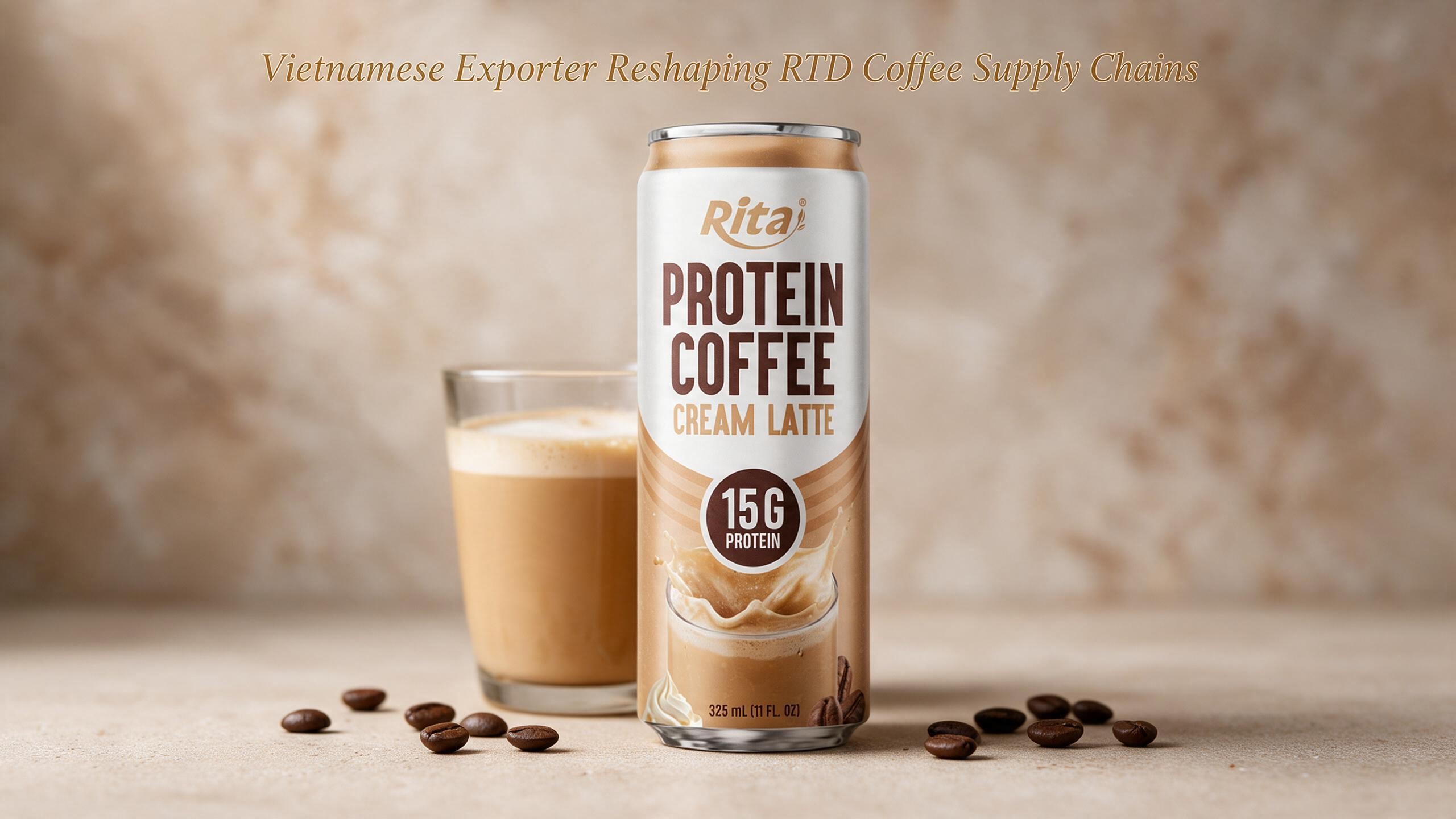
The ready-to-drink coffee aisle has quietly become one of the most competitive battlegrounds in North American retail, and the companies winning shelf space are increasingly those that can pair café-grade flavor with reliable, high-volume supply. Against that backdrop, RITA Cream Latte Protein Coffee 325ml Can With 15g Protein has emerged as a case study in how Vietnamese manufacturing scale, export infrastructure, and product design converge to serve distributors across the United States, Canada, and the broader North American region. The product sits within a three-flavor lineup that also includes Vanilla and Mocha variants, all sharing a uniform 325 ml sleek can format that simplifies merchandising and logistics from port to shelf.
Key Takeaways
- RTD coffee demand in North America is pulling in protein-enriched formats, and supply chain agility now matters as much as taste.
- RITA Food and Drink Co., Ltd. operates 50+ automated production lines and exports to 200+ countries and territories, giving it unusual scale for a Vietnamese OEM/ODM supplier.
- The Cream Latte variant delivers 15 g of protein and 62 mg of caffeine per 325 ml can, targeting mainstream coffee drinkers rather than niche buyers.
- A 24-month shelf life and a stack of international certifications (BRC, FSSC 22000, ISO, HACCP, Halal, Kosher, GMP, SMETA) make the SKU export-ready by design.
- Consistent can format across three flavors reduces distributor complexity in a category where SKU proliferation is a known pain point.
North American Demand Meets Vietnamese Export Capacity
Consumer taste in the United States and Canada has shifted decisively toward beverages that do more than refresh. Coffee drinkers who once defaulted to hot drip or café orders now reach for cans that travel well, chill quickly, and fit a desk-side routine. That shift has opened the door for products like RITA Cream Latte Protein Coffee, which packages a familiar cream latte profile alongside a meaningful protein count in a single grab-and-go unit.
The supply side of that equation is just as important. RITA Food and Drink Co., Ltd., established in 2004, has grown into one of Vietnam's most capable OEM/ODM beverage manufacturers, running more than 50 automated production lines and shipping over 1,200 containers per month. That throughput matters when a North American distributor needs consistent weekly allocations rather than one-off container loads.
For importers, the practical question is whether a supplier can hold quality across repeated shipments while navigating customs, documentation, and seasonal demand spikes. RITA's export footprint, spanning 200+ countries and territories, suggests an organization that has already solved much of that paperwork and logistics burden. Buyers exploring the broader portfolio can review the company's coffee drink series catalog to see how the Cream Latte SKU fits alongside other RTD offerings.
Why Format Consistency Reduces Distributor Friction
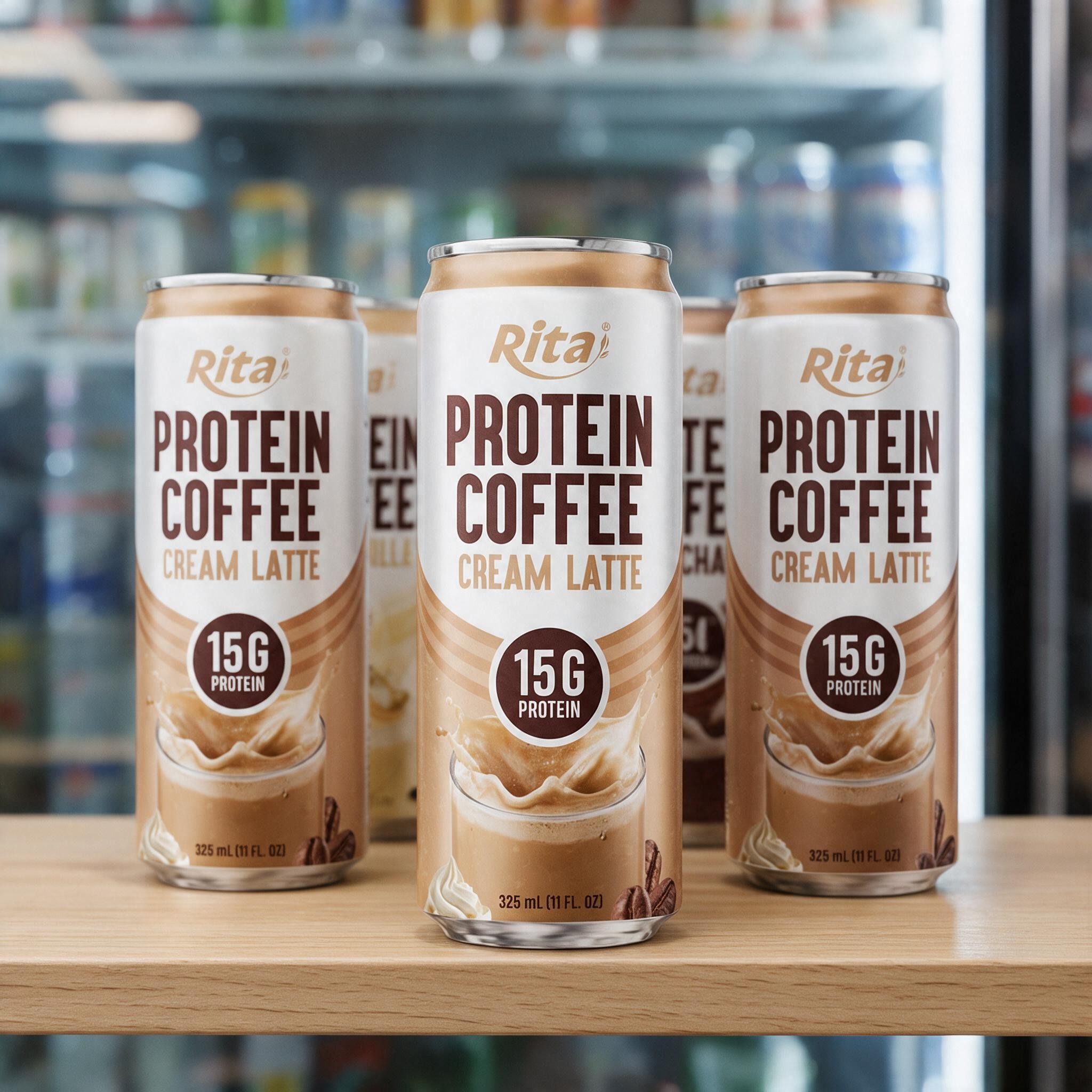
Retail buyers dislike assortment complexity, and the RTD coffee category is already crowded with mixed pack sizes, bottle shapes, and label orientations. By keeping all three flavors — Cream Latte, Vanilla, and Mocha — in an identical 325 ml sleek aluminum can, RITA gives category managers a simpler planogram story. Shelf rows align visually, case packs stack predictably, and warehouse picking errors decline when every unit shares the same footprint.
That uniformity also pays off at the pallet level. Identical can dimensions mean tighter cube utilization during ocean freight and trucking, translating directly into lower per-unit landed cost. For a category where margins are squeezed between coffee commodity prices and promotional discounting, any structural saving in freight density is meaningful.
- Uniform 325 ml sleek can across Cream Latte, Vanilla, and Mocha
- Consistent case configuration simplifies receiving and inventory counts
- Aluminum construction supports rapid chilling and long-distance shipping
Product Design and Formulation Built for Shelf Impact
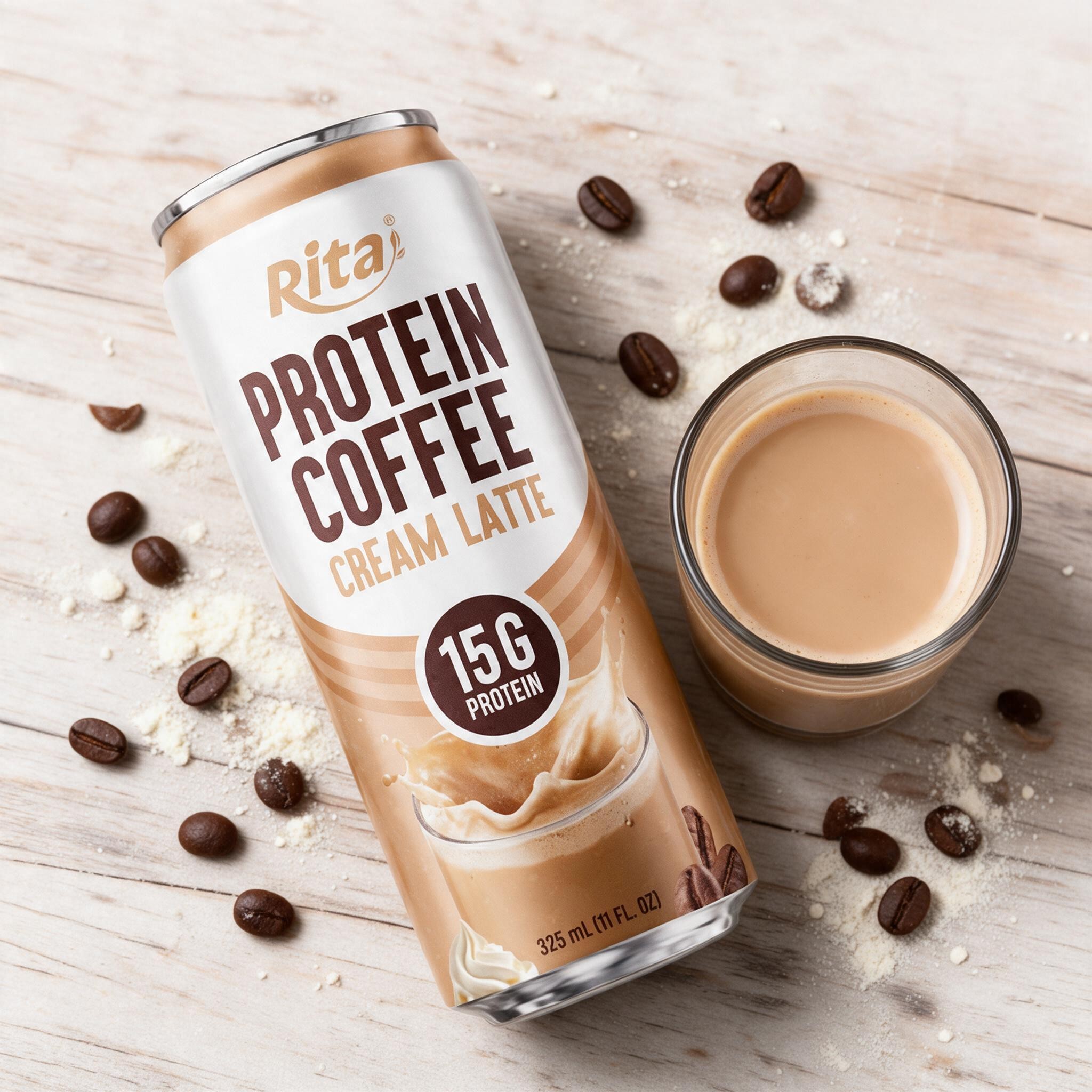
The Cream Latte variant leans into visual cues that shoppers already associate with a classic coffeehouse drink. The label runs a warm white-to-tan gradient with curved swoosh lines, anchored by imagery of a frothy coffee-cream splash, a whipped cream dollop, and scattered roasted beans. On a crowded cooler shelf, that combination reads instantly as a creamy, indulgent coffee rather than a sports nutrition product — an important distinction for mainstream buyers who may not be actively shopping in the protein category.
Inside the can, the formulation blends whole milk powder, milk protein concentrate, and instant coffee powder to produce a rich, creamy body with a light caramel color and a clean, subtly sweet finish. Each can delivers 15 g of protein alongside 62 mg of caffeine, offering a moderate energy lift suitable for daily consumption without pushing the drink into extreme-caffeine territory. Typical nutritional values land around 183 calories, 6.2 g total fat, and 13 g total carbohydrates per 325 ml serving, with protein content referenced as high as 18.9 g per can depending on specification sheet.
Certification Stack That Shortens Import Clearance
Documentation is where many export deals stall, and RITA has assembled a certification portfolio designed to preempt those delays. The product line carries ISO, HACCP, FDA, HALAL, BRC, FSSC 22000, Kosher, GMP, and SMETA credentials, covering food safety management, religious dietary standards, and social compliance auditing. For a US or Canadian importer, that breadth reduces the back-and-forth that typically occurs when a supplier can only produce one or two certificates on request.
A 24-month shelf life under cool, dry storage conditions further de-risks long-haul distribution. Containers routed through West Coast or East Coast ports still arrive with ample runway before best-by dates, giving retailers flexibility on promotional timing and seasonal resets. Companies interested in how RITA structures these export programs can start with the manufacturer's company profile or explore dedicated coffee drinks catalog pages for technical specifications.
From Highlands to Can — Raw Material Sourcing Behind the Blend
Consistent flavor across millions of cans starts with consistent raw materials, and coffee sourcing is the anchor of the Cream Latte profile. RITA's sourcing team works directly with growers in Vietnam's Central Highlands, where the company inspects gardens during peak harvest season to secure the instant coffee powder grades that define the drink's roast character. That farm-to-can visibility gives the manufacturer tighter control over bitterness, acidity, and aroma — the three variables most likely to drift between production runs.
Milk-derived inputs follow a parallel path. Whole milk powder and milk protein concentrate are qualified against fixed supplier panels and incoming-inspection protocols, ensuring that the creamy mouthfeel described on the label holds true whether the can is produced in month one or month twelve of a purchase order.
The company documents its sourcing journey through its coffee garden visits during peak harvest season, offering buyers a transparent look at where the coffee component originates.
Broader raw material infrastructure draws on the Mekong Delta ingredient region, which supplies milk powder inputs and other agricultural commodities used across RITA's wider beverage portfolio.
For teams that prefer visual documentation, the company has published footage of its coffee garden sourcing visits showing field-level inspection practices during harvest.
Market Positioning and Competitive Context
The RTD coffee category does not exist in isolation. Broader beverage M&A activity continues to reshape who controls shelf space and distribution muscle. Heineken's acquisition of Brazilian beer and yerba-mate company Better Drinks signals how multinational players are diversifying beyond their core categories into adjacent refreshment segments. Meanwhile, Zevia lifted its full-year forecast after strong Q3 results, underscoring investor appetite for beverage brands that can demonstrate consistent volume growth. On the financial side, Super Bock promoted its CFO to chief executive, a leadership move often associated with tightening operational discipline ahead of expansion. Russian interest in Coca-Cola HBC assets and Raisio's chairman resignation amid a cut outlook further illustrate how volatile the global beverage landscape remains.
Against that backdrop, mid-sized exporters with deep product libraries and proven compliance records occupy a useful niche. They can supply private label programs, co-develop new SKUs, and scale orders without the procurement complexity of the largest multinational suppliers. RITA's OEM and ODM service model is built precisely for that buyer profile — brands and distributors that want formulation flexibility without building their own production capacity. Additional details on those programs are available through the manufacturer's OEM service page.
Where Cream Latte Sits Relative to the Flavor Lineup
The Cream Latte variant serves as the flagship of the three-flavor range, appealing to consumers who prefer a traditional coffee experience over flavored profiles. Vanilla and Mocha extend the lineup for retailers who want assortment breadth without introducing a new can size or label architecture. Together, the trio covers the majority of mainstream RTD coffee preferences while keeping warehouse complexity low.
| Variant | Flavor Profile | Can Format | Protein per Can |
|---|---|---|---|
| Cream Latte | Classic creamy latte, light caramel color | 325 ml sleek aluminum | 15 g (spec up to 18.9 g) |
| Vanilla | Smooth vanilla coffee blend | 325 ml sleek aluminum | 15 g (spec up to 18.9 g) |
| Mocha | Cocoa-forward coffee profile | 325 ml sleek aluminum | 15 g (spec up to 18.9 g) |
Buyers evaluating the full range can browse the RITA Cream Latte Protein Coffee product page for pack details, specifications, and ordering information.
Supply Chain Takeaways for North American Buyers
For distributors and retail category managers across the United States and Canada, the Cream Latte SKU illustrates a broader point: the winners in RTD coffee will be suppliers who treat logistics, certification, and format discipline as part of the product itself. A great-tasting can that arrives with incomplete paperwork or inconsistent fill levels still fails the shelf test.
RITA's combination of Vietnamese manufacturing scale, a 24-month shelf life, international certification coverage, and a uniform three-flavor can format addresses the operational side of that equation. The Cream Latte flavor addresses the consumer side. Together, they form a proposition that fits how modern beverage supply chains actually function — predictable, documented, and ready to move at container scale.
Companies exploring adjacent categories within the same supplier network can review the milk series catalog for complementary dairy-based beverages that share similar production and export infrastructure.
Frequently Asked Questions
What protein and caffeine content does RITA Cream Latte Protein Coffee contain?
Each 325 ml can delivers 15 g of protein (specification sheets reference up to 18.9 g per can) alongside 62 mg of caffeine, providing a moderate energy lift for daily consumption. Typical nutritional values are approximately 183 calories, 6.2 g total fat, and 13 g total carbohydrates per can.
What certifications back the RITA Cream Latte Protein Coffee line?
The product holds ISO, HACCP, FDA, HALAL, BRC, FSSC 22000, Kosher, GMP, and SMETA certifications, covering food safety management, religious dietary compliance, and social auditing standards. These credentials support smoother import clearance for US and Canadian buyers.
How long is the shelf life of the 325 ml Cream Latte can?
The product carries a 24-month shelf life when stored under cool, dry conditions, making it well-suited for ocean freight and extended distribution windows across North American warehouse networks.
What flavors are available alongside Cream Latte?
The lineup includes Cream Latte, Vanilla, and Mocha variants, all packaged in the same 325 ml sleek aluminum can format to simplify merchandising and logistics for retailers and distributors.
Who manufactures RITA Cream Latte Protein Coffee?
The product is produced by RITA Food and Drink Co., Ltd., a Vietnamese OEM/ODM beverage manufacturer established in 2004 with more than 50 automated production lines, exporting to over 200 countries and territories worldwide.