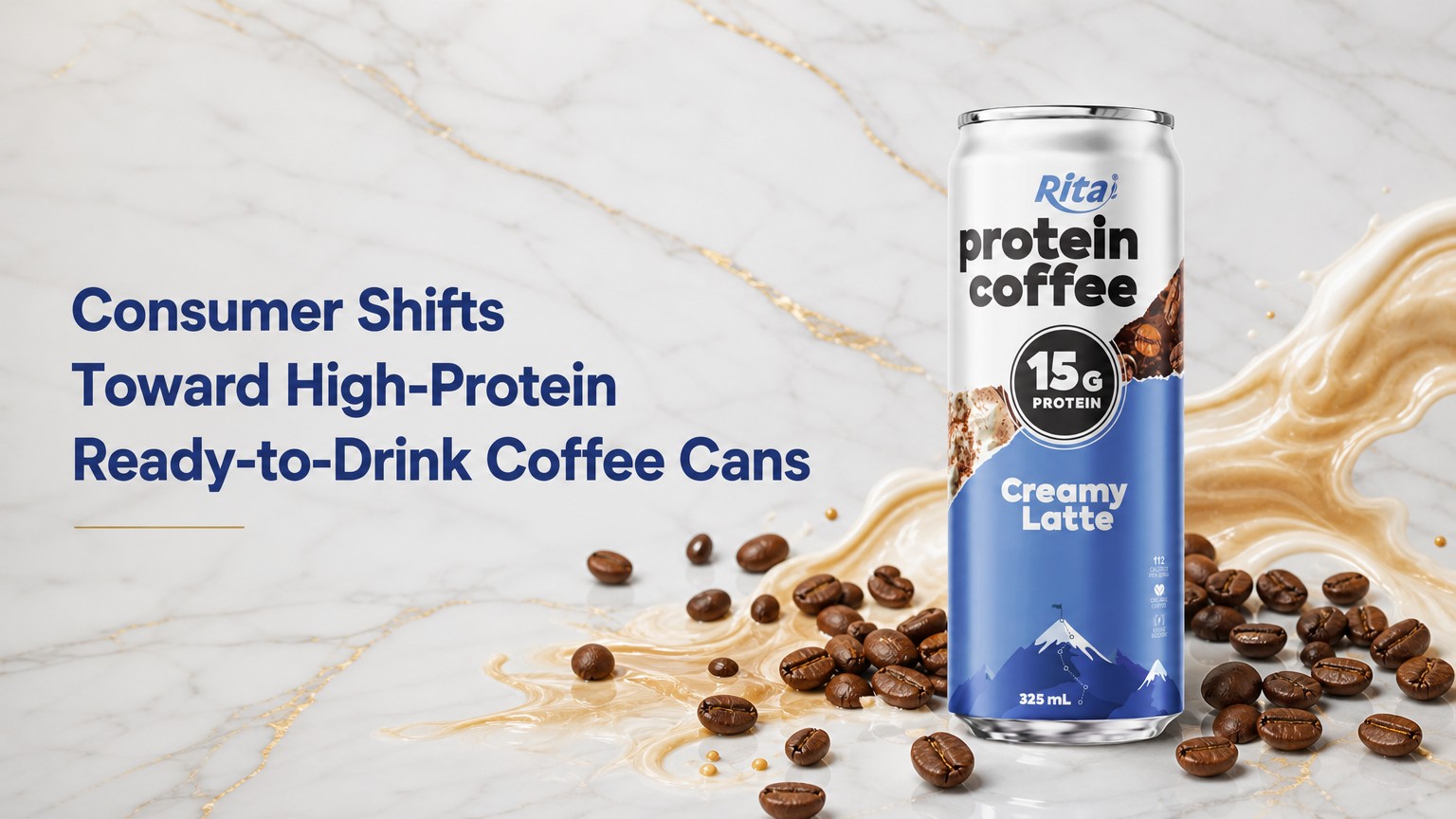
High-protein ready-to-drink coffee has moved from a specialty cooler shelf into the center of beverage buying conversations, and a new Creamy Latte release shows how quickly the category is converging around one proposition — familiar café taste delivered in a portable, protein-bearing format. The Rita High Protein Coffee Creamy Latte Drink 15g Protein arrives as a 325ml aluminum can that pairs a smooth latte profile with 15g of protein per serving, answering the way shoppers now sequence their decisions: flavor first, convenience second, label numbers third. For retailers, distributors and private label entrepreneurs tracking ready to drink coffee trends, the SKU is a compact case study in one product meeting several demand signals at once.
Coffee occasions have multiplied. Consumers increasingly treat a latte-flavored can as an all-day companion rather than a morning-only habit, and that shift is precisely where high-protein ready-to-drink coffee earns its shelf position.
Key Takeaways
- Shopper behavior treats coffee cans as snack-style occasions, favoring portable formats with clear protein and caffeine figures.
- The Rita Creamy Latte can carries 15g of protein, roughly 62mg of caffeine and a 24-month shelf life in a 325ml aluminum format.
- RITA Food and Drink Co., Ltd runs 50+ automated production lines, ships more than 1,200 containers monthly and exports to 200+ countries and territories.
- Private label buyers can tailor formulation, artwork and pack size for retail and foodservice distribution.
- Policy headlines such as Germany's sugar tax plan are reshaping formulation briefs across the beverage industry.
Why High-Protein Ready-to-Drink Coffee Is Reshaping Retail Aisles
Shelf behavior tells the story: a can of high-protein ready-to-drink coffee is now as likely to be reached for at 3 p.m. as at 8 a.m.
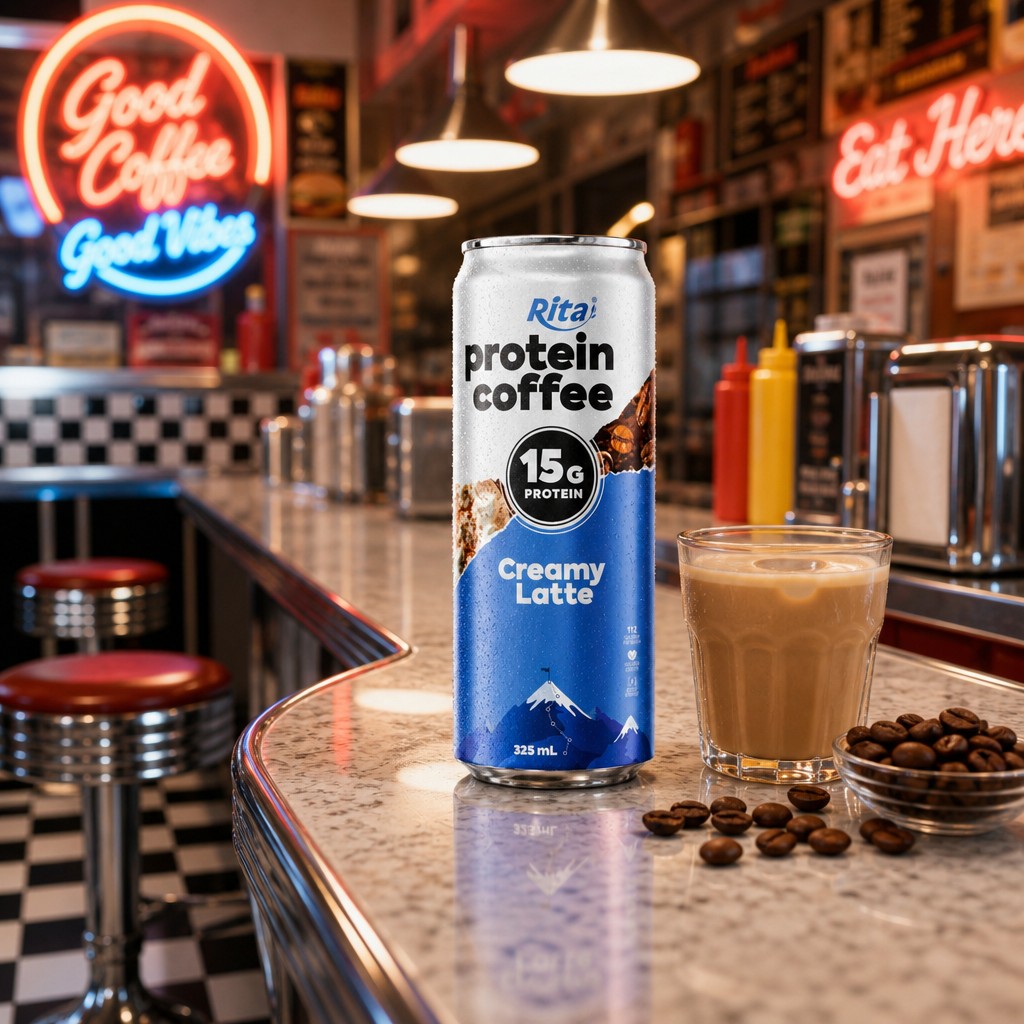
Across North American retail, the coffee section no longer stops at hot brew and refrigerated lattes. Category watchers describe a shopper who moves fluidly between formats — beans at home, a café visit on the commute, and a shelf-stable can in a desk drawer. That third decision happens fast and visually: front-of-pack claims, protein grams, caffeine content, and a flavor name that sounds like something already ordered at a counter. Creamy Latte clears those hurdles without asking anyone to learn a new vocabulary.
The Coffee Occasion Has Sprawled Beyond the Morning
Coffee consumption is no longer scheduled. A latte-flavored can functions as an afternoon pause, a post-commute reset or a desk-side constant, and buyers expect it to travel without warming up or losing its texture.
Flavor familiarity does much of the conversion work. A Creamy Latte profile borrows the language shoppers already associate with café menus, which lowers the barrier to a first trial, while the 15g protein figure gives them a concrete number to weigh against powders, bars and rival cans. In shelf conversations reported by buyers, that pairing of a recognizable flavor name and a round protein figure repeatedly decides which RTD coffee beverage gets picked up first.
Format matters as well. Aluminum chills quickly, stacks cleanly in cooler doors and photographs well, which counts for more as product discovery shifts from the aisle to a phone screen.
Reading the Label Before the First Sip
Label reading has become almost reflexive. Shoppers scan protein grams, caffeine content, sweetener type and serving size before they ever turn the can around.
- Protein grams per can, compared directly against rival RTD coffees
- Caffeine content, around 62mg per serving, matched to time of day
- Sweetener system and serving size, read in seconds
- Shelf life and pack format, deciding pantry versus cooler placement
- Artwork that stays legible at arm's length
The Rita Creamy Latte can puts each of those scan points on its front panel, and the full specification is published on the Rita High Protein Coffee Creamy Latte Drink 15g Protein listing, where buyers can review packaging details, serving data and order terms in a single place.
Inside the Creamy Latte Formula and the 325ml Can
Behind the label sits a formulation built for consistency across long supply chains.
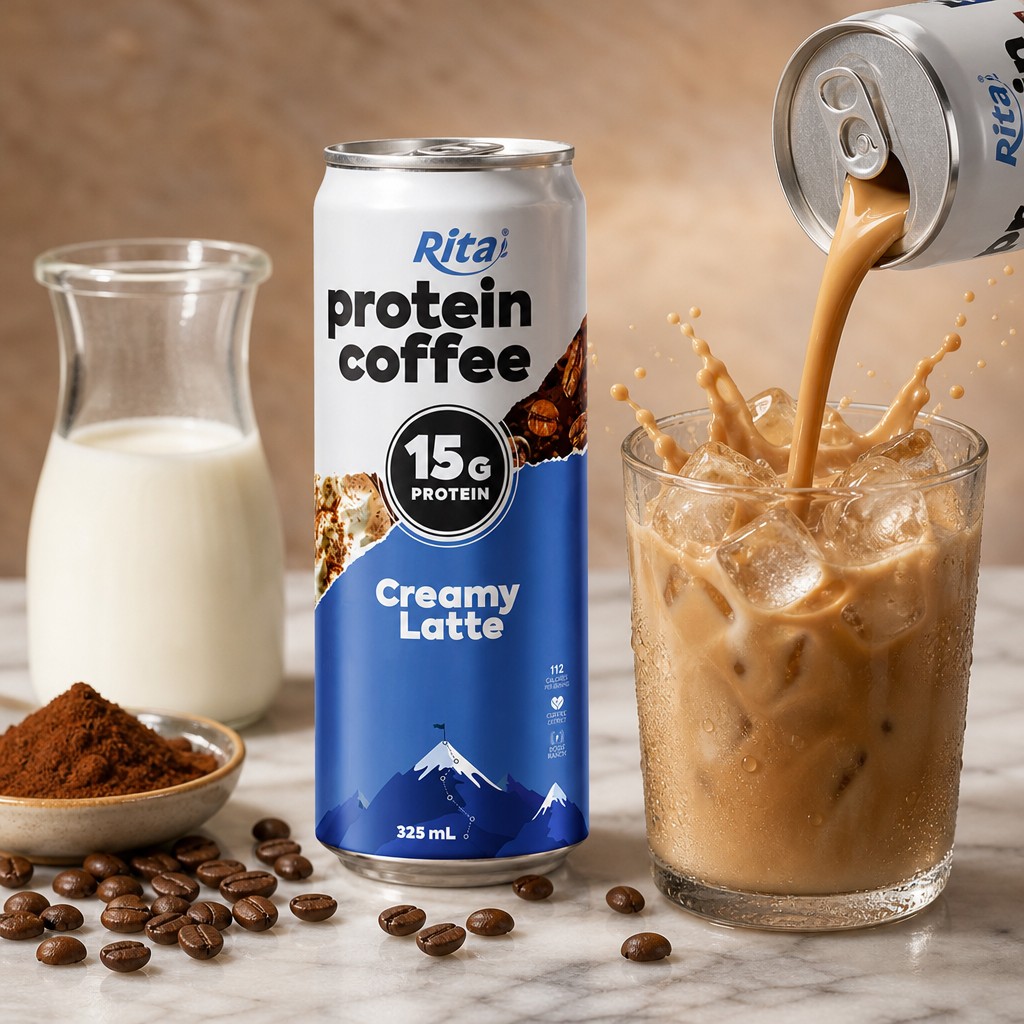
The recipe starts with water, whole milk powder and milk protein concentrate, while instant coffee powder supplies the latte character. Sucralose and acesulfame potassium round out the sweetness profile, and emulsifiers plus stabilizers keep the texture even from the first sip to the last. Every element serves one commercial purpose: a drink that tastes the same in a Chicago cooler and a Los Angeles vending unit after months in a distribution center.
That consistency is what lets a shelf-stable can carry a 24-month shelf life and still deliver a smooth, creamy mouthfeel when opened straight from the shelf.
Ingredient Profile and Serving Specifications
Specifications for the Creamy Latte variant read as follows.
| Attribute | Detail |
|---|---|
| Format | 325ml aluminum can, RTD coffee beverage |
| Protein per can | 15g as declared on the label |
| Caffeine per serving | Approximately 62mg |
| Core ingredients | Water, whole milk powder, milk protein concentrate, instant coffee powder |
| Sweetener system | Sucralose, acesulfame potassium |
| Texture agents | Emulsifiers and stabilizers |
| Shelf life | 24 months |
| Flavor | Creamy Latte |
Buyers comparing lines appreciate having these figures in a stable, export-ready format, since protein coffee latte positioning lives or dies on how cleanly the numbers translate from can to shelf tag to e-commerce bullet point.
Packaging Built for Retail Visibility
The can artwork is deliberate. A white-to-blue gradient wraps the body, with roasted coffee beans, creamy latte swirls and mountain imagery anchoring the design. The result is a front panel that reads clearly at distance in a cooler door and photographs cleanly for marketplace thumbnails. In a category where first impressions land in under a second, design functions less as decoration and more as distribution.
Buyers exploring the wider range can browse the coffee drink series catalog, which groups ready-to-drink coffee variants by format and flavor so assortment planning stays straightforward.
Export Capacity Meets North American Demand for High-Protein Ready-to-Drink Coffee
Supply reliability has become a selection criterion rather than an afterthought.
Behind the Creamy Latte can stands RITA Food and Drink Co., Ltd, a Vietnamese OEM and ODM beverage manufacturer established in 2004 that supplies brands across more than 200 countries and territories. The company operates over 50 automated production lines, ships more than 1,200 containers each month, and holds roughly 600 twenty-foot containers of monthly capacity for dedicated programs. For North American importers, that scale shortens the conversation about lead times, reorder volume and seasonal peaks.
The manufacturer's coffee drinks catalog sits inside a wider portfolio that also covers fruit juices, coconut products, milk drinks and energy beverages, letting a buyer build several categories through one relationship.
Quality Systems Buyers Ask About First
Certification paperwork is usually the first attachment a retailer requests. RITA holds BRC, FSSC 22000, ISO, GMP, HACCP and SMETA recognitions alongside Halal Jakim and Halal HCA-GCC approvals and Kosher certification, while product-level records for this coffee line cover ISO and HACCP documentation. That stack lets a buyer move from sampling to compliance review without rebuilding the file from scratch.
Fewer compliance questions mean a shorter path from first sample to first purchase order.
Headlines Shaping Beverage Strategy This Season
Several recent stories frame the environment in which protein coffee launches are being planned. The German government has passed a sugar tax plan targeting beverages, a policy move that pushes formulators to revisit sweetener systems and serving sizes across Europe-bound SKUs. Strike action at a Diageo production site was suspended ahead of negotiations, a reminder of how labor conditions can interrupt supply for global drink brands. Asset-sale discussions around Uncle Nearest continue under a receiver, and the Latvian tax authority has refrozen accounts belonging to Amber Latvijas Balzams, both cases underscoring the financial scrutiny beverage companies now operate under.
For buyers, these headlines translate into a straightforward commercial reality: formulation flexibility and dependable manufacturing partners weigh more heavily than they did a year ago.
One further signal — Hijos de Rivera establishing a new subsidiary in Germany — points to continued cross-border expansion across the drinks trade.
From Vietnam's Coffee Highlands to the Can
Coffee flavor is decided long before a can is filled. Sourcing teams document raw material conditions at origin, tracking cherry quality through harvest windows so that the instant coffee powder used in the Creamy Latte line arrives with a consistent roast and aroma profile.
As part of that program, RITA's team visited Vietnam's coffee gardens during the peak harvest season to evaluate ripeness and processing conditions directly at the source.
Footage from the same sourcing journey is available here: https://www.youtube.com/watch?v=F2yJLjUYiuo
Private Label Pathways in High-Protein Ready-to-Drink Coffee
For brand owners, the quickest route into high-protein ready-to-drink coffee is often a private label program.
RITA offers OEM and ODM services that let customers adjust formulation, swap flavor profiles, redesign artwork and choose pack sizes — the 325ml aluminum can used here, alongside glass, PET and PP formats elsewhere in the portfolio. Minimum order quantities stay flexible so a regional distributor can test the category without over-committing inventory, while the same platform supports large programs once velocity proves out. The Rita High Protein Coffee Creamy Latte Drink 15g Protein product page shows the base specification a private label brief would start from.
Retail chains can place the can in grab-and-go coolers near checkout, while foodservice operators can list it as a fast-add coffee option at counters where espresso equipment is unavailable.
The positioning logic is simple: the Creamy Latte flavor taps a preference consumers already hold, the protein figure answers the comparison shoppers make on shelf, and the 24-month shelf life relieves cold-chain pressure from the distribution plan. Together those attributes give both private label and branded programs a workable margin story in North American beverage retail. Interested buyers can request details on the Creamy Latte can directly through the listing before building out a broader assortment.
Frequently Asked Questions
What protein and caffeine does the Rita Creamy Latte coffee can contain?
Each 325ml aluminum can delivers 15g of protein and approximately 62mg of caffeine per serving, built on a base of water, whole milk powder, milk protein concentrate and instant coffee powder.
How long does the product keep and how is it stored?
The formulation is built for a 24-month shelf life through its emulsifier and stabilizer system, and each production run ships with storage guidance and lot documentation.
Can formulation and packaging be customized under a private label program?
Yes. RITA operates OEM and ODM programs that let buyers adjust formulation, flavor profile, label artwork and pack size, with flexible minimum order quantities for both trial runs and established retail programs.
Which certifications support distribution in retail and foodservice?
The manufacturer holds BRC, FSSC 22000, ISO, GMP, HACCP and SMETA recognitions along with Halal Jakim, Halal HCA-GCC and Kosher approvals, and product-level records for this coffee line include ISO and HACCP documentation.
Which sales channels suit this ready-to-drink coffee beverage?
Grab-and-go coolers, checkout zones, convenience formats and foodservice counters all perform well, since the 325ml can travels without special handling and holds its flavor on the shelf.