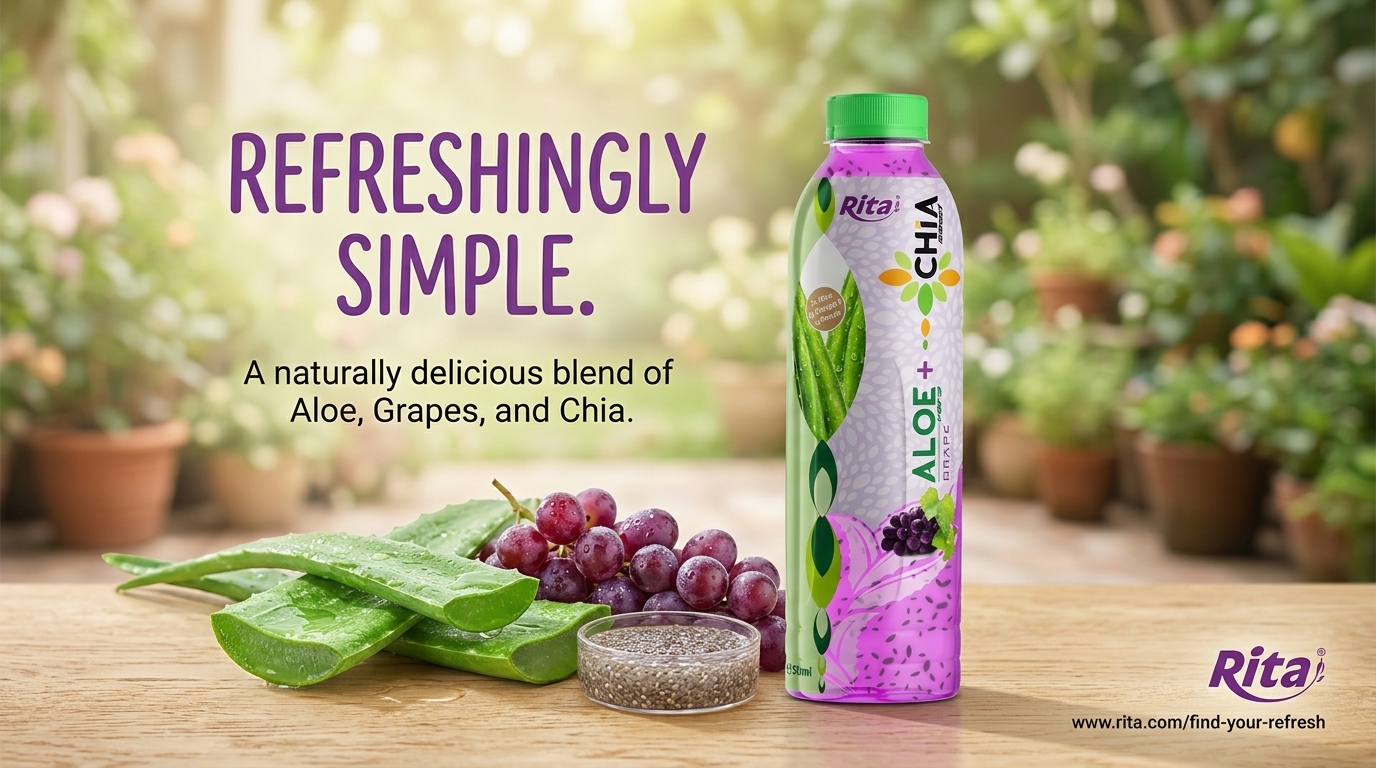
The global beverage industry is experiencing a significant shift as consumers increasingly seek products that combine natural ingredients with unique textures and flavors. Among the emerging categories, aloe vera drink with chia seed grape flavor has captured the attention of importers, distributors, and F&B businesses looking to diversify their portfolios. This trend is not merely a passing fad but a reflection of deeper changes in consumer behavior, retail strategies, and export opportunities. In this article, we explore the market dynamics, production capabilities, and business potential of such innovative beverages, using the aloe vera drink with chia seed grape flavor as a reference point for industry analysis.
Key Takeaways
- The demand for aloe vera and chia seed beverages is growing rapidly in North America, Europe, and Asia-Pacific due to their unique sensory appeal.
- Vietnam has emerged as a major export hub for bottled beverages, with manufacturers offering competitive pricing, flexible MOQs, and OEM/ODM services.
- Products like the aloe vera drink with chia seed grape flavor are ideal for retail, Horeca, and private label channels, thanks to their 24-month shelf life and PET bottle packaging.
- Strategic sourcing from certified factories (ISO, HACCP, FDA, HALAL) ensures compliance with global food safety standards.
- Understanding payment terms (L/C, T/T), delivery timelines (20–25 days), and supply capabilities (300 containers/month) is crucial for successful import planning.
The Rise of Texture-Infused Beverages in Global Markets
Consumer preferences in the beverage sector have evolved dramatically over the past decade. While traditional soft drinks once dominated shelves, today's buyers are looking for drinks that offer more than just hydration. Texture-infused beverages—those containing seeds, pulp, or gel-like pieces—are gaining traction. The combination of aloe vera gel and chia seeds in a single drink creates a multi-sensory experience that appeals to adventurous consumers.
Why Aloe Vera and Chia Seeds Are a Powerful Duo
Aloe vera has long been a staple in Asian beverage markets, prized for its refreshing taste and translucent texture. Chia seeds, originally from Central America, have become a global superfood ingredient due to their ability to absorb liquid and form a gel-like consistency. When combined, these two ingredients create a drink that is visually appealing and texturally interesting. The grape flavor adds a familiar sweetness that masks any bitterness, making it accessible to a wide audience.
Market Adoption Across Regions
In North America, the demand for plant-based and natural ingredient drinks is surging. Retailers like Whole Foods and specialty Asian grocery stores are expanding their beverage sections to include imported items. In Europe, consumers are drawn to products with clean labels and transparent sourcing. The Asia-Pacific region remains the largest market for aloe vera drinks, but growth is also visible in the Middle East and Africa. For distributors, stocking an aloe vera chia seed beverage can fill a niche that is currently underserved.
Production Capabilities and Export Advantages from Vietnam
Vietnam has positioned itself as a leading beverage exporter, thanks to its robust manufacturing infrastructure and competitive labor costs. Factories like RITA, with over 20 modern production lines and a 30,000 m² facility, can produce up to 1,200 containers per month. This scale allows for stable quality, fast lead times, and large-scale order fulfillment.
OEM and ODM Services for Global Brands
One of the key advantages of sourcing from Vietnam is the availability of OEM (Original Equipment Manufacturing) and ODM (Original Design Manufacturing) services. Businesses can customize formulations—adjusting sweetness, viscosity, and flavor intensity—as well as packaging design. For example, a distributor targeting the European market might request a slightly less sweet version of the grape aloe vera drink with chia seeds to suit local palates. The minimum order quantity (MOQ) is 200 cartons per order, making it accessible for both small and large buyers.
Packaging Options and Shelf Life Considerations
The product is packed in a 500 ml PET bottle, which is lightweight, shatterproof, and recyclable. PET bottles are ideal for export because they reduce shipping weight compared to glass, lowering logistics costs. The shelf life of 24 months provides ample time for inventory management and distribution. For businesses looking to diversify their packaging, RITA also offers aluminum cans, glass bottles, and PP bottles in various sizes. This flexibility allows importers to choose the format that best suits their target market—for instance, smaller cans for on-the-go consumption or larger bottles for family use.
Understanding Payment Terms and Supply Chain Logistics
For first-time importers, navigating payment terms and delivery schedules can be challenging. Typical payment terms for this product are L/C (Letter of Credit) or T/T (Telegraphic Transfer). L/C is often preferred for large orders as it provides security for both buyer and seller. T/T, on the other hand, is faster and may involve a deposit (e.g., 30% upfront and 70% before shipment). The delivery time is 20–25 days after order confirmation, which is relatively fast compared to other Asian suppliers.
Port of Loading and Supply Capacity
All shipments are dispatched from Cat Lai Port in Ho Chi Minh City, one of Vietnam's busiest ports with excellent connectivity to global shipping routes. The supply capacity is 300 twenty-foot containers per month, ensuring that even bulk orders can be fulfilled without delays. This reliability is critical for wholesalers who need to maintain consistent stock levels.
Certifications That Open Doors
To export to regulated markets, products must meet strict food safety standards. This beverage holds multiple certifications, including ISO, HACCP, FDA, HALAL, USDA Organic, and EU Organic. These certifications are not just logos on a label—they represent rigorous quality control systems that ensure the product is free from harmful chemicals and safe for consumption. For distributors targeting the US market, FDA approval is particularly important. Similarly, HALAL certification is essential for Middle Eastern and Southeast Asian markets.
Retail and Horeca Applications for Aloe Vera Chia Seed Drinks
The versatility of this beverage makes it suitable for multiple sales channels. In retail, it can be positioned in the functional drink aisle, alongside kombucha and coconut water. Its vibrant grape color and visible chia seeds create strong shelf appeal. For the Horeca sector (hotels, restaurants, cafes), the drink can be served as a refreshing non-alcoholic option or used as a mixer in mocktails. Many coffee shops are now offering specialty drinks that include aloe vera or chia seeds, tapping into the growing demand for Instagram-worthy beverages.
Private Label Opportunities
Private labeling is a growing trend in the beverage industry, allowing retailers to build their own brand without investing in manufacturing. With RITA's OEM services, a supermarket chain can launch its own line of aloe vera chia seed drinks under its store brand. The free sample and free design offer reduce the upfront investment, making it easier for startups to enter the market.
Export Opportunities and Market Entry Strategies
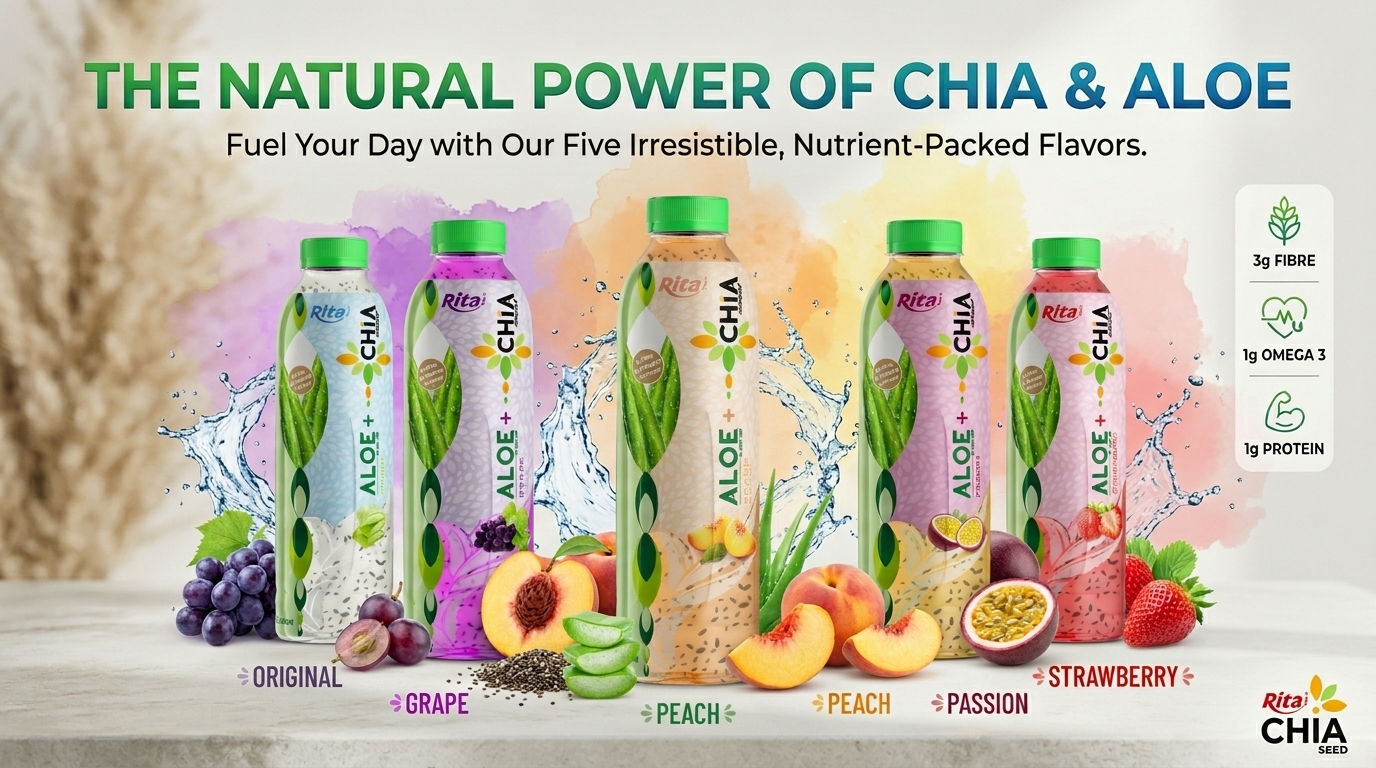
For beverage businesses looking to import from Vietnam, the key is to identify the right product-market fit. The aloe vera drink with chia seed grape flavor is particularly well-suited for markets with a growing Asian diaspora or health-conscious consumers. Countries like the United States, Canada, Australia, and the United Kingdom have seen a surge in demand for such products.
Building a Distribution Network
Successful importers often start by targeting specialty grocery stores, Asian supermarkets, and online platforms like Amazon or Alibaba. Offering promotional pricing for first orders and providing point-of-sale materials can help drive initial sales. Additionally, attending trade shows such as SIAL, Anuga, or PLMA can connect buyers with suppliers.
Leveraging Free Samples and Design Services
Before committing to a large order, importers can request free samples to evaluate the product's taste, texture, and packaging. This is a low-risk way to test the market. The free design service allows businesses to customize labels and packaging without additional costs, which is particularly beneficial for startups with limited budgets. For more beverage options, visit chia and basil seed product catalog.
Frequently Asked Questions
1. What is the minimum order quantity for this product?
The minimum order quantity is 200 cartons per order. Each carton contains multiple bottles, so the total volume can be significant. This MOQ is designed to balance cost efficiency for the manufacturer with accessibility for small to medium-sized distributors.
2. What payment terms are available for international buyers?
Payment can be made via Letter of Credit (L/C) or Telegraphic Transfer (T/T). L/C is recommended for large orders as it provides financial security for both parties. T/T typically requires a 30% deposit upfront, with the remaining 70% paid before shipment.
3. Can the product be customized for private label or OEM orders?
Yes, the product is available for OEM and ODM partnerships. You can customize the formulation (sweetness, flavor intensity, viscosity), packaging design, and branding. Our team provides free design support to help you create a unique product for your target market. For more information, explore our OEM service page.
4. How long does delivery take, and which port is used?
Delivery time is 20–25 days after order confirmation. All shipments are dispatched from Cat Lai Port in Ho Chi Minh City, Vietnam. This port has excellent global connectivity, ensuring timely delivery to destinations worldwide.
5. What certifications does this beverage have?
The beverage is certified with ISO, HACCP, FDA, HALAL, USDA Organic, and EU Organic standards. These certifications ensure that the product meets international food safety and quality requirements, making it suitable for export to regulated markets.